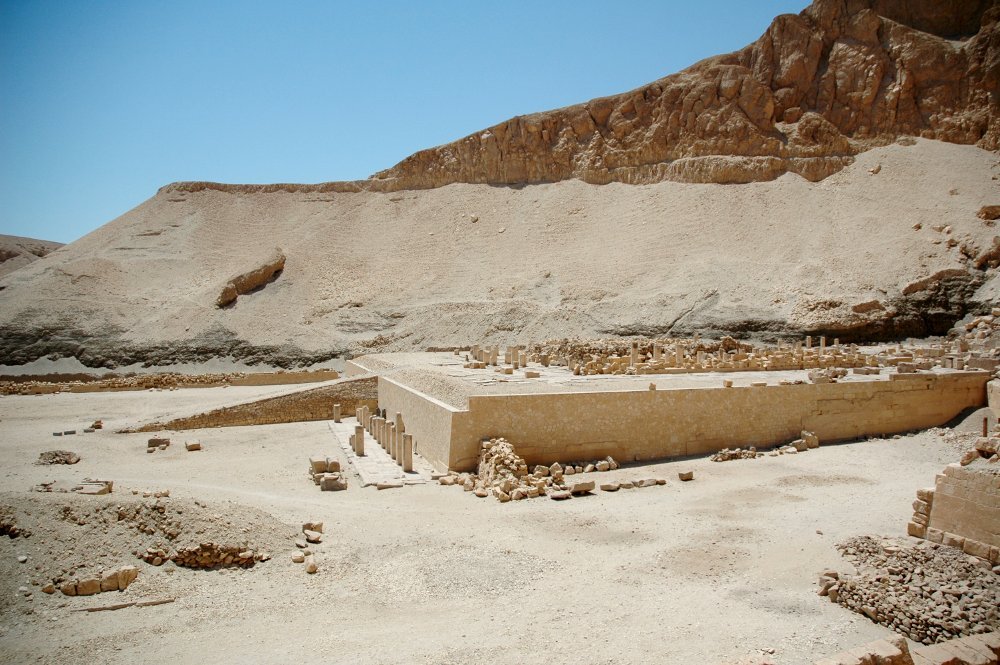

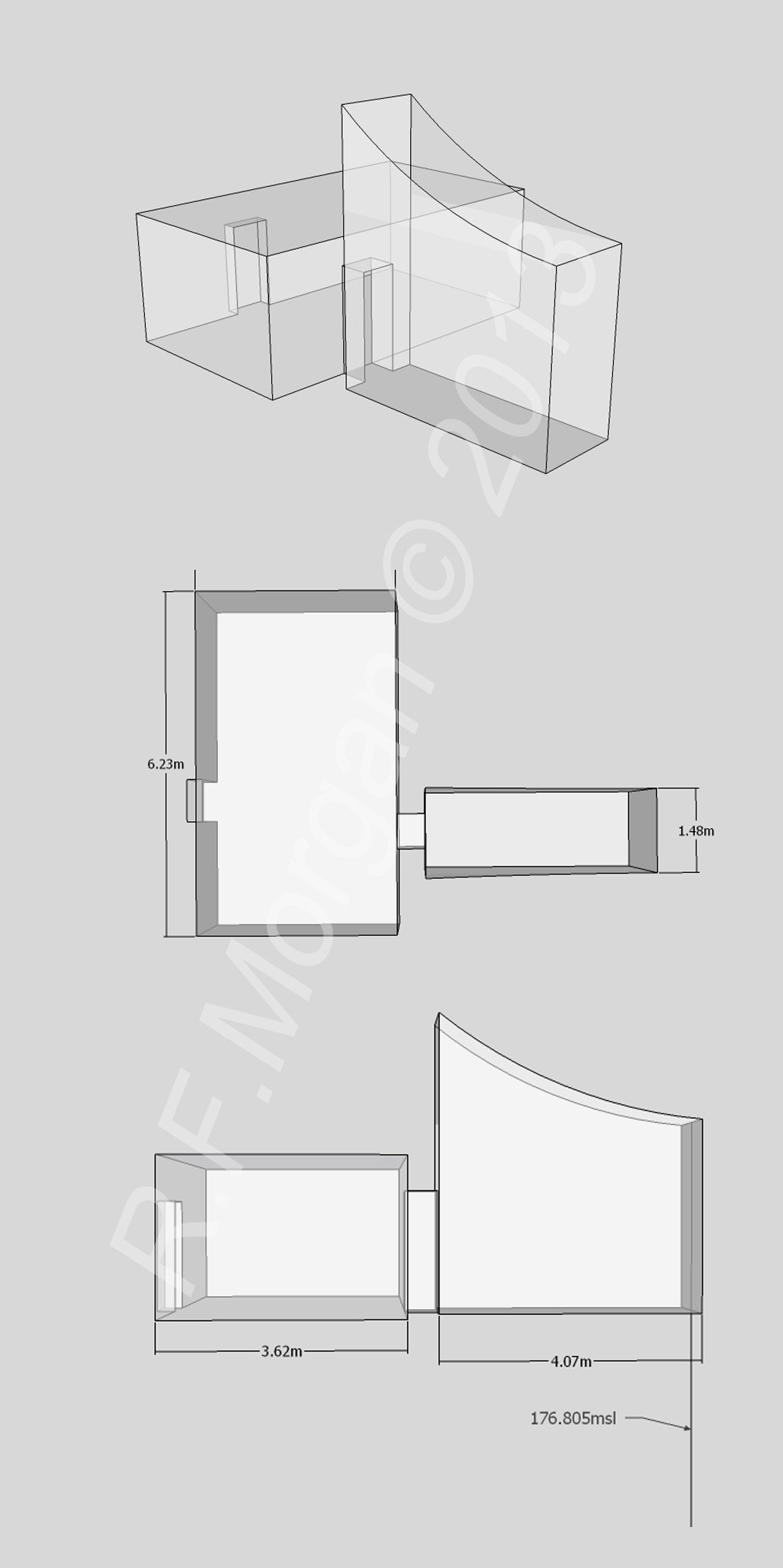
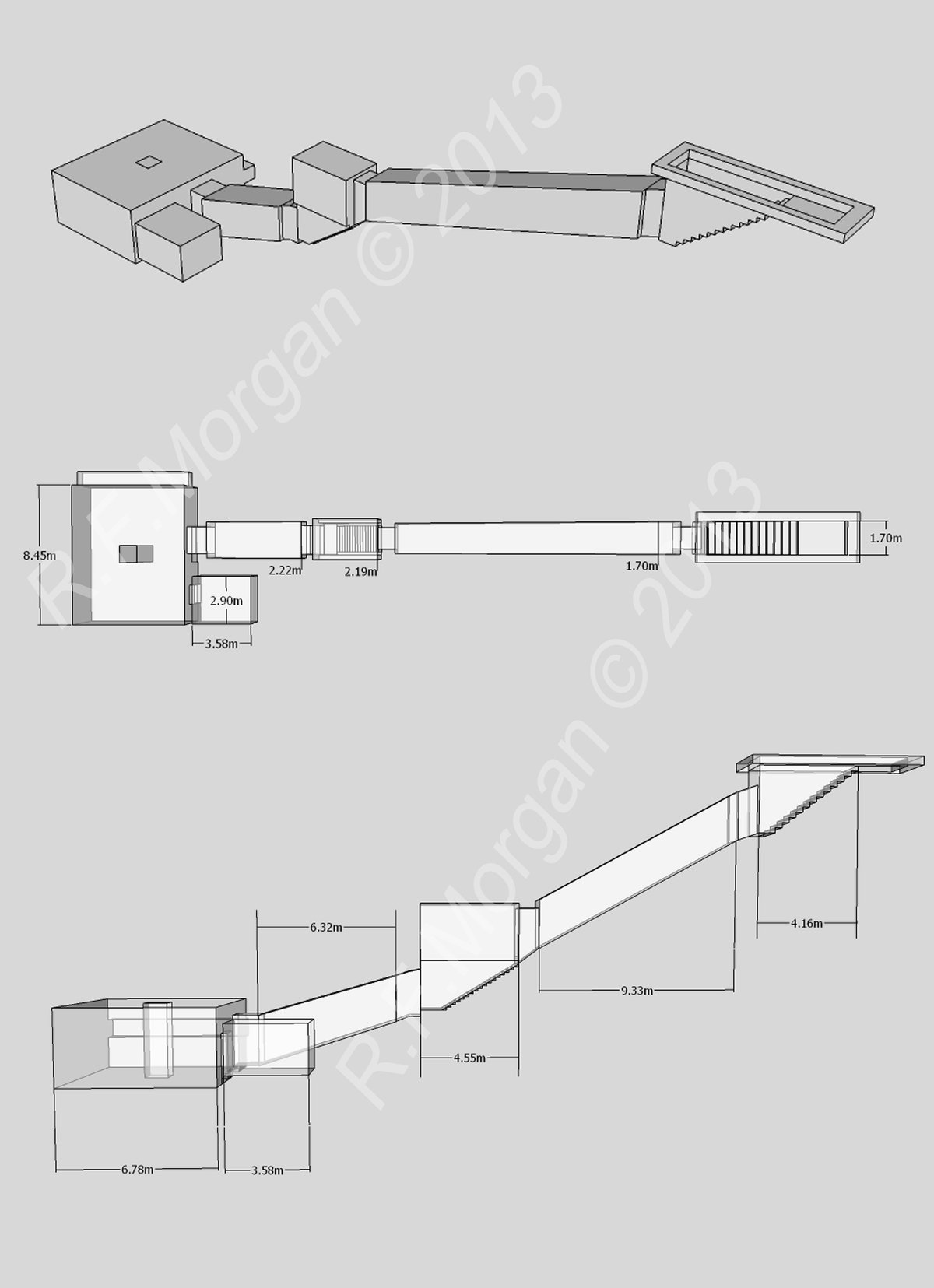
The Temple of Mentuhotep II is a funerary temple built by the Pharaoh of the 11th Dynasty. Located on the West Bank of Thebes in the valley of Deir el-Bahari, it stands near the Saff-graves of Mentuhotep's ancestors. It is an important historical monument, serving as a testament to the architectural transition from the pyramid temples to the millions of years' houses of the New Kingdom.
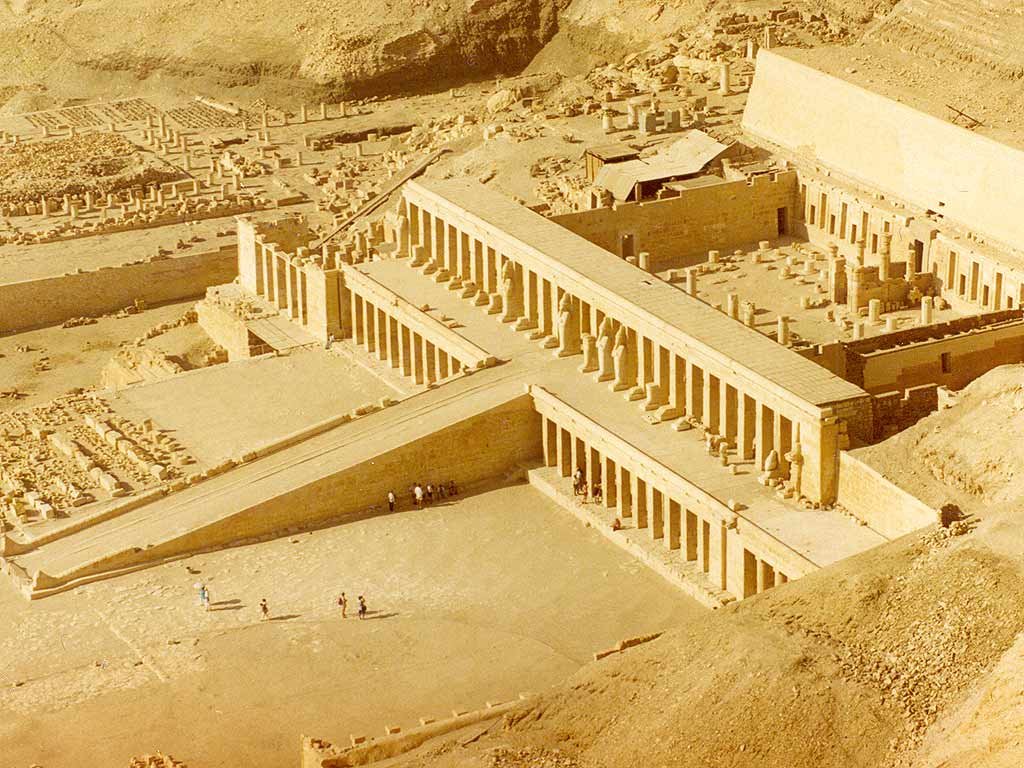
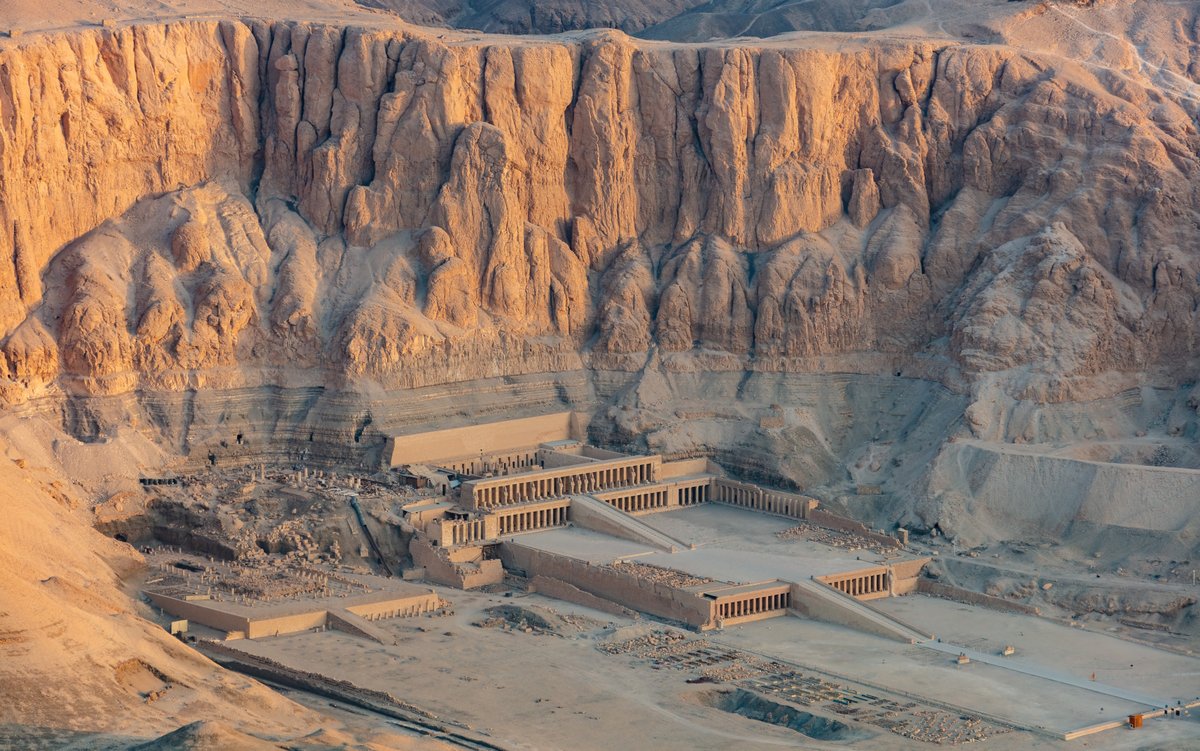
This temple was the only partially preserved monumental temple building of its era and served as a model for the temple of Hatshepsut, built approximately 550 years later. While it was eventually covered by a landslide during the 20th Dynasty, it was systematically excavated starting in 1859. Archaeologists uncovered a seated statue of King Amunre and a graniter altar of Mentuhotep, alongside other finds like the tomb of Neferu.
The complex features a 1.2-kilometer long processional way leading to a wide forecourt. Archaeological evidence indicates a reconstructed garden containing at least 57 tamarisks and 6 sycamore figs, with other flower beds. To maintain this greenery in the desert landscape, gardeners had to provide irrigation from the valley located one kilometer away.
Visitors can see the terraced sanctuary, which is dedicated to the fusion of the war god Month and the sun god Re. The structure includes a hypostyle hall, a sanctuary, and a core building. Though a modern ramp was added in 1905, the remains of the original limestone cladding are still visible in two places.
Sources: Wikipedia, OpenStreetMap, Wikidata, Wikimedia Commons
Written by Mutabor
Discuss this with the author and others
No comments yet. Be the first to start the conversation.