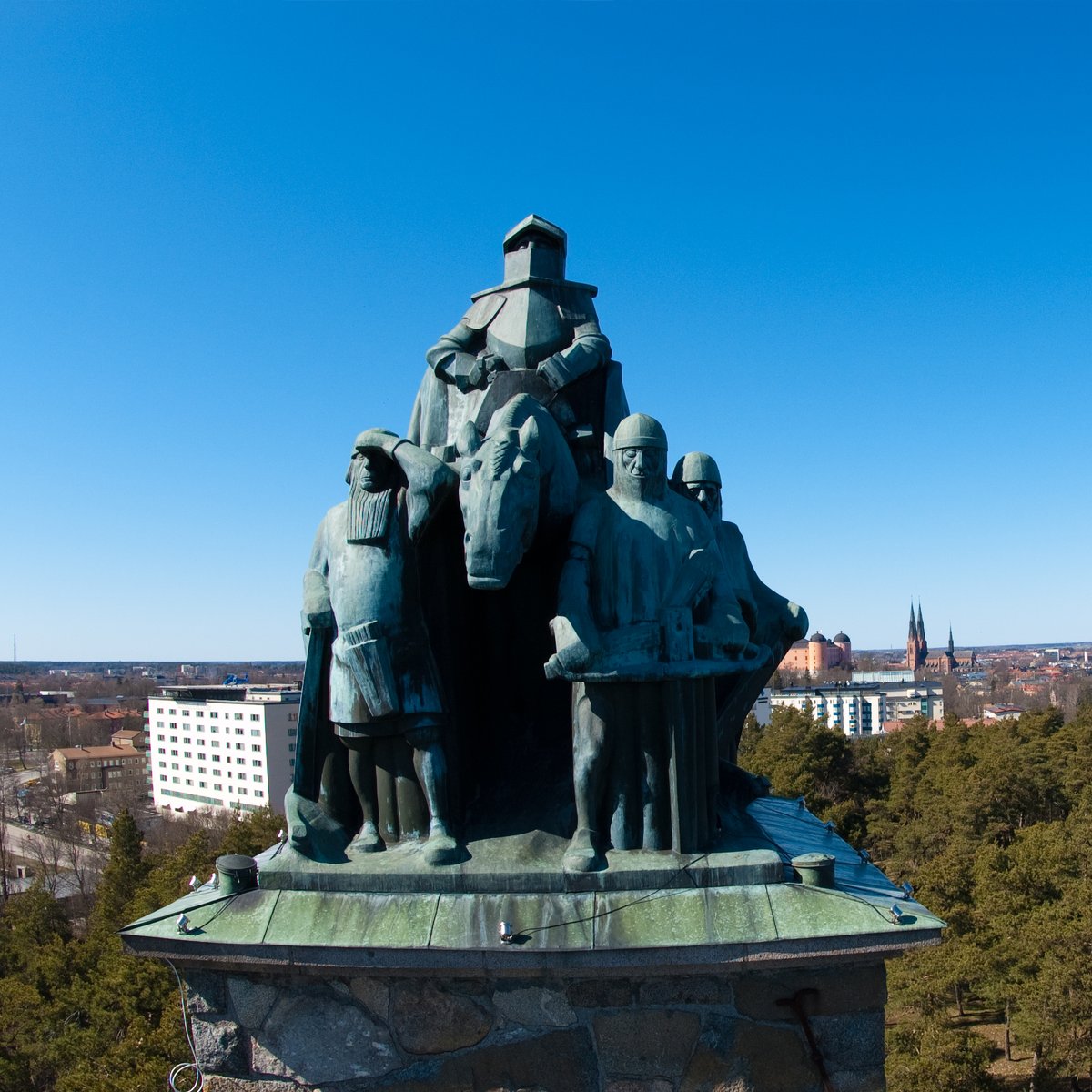

The idea for a monument to Sten Sture the Elder originated with the Uppsala student corporation, tracing back to the 400th anniversary of the Battle of Brunkeberg in 1871. In 1901, a competition was announced, which Carl Milles entered while still studying in Paris. When the prize committee announced its decision in April 1902, Milles' proposal placed fourth behind Charles Lindholm, Ragnar Östberg, and Olle Hjortzberg. This result shocked Milles, who had been certain of a victory.
However, the committee's decision faced strong criticism, particularly from the Uppsala student corporation. Students published posters urging the removal of the prize committee and eventually bypassed them to invite Milles personally. Upon his arrival, the young sculptor became widely known as the press discussed the matter. A newly appointed monument committee, enthusiastic about Milles, ordered a model of the Sten Sturemonumentet and collected the necessary funds.
By the time the monument was finally unveiled on February 13, 1925, nearly 25 years had passed since the first sketch. During this time, Milles' personal style had shifted toward a lighter aesthetic, and public taste had evolved, leading some critics to remark that there was "too much Sten, too little Sture." Despite the delay, which was caused by a lack of funds and debates over the monument's location, the work was considered a great success and brought Milles significant national fame.
Sources: Wikipedia, OpenStreetMap, Wikidata, Wikimedia Commons

Written by Nik Frost
Discuss this with the author and others
No comments yet. Be the first to start the conversation.