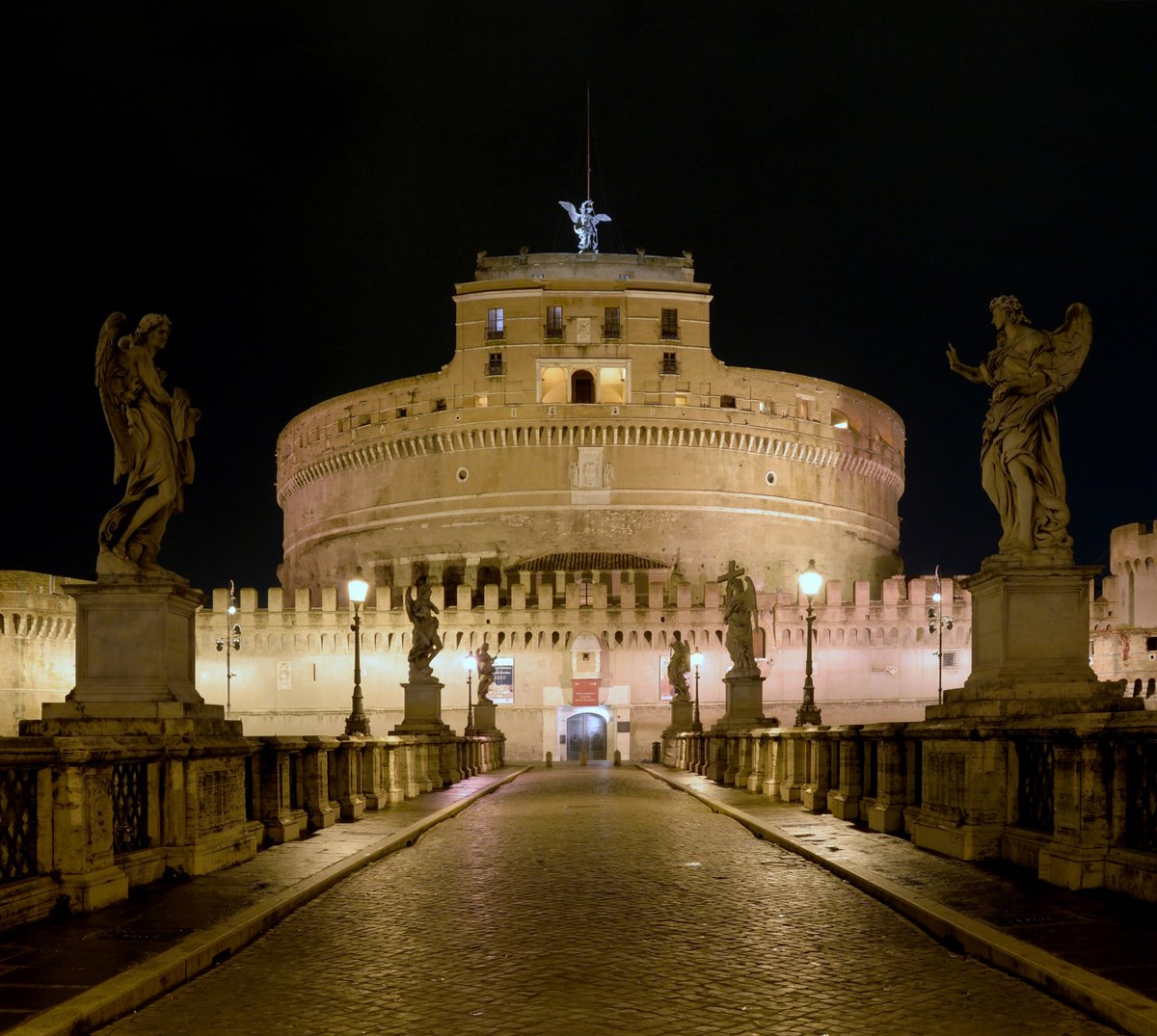

Hadrian commissioned the construction of his mausoleum in Rome between 134 and 139 AD. Originally the mausoleum was a decorated cylinder, with a garden top and golden quadriga, and it was the tallest building in Rome. It was intended to be a resting place for Hadrian and his family, with the remains of succeeding emperors also being put here later.
However, it was converted to a military fortress in 401 AD, and the contents and decorations were largely lost. The building was later repurposed as a castle, connected to St. Peter’s Basilica by the Passetto di Borgo during the 14th century. Notable prisoners at the castle include the sculptor and goldsmith Benvenuto Cellini and the magician and charlatan Cagliostro. Today, Castel Sant'Angelo, also known as the Mausoleum of Hadrian, stands as a testament to the long and intriguing history of Rome.
Sources: Wikipedia, OpenStreetMap, Wikidata, Wikimedia Commons


Written by Nicolo Ciampini
Discuss this with the author and others
No comments yet. Be the first to start the conversation.