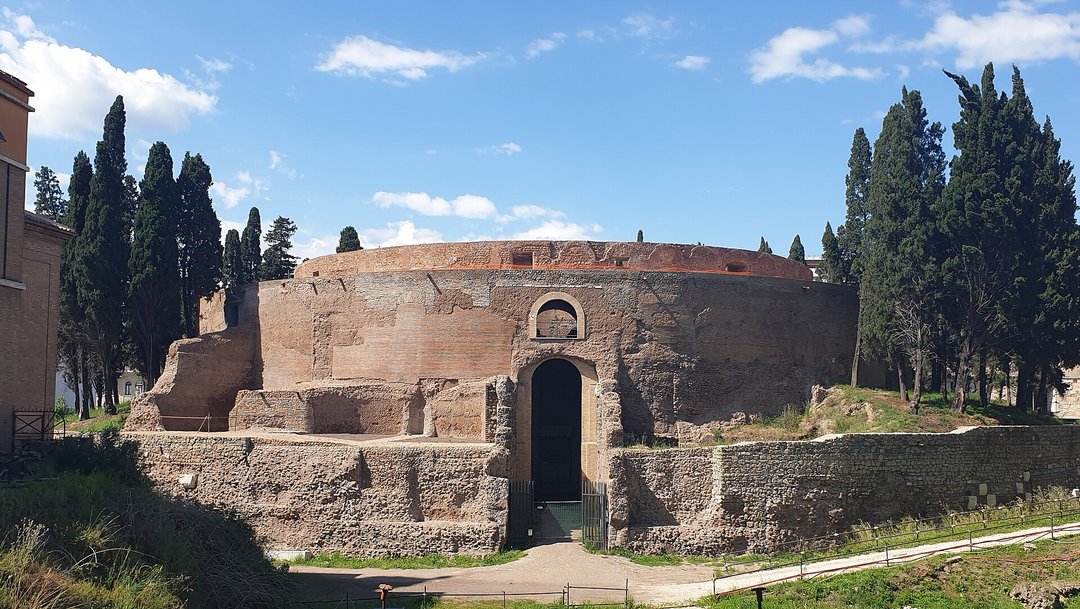

A few streets from the Spanish Steps, where visitors stream between fountains, boutiques and gelato counters, there is a great circular ruin that many walk straight past. It sits low and mysterious behind the modern city, an enormous ring of ancient brick and earth that looks almost misplaced among the traffic.
This is the Mausoleum of Augustus. And the man who built it left something behind far more familiar than his tomb. Every time you say “August,” you are saying his name.
He wasn’t born Augustus. He arrived in the world in 63 BC as Gaius Octavius, the great-nephew of Julius Caesar. When Caesar was assassinated, the 18-year-old discovered that Rome’s most famous strongman had adopted him in his will and made him his principal heir. What followed was anything but a peaceful inheritance.
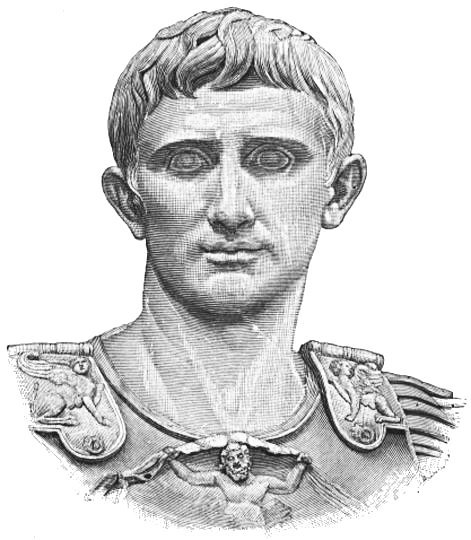
Octavian, as we usually call him during these years, manoeuvred through alliances, betrayals and civil war until only two great rivals remained: Mark Antony and Cleopatra. Their defeat at the Battle of Actium in 31 BC left him master of the Roman world.
There was just one awkward detail. Romans hated kings. So Octavian performed one of history’s cleverest political transformations. He presented himself not as a monarch but as the man who had restored the Republic. In 27 BC, the Senate bestowed upon him a new title: Augustus. It was a beautifully ambiguous word. The Latin augustus suggested something venerable, majestic, even sacred — a man touched by greatness without actually calling him a king.
Octavian had become Augustus. And eventually, August became August.
The month had previously been called Sextilis, or “sixth month,” a linguistic fossil from the old Roman calendar when the year began in March. In 8 BC, the Senate renamed it Augustus in the emperor’s honour. The month was associated with several important moments in his extraordinary ascent to power.
One story, however, is too good to be true. You may have heard that Augustus demanded an extra day for his month because Julius Caesar’s July had 31 and imperial pride could not tolerate August being shorter. It is a wonderful image: two of history’s most powerful Romans competing from beyond the grave over who had the bigger month. Unfortunately, it didn’t happen. The familiar arrangement of month lengths emerged from the Julian calendar reforms and was not the result of Augustus stealing a day from February to satisfy his ego. Sometimes history refuses to cooperate with a good anecdote.
But Augustus certainly understood monuments. Around 28 BC, while still only in his thirties, he began constructing the enormous mausoleum on the Campus Martius. Imagine it not as the battered brick cylinder visible today, but as an audacious new landmark of pale stone, concentric walls and planted terraces, possibly crowned by a bronze statue of Augustus himself. It was a tomb built by a young man planning for eternity. He had plenty of time to contemplate it. Augustus lived for another four decades, dying in AD 14 at the age of 75. His body was returned to Rome, cremated, and his ashes placed inside the mausoleum he had prepared so many years before.
Then came the long afterlife that makes Roman ruins so irresistible. The mausoleum became a fortress. Then a garden. It hosted bullfights and spectacles. In the modern era it became a concert hall. Mussolini stripped away later structures around it as part of his regime’s obsession with appropriating the grandeur of imperial Rome. Then, for decades, the great tomb sat neglected and largely inaccessible.
Yet Augustus’s name escaped the ruin. It travelled through Latin and across languages and centuries until it became an ordinary word printed on airline tickets, restaurant reservations and out-of-office messages.
And in Italy, August developed a personality all its own. Come in the middle of the month and you encounter Ferragosto, officially celebrated on 15 August and today closely associated with the Catholic Feast of the Assumption. But its name reaches much further back.
Ferragosto derives from the Latin Feriae Augusti — the “holidays of Augustus.” The emperor instituted a period of rest and festivities in 18 BC, connected with the end of the agricultural season and existing summer celebrations. Two thousand years later, Italians are still remarkably committed to the concept.
Ferragosto is the symbolic heart of the Italian summer. Cities empty, shutters descend over neighbourhood shops and families migrate towards the sea, mountains and countryside. The traditional Ferragosto excursion — the gita fuori porta — might involve a heroic quantity of food, a beach umbrella and several generations of relatives. For the unsuspecting traveller, it can feel as though somebody has quietly evacuated Italy.
And then there are weddings. Traditionally, August has not always been considered an auspicious month in which to marry in Italy. An old saying warns: “La sposa agostina non si gode la curtina.” Its meaning varies in interpretation, but the message is unmistakably gloomy: an August bride should not expect much happiness from married life. Other regional traditions similarly regard August weddings with suspicion. Modern Italians do, of course, marry in August, so don't cancel the venue just yet. But between old superstition, ferocious heat and half the country disappearing on holiday around Ferragosto, there are practical as well as folkloric reasons why August can be an awkward month for a grand Italian wedding.
There is something wonderfully circular about all this. Augustus created a holiday. The holiday became Ferragosto. Augustus gave his name to a month. That month became synonymous in Italy with escaping work altogether. And while his empire vanished, Italians still celebrate the season bearing his name by heading for the beach.
So when you stand beside the Mausoleum of Augustus, don't think only of the emperor buried within. Think of an 18-year-old heir navigating the murderous politics of Rome. Of Cleopatra and Antony. Of a republic quietly becoming an empire. Of a young ruler building his tomb decades before he needed it. Of ancient harvest holidays transformed into modern traffic jams towards the Adriatic. And then think of the word on your calendar. August.
Two thousand years after the emperor was carried into his mausoleum, we are still saying his name.
Photo: MumblerJamie
Written by Nik Frost
Discuss this with the author and others
No comments yet. Be the first to start the conversation.