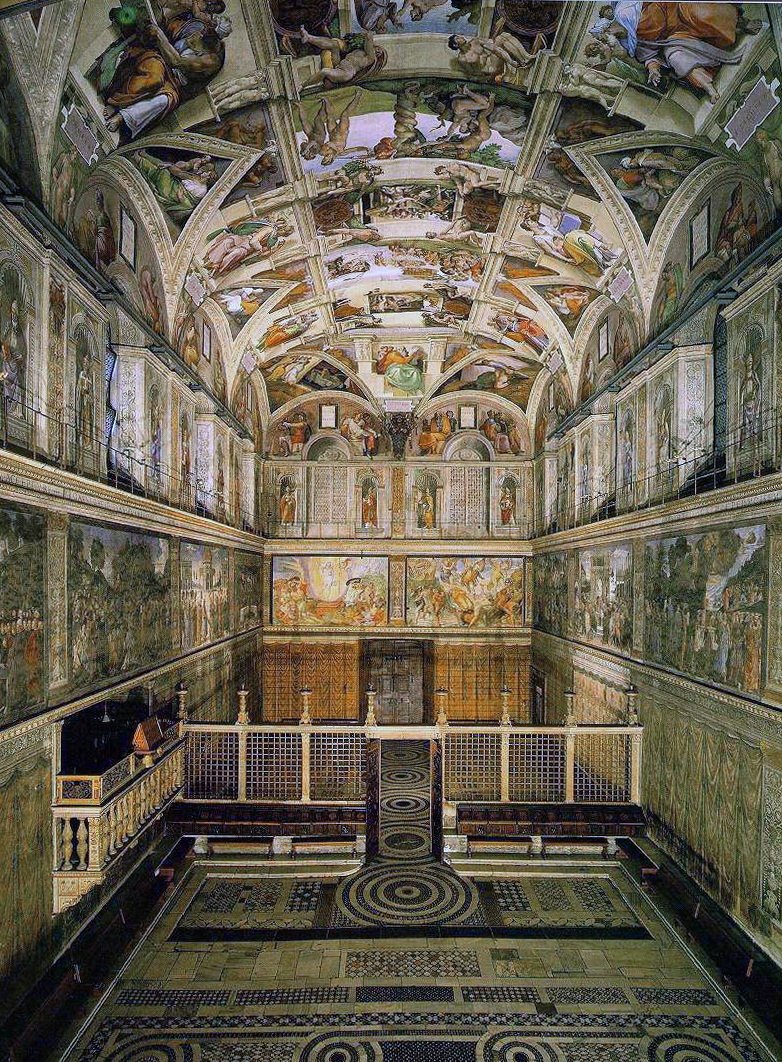

Originally known as the Cappella Magna, the Sistine Chapel was built between 1473 and 1481 by Pope Sixtus IV. It serves as a site for both religious and functionary papal activity, including the papal conclave where a new pope is selected. The chapel's fame lies mainly in the frescoes that decorate its interior, most particularly the ceiling and The Last Judgment, both by Michelangelo.
During the reign of Sixtus IV, a team of Renaissance painters including Sandro Botticelli, Domenico Ghirlandaio, Pietro Perugino, and Cosimo Roselli created a series of frescoes depicting the Life of Moses and the Life of Christ. These were completed in 1482, and the chapel was consecrated and dedicated to the Virgin Mary in 1483. The chapel is about 35 metres long and 14 metres wide, with the ceiling rising to about 20 metres above the main floor.
Between 1508 and 1512, under the patronage of Pope Julius II, Michelangelo painted the chapel's ceiling, a project regarded as one of the major artistic accomplishments of human civilization. He returned to the chapel between 1535 and 1541 to paint The Last Judgment for popes Clement VII and Paul III. The chapel sits on the site of the Cappella Maggiore, which was recorded as existing in 1368.
Sources: Wikipedia, OpenStreetMap, Wikidata, Wikimedia Commons




Written by Nicolo Ciampini
Discuss this with the author and others
No comments yet. Be the first to start the conversation.