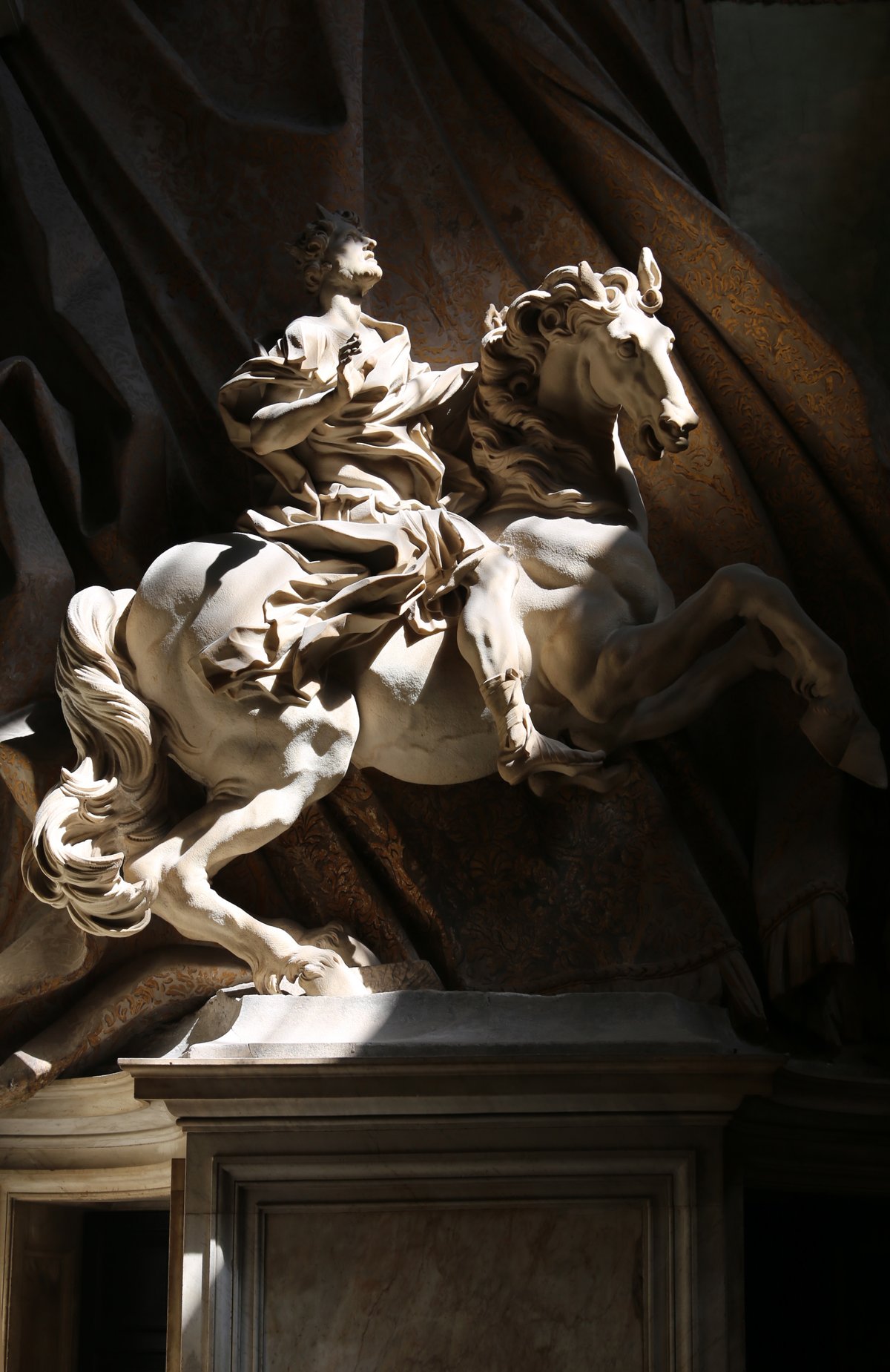

Why does Constantine look so surprised? He is reacting to a miraculous cross in the sky, a sign that gave him the confidence to crush Maxentius at the Battle of Milvian Bridge. Bernini captured this exact moment of divine intervention in marble, though some might argue the emperor looks a bit too youthful for the job.
It took Bernini nearly a decade to get this right, starting in 1654 and finally finishing in 1668. He even had to build a massive niche with flowing drapery to make sure the statue didn't get swallowed by the architecture. Moving the beast from his studio to the Scala Regia was a logistical nightmare involving oxen, sledges, and a guard patrol to protect it through the night.
People back then were quite picky. They complained that the cross was nearly invisible and that the horse had a ridiculously long neck and odd ears. They even noted that Constantine seems to be riding without a saddle or reins. Is it a sculpture or a relief? Some of the 1600s critics weren't sure.
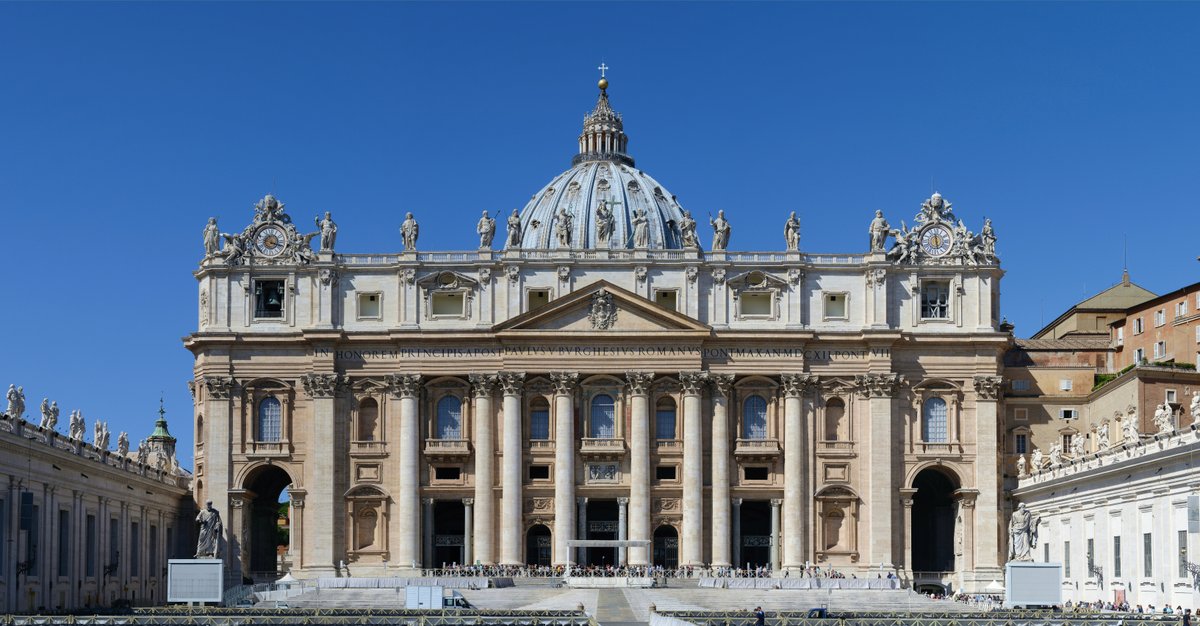
Today, you can only see it from one specific angle under the portico of St Peter's. Because of its awkward placement, it doesn't get as much love from art historians as it probably should. It remains a strangely dynamic, slightly impossible moment frozen in stone.
Sources: Wikipedia, OpenStreetMap, Wikidata, Wikimedia Commons

Written by Nicolo Ciampini
Discuss this with the author and others
No comments yet. Be the first to start the conversation.