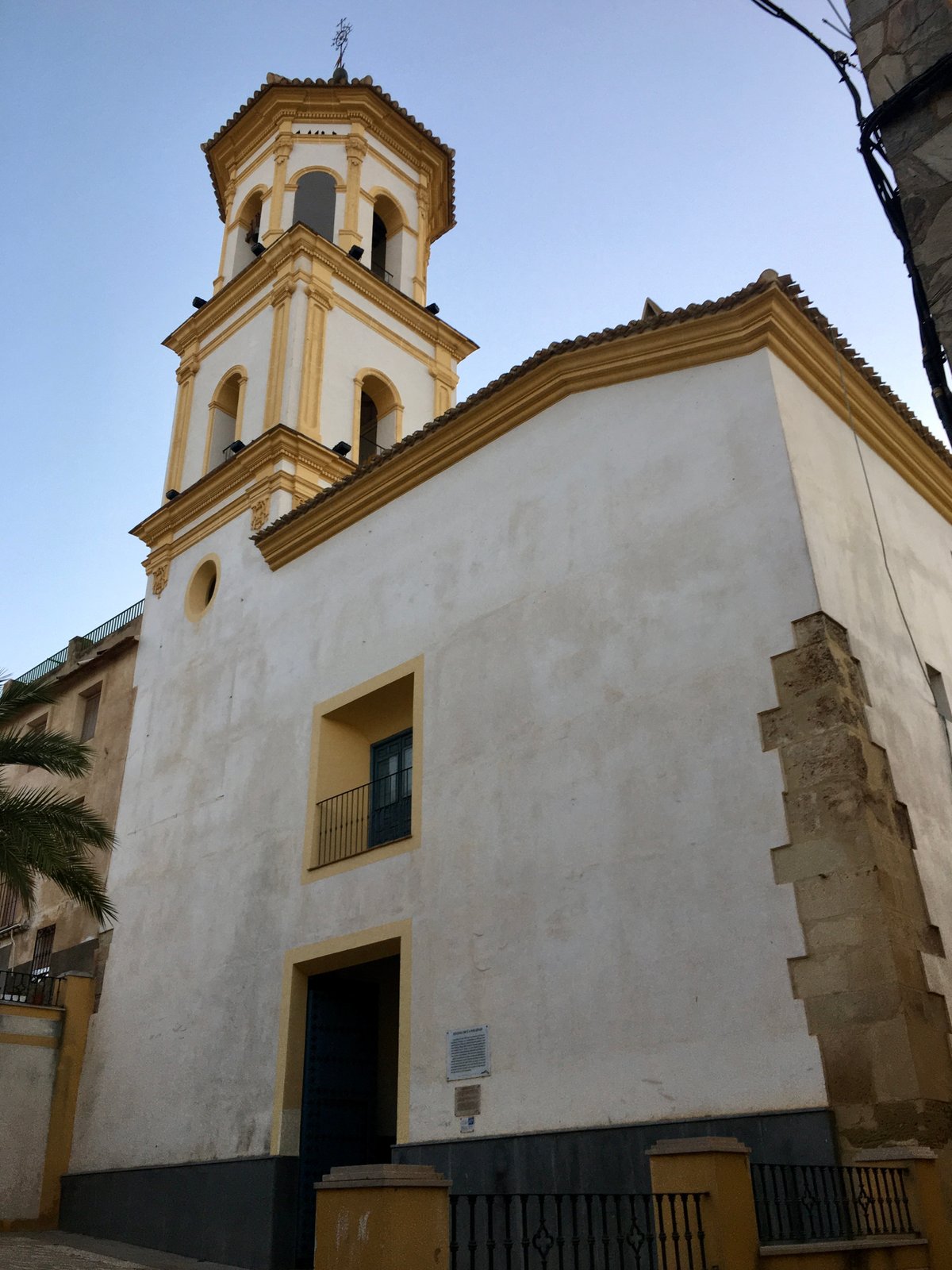

Built by local artisan Ginés de Egea, the Iglesia de La Soledad was financed by the Cofradía de la Virgen de los Dolores, a cofradía composed of the high bourgeoisie of the time. Due to a council-imposed prohibition, the church was constructed using modest materials. The modest exterior hides an intricate interior, made of mampostería and featuring three naves and four tracts, built in the second half of the 17th century. The tower-campanario was added in 1788.
The interior is divided into three naves separated by pillars cruciform and supported by semi-point arches. The capella, with a hexagonal shape, covers a false vault of gallones united in the center forming a florón. The coro alto is situated at the feet and is supported by a jaspe rojo column, which is believed to come from the nearby ruins of Begastri. Today, the Iglesia de La Soledad is declared a Bien de Interés Cultural and is maintained by the Cofradía de la Virgen de los Dolores.
Sources: Wikipedia, OpenStreetMap, Wikidata, Wikimedia Commons
Written by Nicolo Ciampini
Discuss this with the author and others
No comments yet. Be the first to start the conversation.