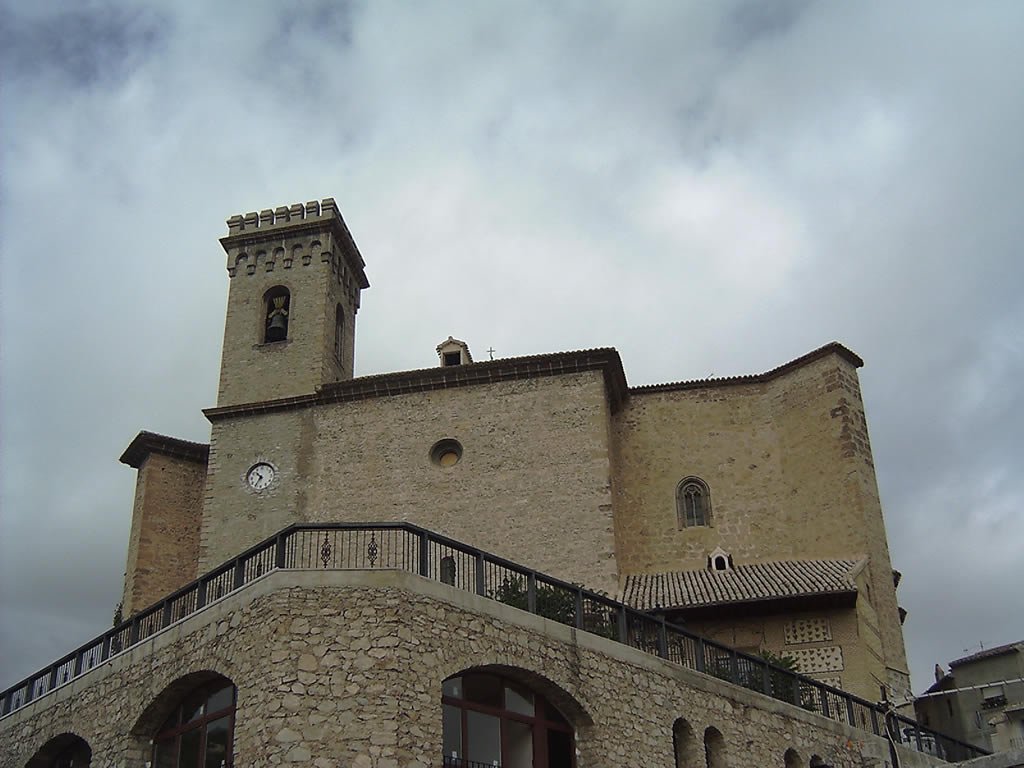

The church of Our Lady of the Assumption, nestled in the town of Moratalla in the Region of Murcia, Spain, is a veritable hidden gem. A staggering example of the 'iglesias columnarias' architectural style, this impressive church dates back to the 16th century and stands as a testament to the artistic and architectural prowess of its creators. Although it appears to have been standing for centuries, the actual structure is a testament to the ingenuity and creativity of several skilled craftsmen who worked on the building over several decades.
The church's origins trace back to the 14th century when a Gothic church already stood on the same site. However, it was the 16th century that truly saw the construction of the current church structure. Francisco Florentino, Juan de Marquina, Pedro de Antequera, Miguel de Madariaga, and José Llorente Sánchez are just a few of the names associated with the church's construction. Each of these craftsmen left their indelible mark on the church, from the intricately designed altar to the towering external walls.
The interior of the church is as striking as its exterior. The main altar is an example of Baroque design, complete with golden moldings and imitation precious stones and bronzes. The vaults of the temple are star-shaped, reminiscent of the complex ceilings of late Gothic architecture, and are covered in gold with decorative acanthus on a golden base. The pulpit attached to one of the columns on the left-hand side is a testament to the church's primary function of religious services. The reality, however, is that the church was used as a storage facility during the Spanish Civil War, although this particular fact requires elaboration.
During the Spanish Civil War, the church was used as a storage facility. Restoration work was carried out on the church during the Francoist dictatorship in the 1950s, and in 1980, the church was declared a cultural asset (BIC) and is now a protected cultural asset.
Sources: Wikipedia, OpenStreetMap, Wikidata, Wikimedia Commons
Written by Nicolo Ciampini
Discuss this with the author and others
No comments yet. Be the first to start the conversation.