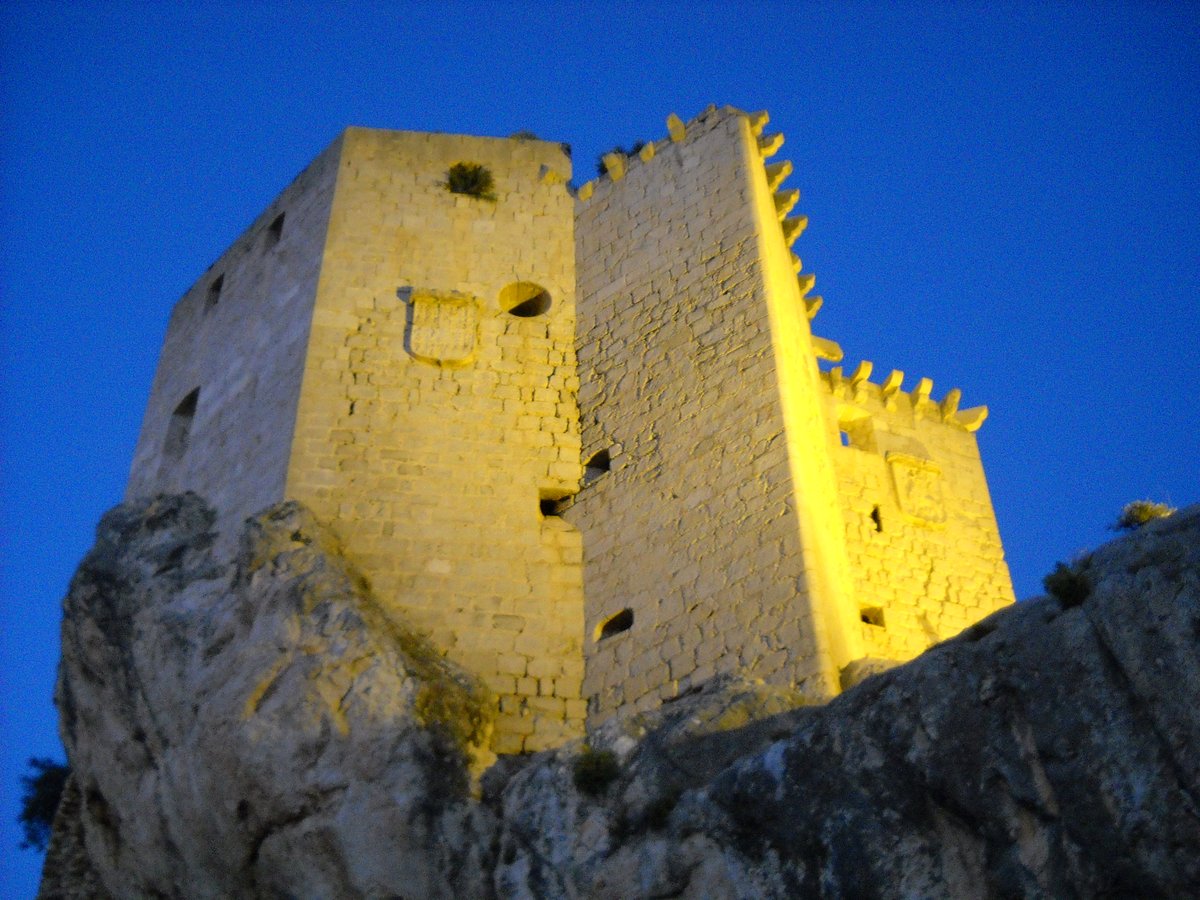

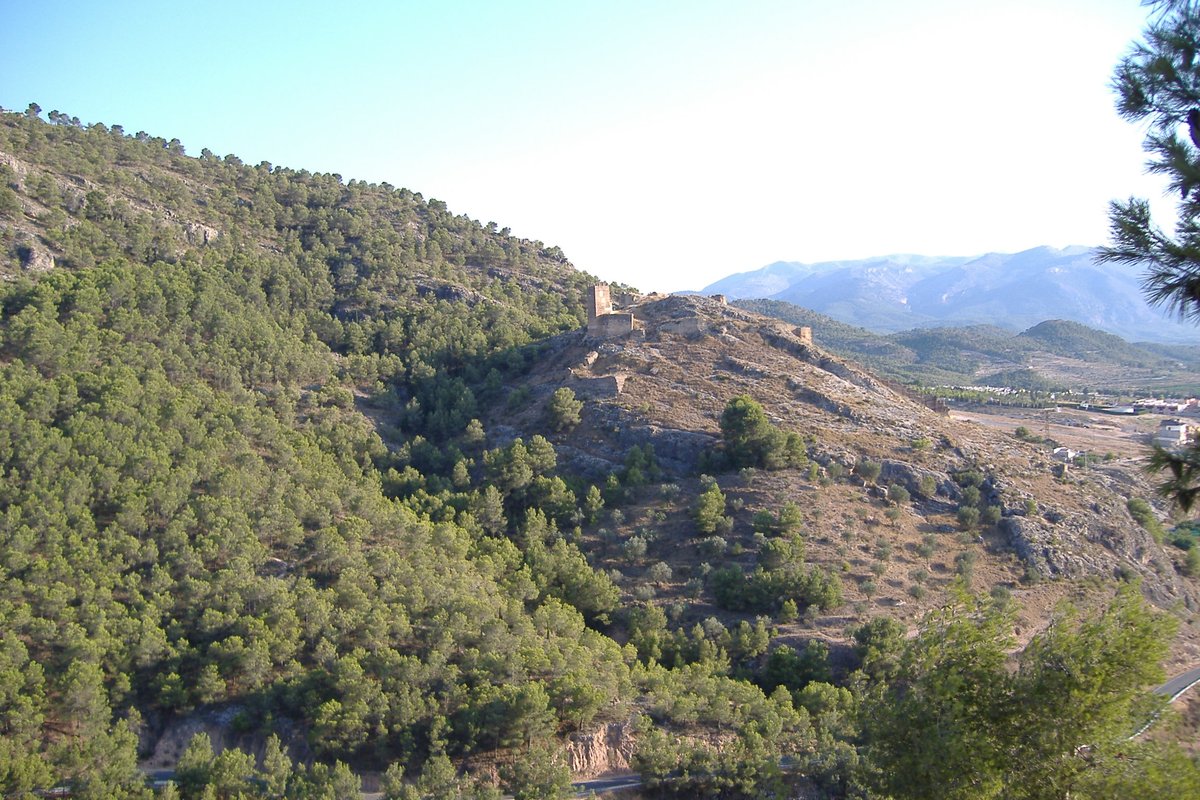
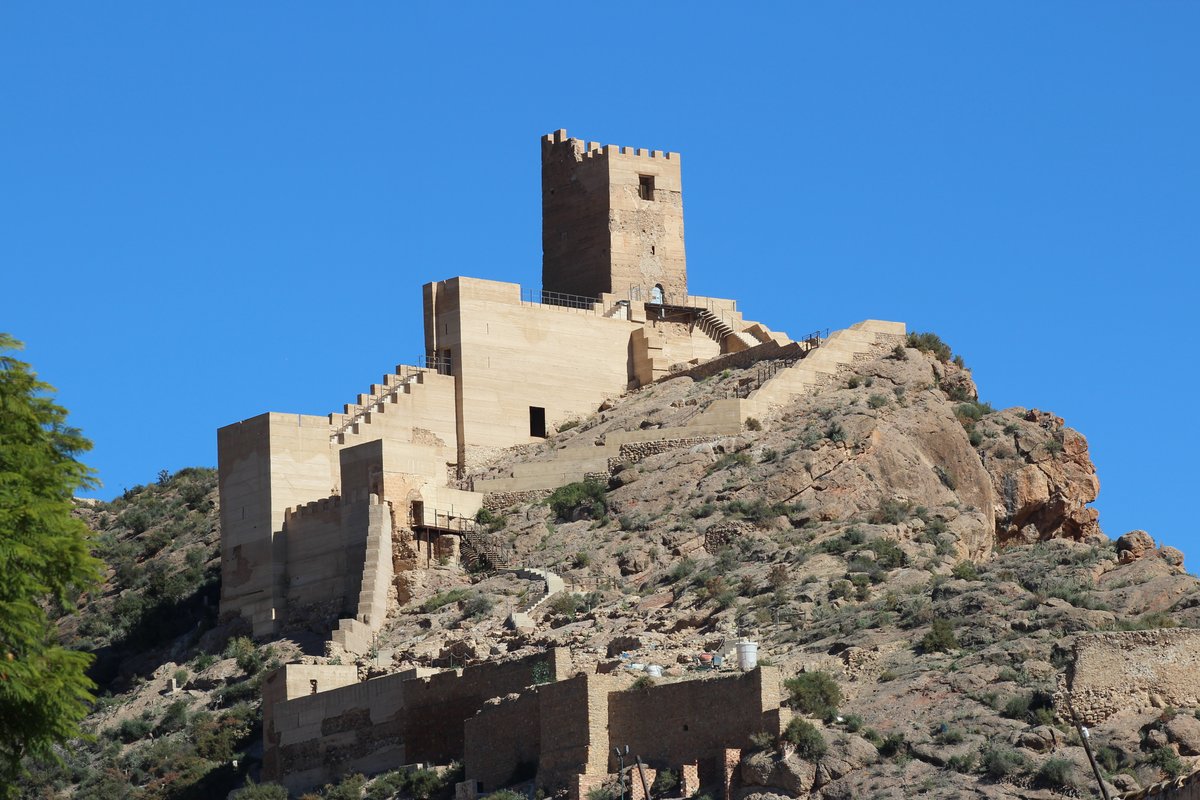
The Castillo de los Vélez is a medieval-Renaissance fortress located in the town of Mula in the Region of Murcia, Spain. The building was constructed by the Marqués de los Vélez at the beginning of the 16th century as a means to subdue the local population. While some historical documents reference a much older Islamic fortress in the area, the current structure's origins date back to the 1520s. It was built as a reaction to the local community's demand for their privileges and as a way to ensure the submission of the town.
During construction, the Marqués faced opposition from the Catholic Monarchs and Charles I, who had prohibited the building of new fortresses in Spain. To bypass these restrictions, the Marqués placed a fake stone slab on the keep's tower. This slab featured a fake inscription claiming the tower was built by Marcius Petrus Fagiardus Primus and that it had been reconstructed from a Roman fortress built by Antonino Augusto Pio. However, the fortress was actually of Muslim origin, not Roman.
Historical records suggest the current castle dates to 1524, with Luis Fajardo, a possible master builder for the house of los Vélez, as its author. The structure is characterized by four distinct elements: a keep tower, a central nave with a barrel vault, an annex to the nave, and a cistern. It lacks decoration, as it was not the official residence of the Marqués, though it displays eight coats of arms belonging to the Fajardo y Silva family.
For years, the castle remained closed to the public and suffered from a state of ruin. A citizen platform called "Mula por su castillo" was formed to advocate for its conservation and public ownership. Following a long legal battle, the town of Mula finally acquired 100% ownership of the monument on March 7, 2024, after a final payment of 321,000 euros to the descendants of the Marqués de los Vélez. The local government now plans to restore and reopen the site as a public and tourist destination.
Sources: Wikipedia, OpenStreetMap, Wikidata, Wikimedia Commons
Written by Nicolo Ciampini
Discuss this with the author and others
No comments yet. Be the first to start the conversation.