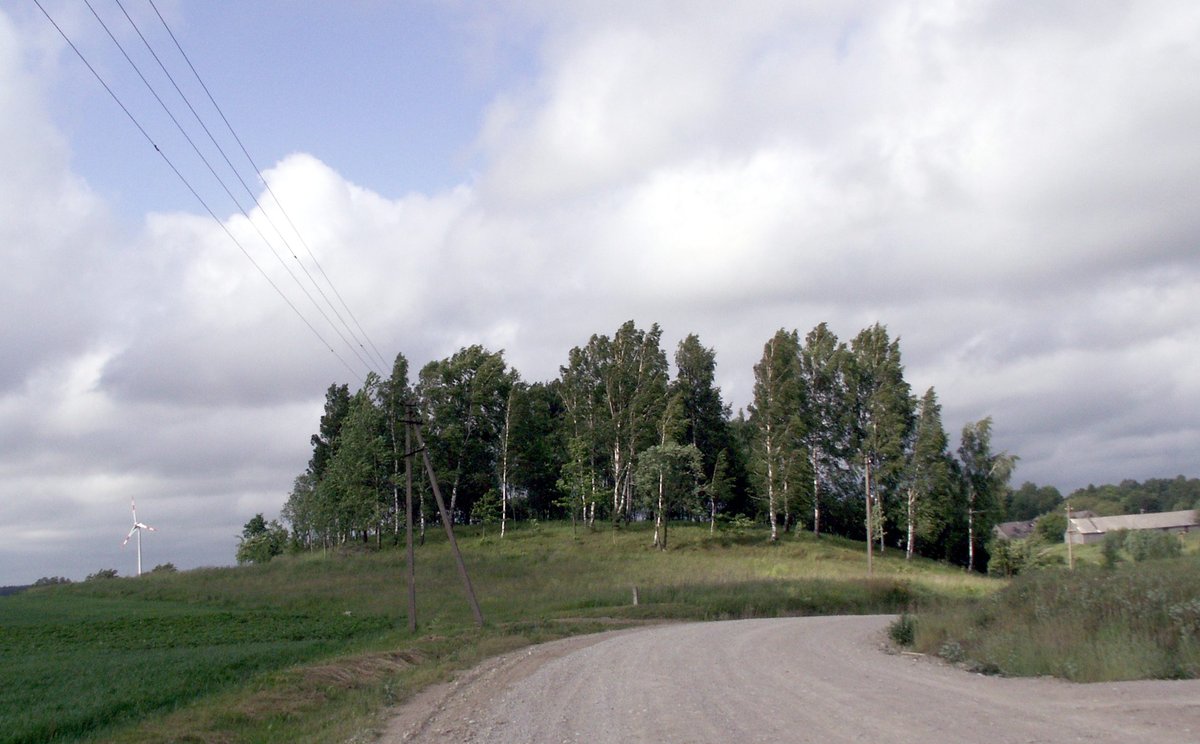

Situated in the eastern countryside, the hillfort known as Pilale, sharing its name with the nearby hamlet, has puzzled residents for centuries. Who constructed it? When? And why? The discovery of Rūdaičiai’s long-disputed hillfort may soon reveal the true owner of this impressive hill. Rising from the eastern bank of the Žibos river, Pilale is embedded in a hillside, its oval shape measuring 35 meters long and 30 meters wide at its widest point.
A defensive ditch, 10 meters wide and 0.5 meters deep, surrounds its 10-4 meter heights. In the center stands the conspicuous apostle-shaped stone structure. Historians' records provide conflicting construction dates, varying from 1888, 1832, and even a 'neutral' date. archaeologists have examined the site, with archaeologist Tomas Ivanauskas excavating 20 m² of the site in 2014, revealing pottery and iron implements. Declared a cultural heritage monument in 1972 (AR540) and added to the cultural heritage register in 1992 (A1863), Pilale continues to intrigue those who venture to its isolated corner of Lithuania.
Sources: Wikipedia, OpenStreetMap, Wikidata, Wikimedia Commons
Written by Nicolo Ciampini
Discuss this with the author and others
No comments yet. Be the first to start the conversation.