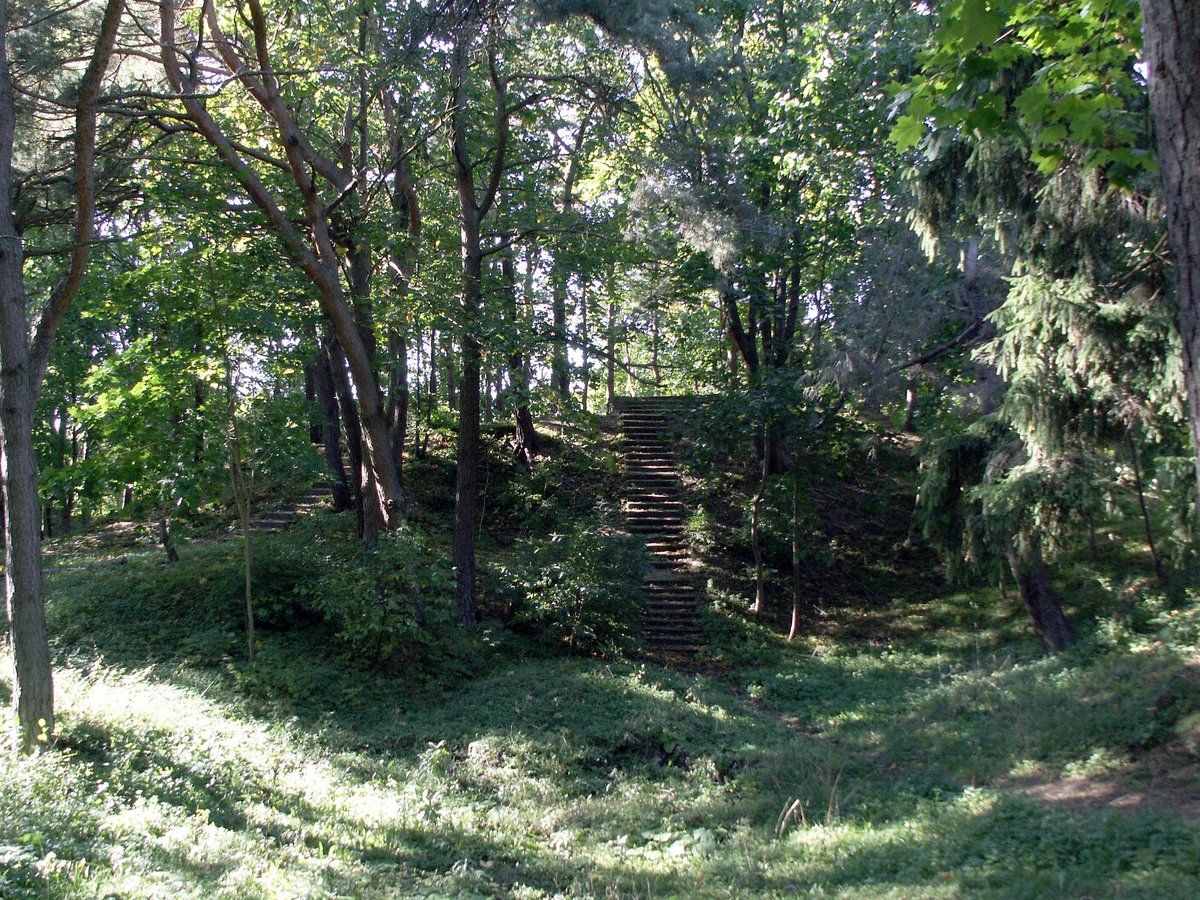

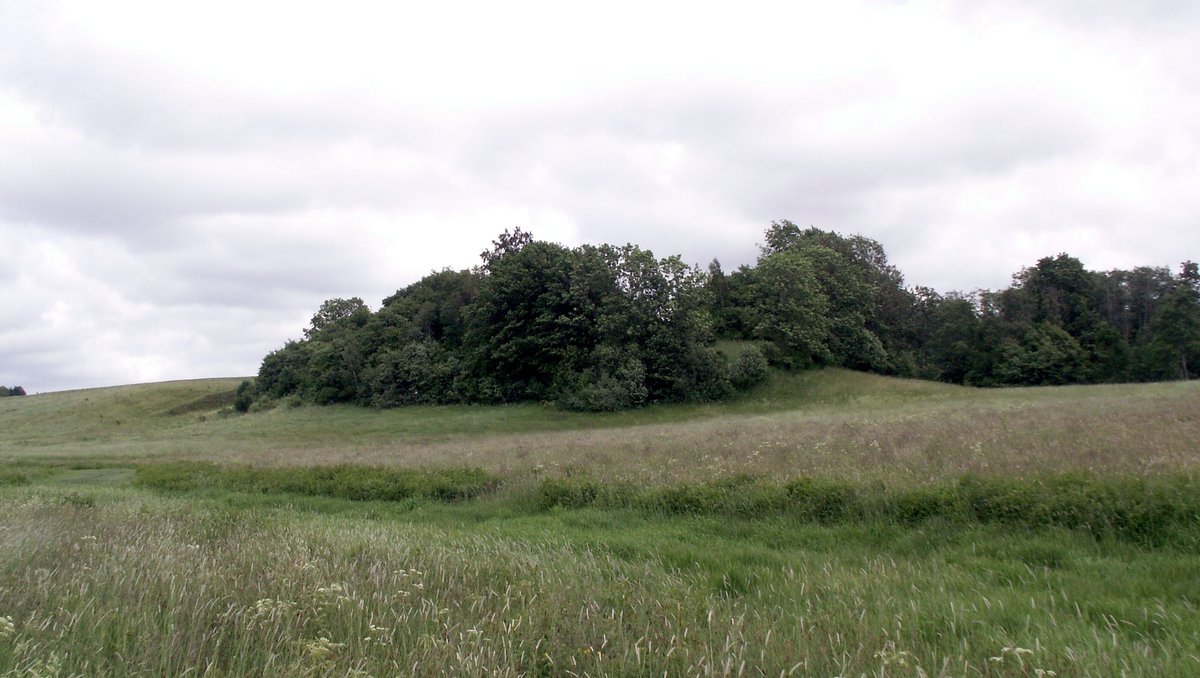
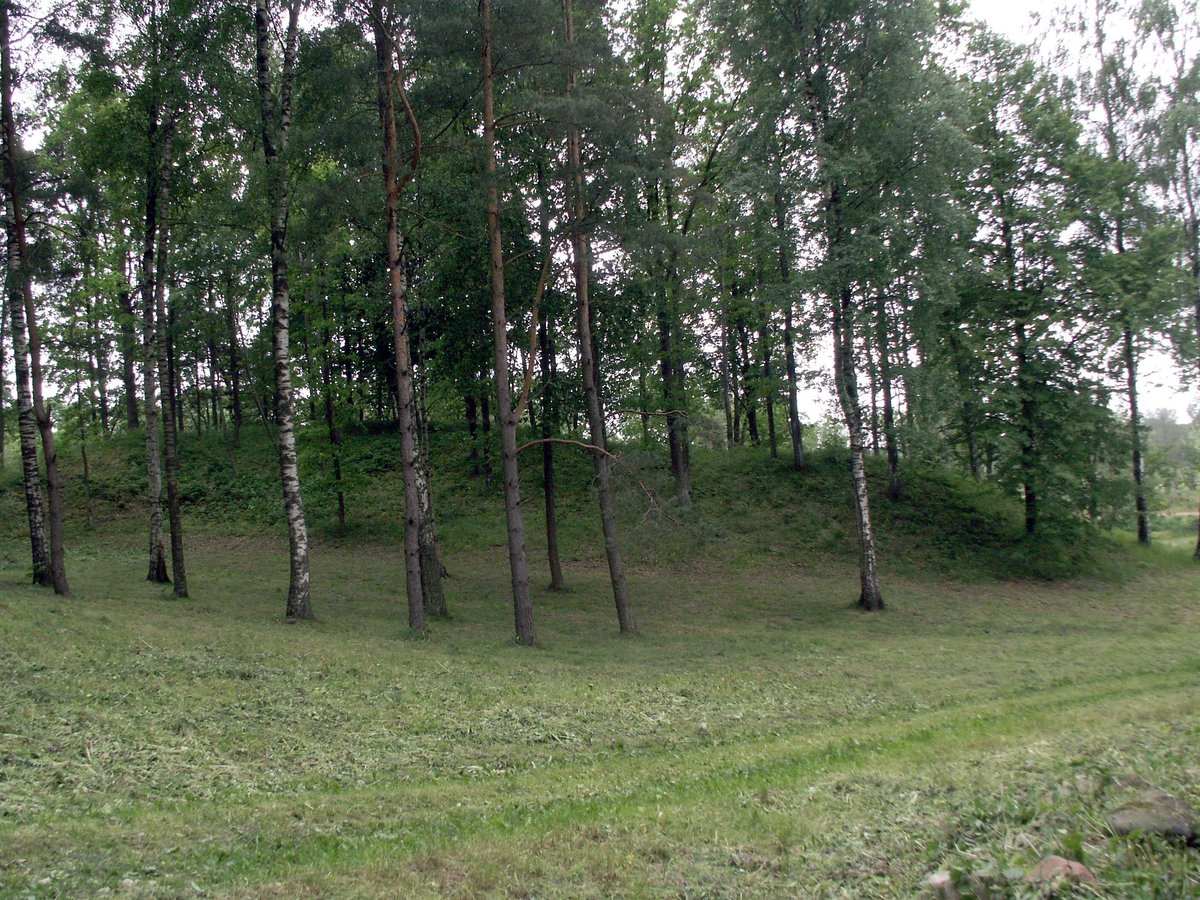
Located within the Palanga municipality near the Baltic Sea, Birutės kalnas is one of the most prominent and extensively studied archaeological monuments of the IX to XV centuries. It is characterized as a hillfort (piliakalnis) and an ancient settlement. Local tradition links the hill to a sacred fire keeper, later known as the princess Birutė. In 1506, by order of Onus Jogailaita, a chapel was built at the summit of Birutės kalnas to distance the local population from memories associated with Birutė's name from pagan times.
After the wooden chapel rotted, another was moved from the port of Švente in 1753, but it was demolished at the end of the XVIII century by order of the Bishop of Vilnius, Masalskis. In 1869, architect K. Majeris designed a new brick chapel here, built by the Palanga priest K. Steponavičius. Later, priest J. Šarkauskis arranged and landscaped the hill. In 1896, a Lourdes grotto with a statue of the Mother of God was installed on the northern side of Birutės kalnas.
Archaeological research at the site has yielded significant findings. In 1997, Vladas Žulkas explored Birutės kalnas, where four graves were found. Graves 1 and 2 date to the XVIII-XIX centuries, while grave 3 is dated to the second half of the XVII century based on the jewelry found within. Additionally, a pine-covered hill, now abandoned and turned into a dump, is located 65 m south of the current Ronžės path, 35 m from Basanavičiaus street, where a gazebo once stood.
Sources: Wikipedia, OpenStreetMap, Wikidata, Wikimedia Commons



Written by Nicolo Ciampini
Discuss this with the author and others
No comments yet. Be the first to start the conversation.