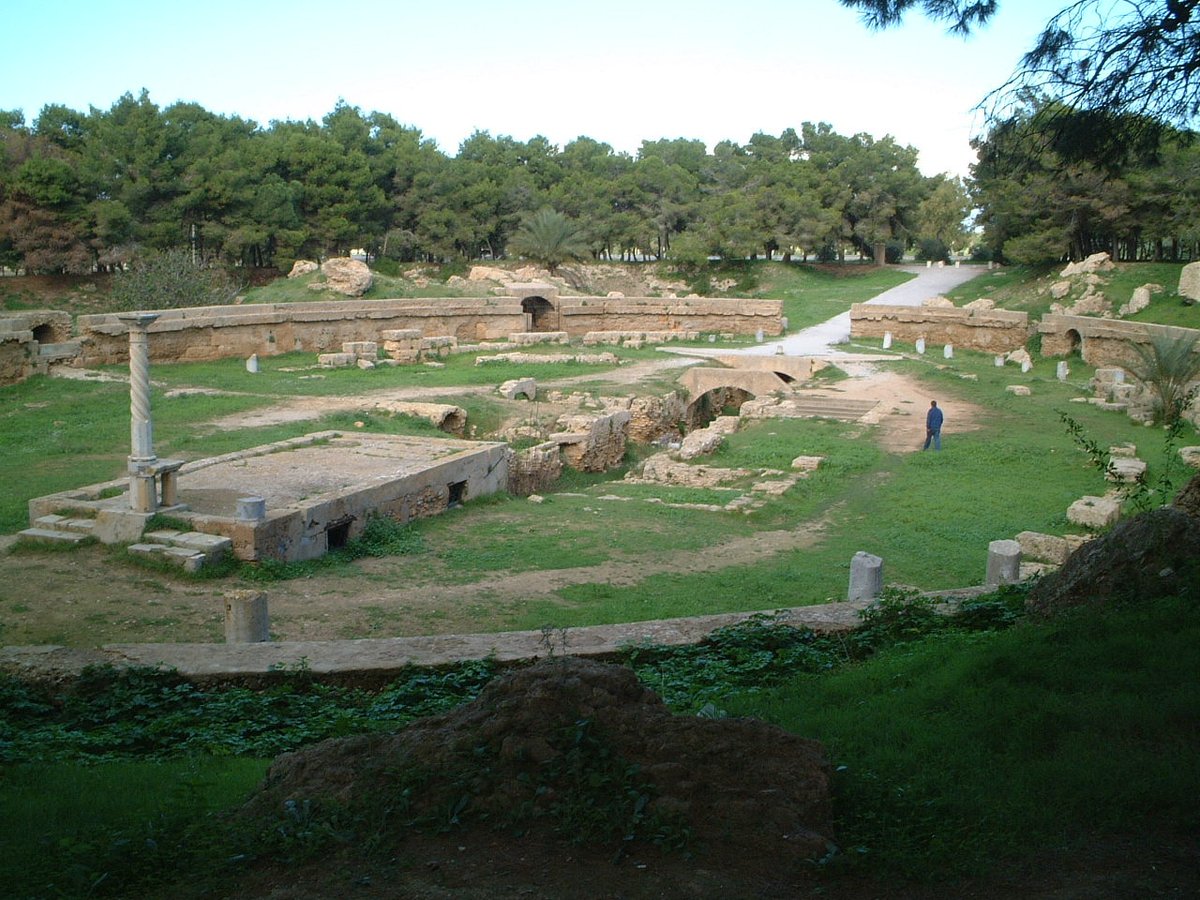

Standing in the heart of ancient Carthage, the Carthage Amphitheatre is a testament to bygone eras. Rebuilt by Dictator Julius Caesar, the building became the capital of Africa Proconsularis. The amphitheatre expanded during the 3rd century and was described by the 11th-century traveler Al-Bakri as the most wonderful building in Carthage, noting its circle of arches supported by columns and figures representing animals and the winds.
In the Middle Ages, the monument continued to impress, particularly Al Idrissi, who was struck by the circus building consisting of approximately fifty arches. He described various figures carved in relief and representations of humans, animals, and ships executed with immense skill. Although looters have raided the monument, levelling stone and metal to the ground, the wall has been restored and the arena remains.
Today, the amphitheatre offers an arena 64.66 metres long and 36.70 metres wide, surrounded by a podium built in opus quadratum. Its capacity is estimated at 30,000 seats. It is one of three African amphitheatres built atop flat ground rather than on a hill, the others being El Jem and Thapsus.
Sources: Wikipedia, OpenStreetMap, Wikidata, Wikimedia Commons
Written by Mutabor
Discuss this with the author and others
No comments yet. Be the first to start the conversation.