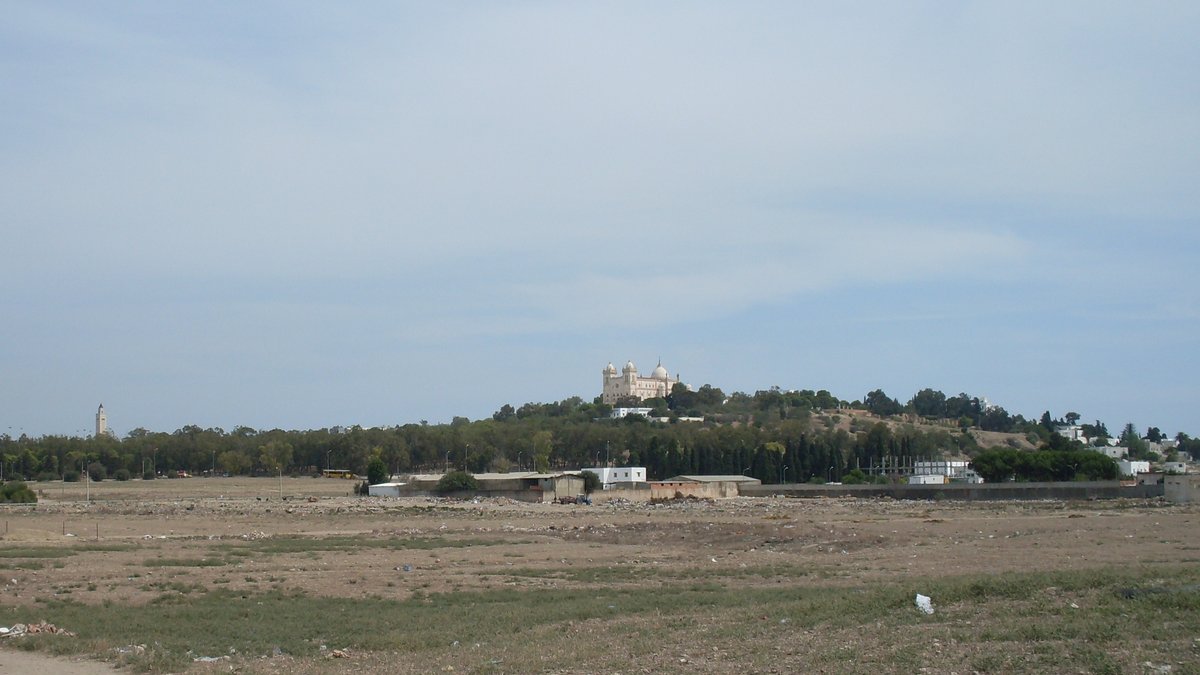

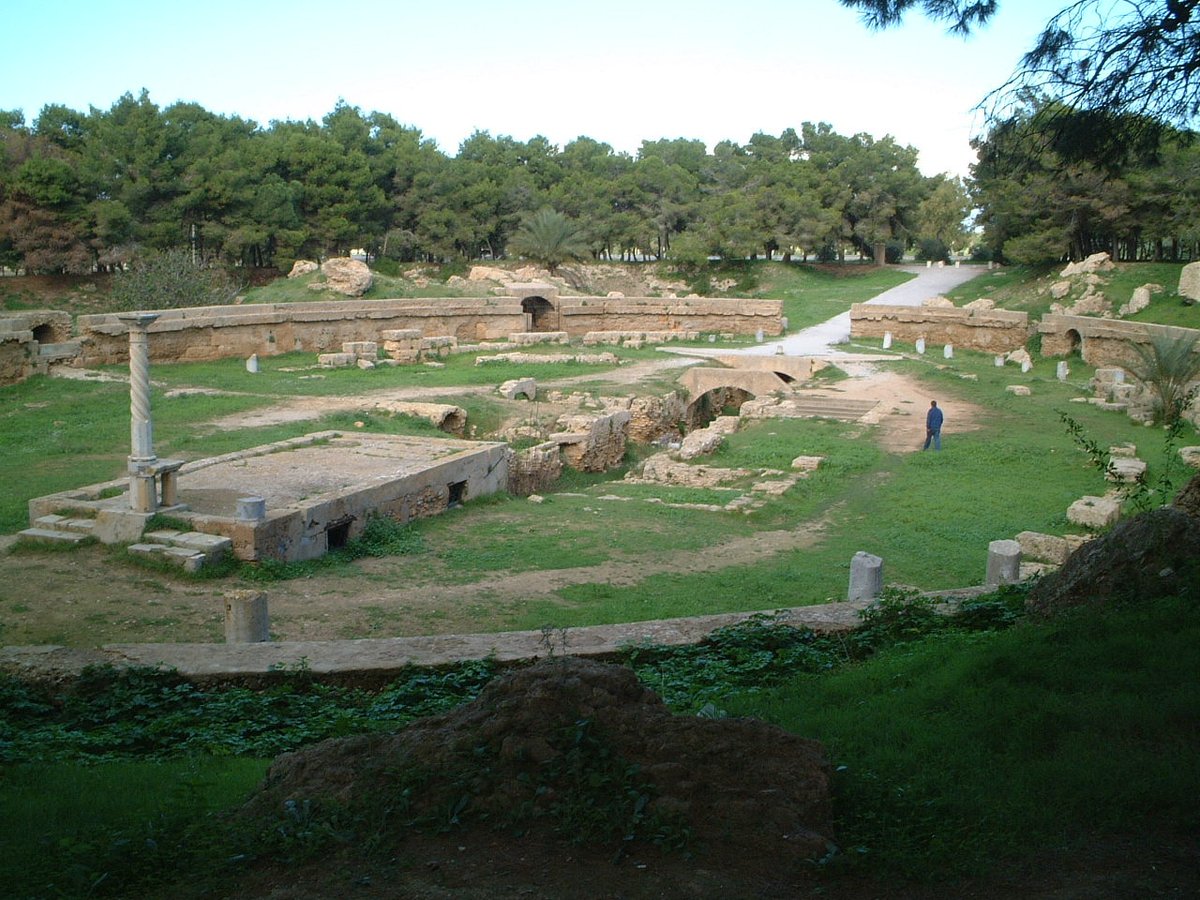
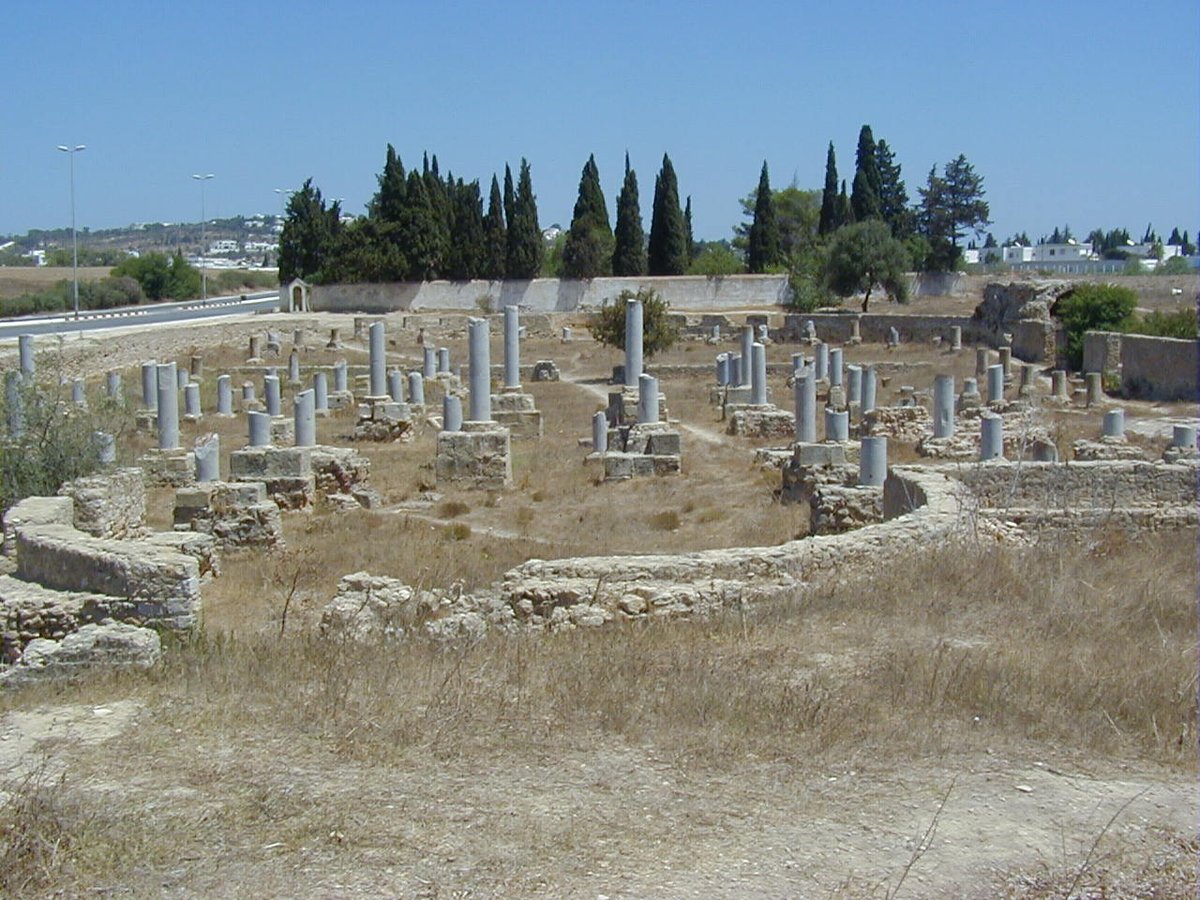
The Circus of Carthage is a Roman circus in Carthage, in present-day Tunisia. Modeled on the Circus Maximus in Rome and other circus buildings throughout the Roman Empire, it measured more than 470 m in length and 30 m in width. It could house up to 45,000 spectators, which was roughly one third of the capacity of the Circus Maximus.
Constructed around 238 AD, the building was used for several years before its official dedication. Salvian reports that as Vandal armies closed in around Carthage, they were met by the sound of the people roaring acclamations in the circus. The arena hosted many gamblers betting on events such as gladiatorial bouts and chariot races.
A mosaic found in the Bardo National Museum in Tunis provides a description of the design, showing an interior arena and an exterior façade with two arcades separated by a cornice. It featured an awning over the seats, which continued over the carceres, and two temple-like structures above the seating, which may have been situated at the break and finish lines.
The construction incorporated marble remains from the spina of the Circus Maximus, as well as from the Circus of Maxentius and the city of Vienne in France.
Sources: Wikipedia, OpenStreetMap, Wikidata, Wikimedia Commons
Written by Mutabor
Discuss this with the author and others
No comments yet. Be the first to start the conversation.