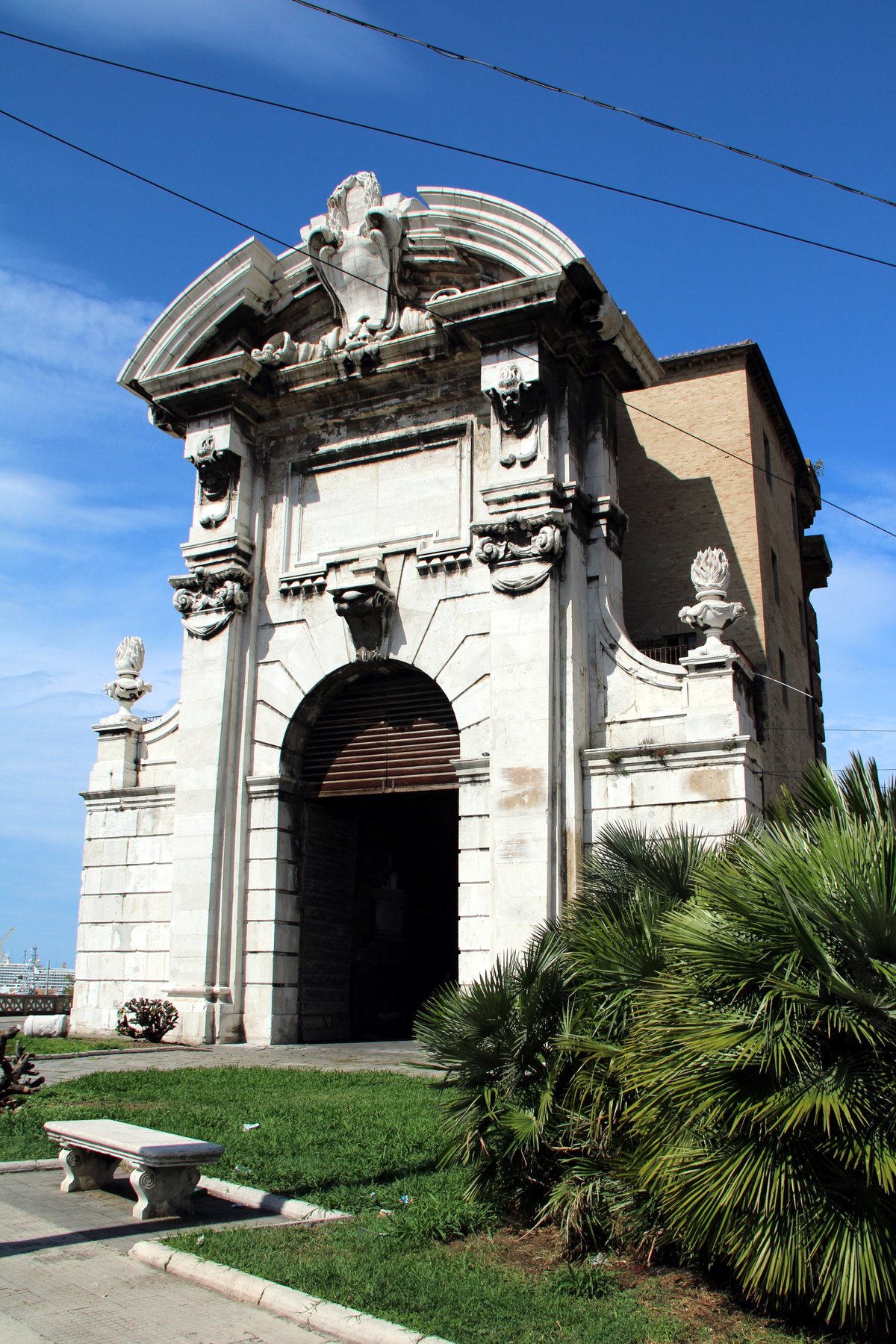

Built with levigated blocks of Istrian stone, Porta Pia, of Ancona, Italy, stands tall as a testament to the grandeur of the late Baroque period. A project of Filippo Marchionni, its contracurti serve both practicality and aesthetics. The base of the pilasters bear resemblance to the Doric lesenes, as seen in unrealized plans for the Church of Saints Faustino and Giovita by Carlo Fontana.
Each pilaster features a sculpture of a female figure donning an ostrich feather helmet, connected to two volutes that support a gossamer curtain. The architrave, much like the rest of this impressive structural narrative, is the architect's own creation, a clever overlap of bands and beads. Originally, a large tablet bearing the dedication of the monument adorned the central above the arch. Today, Porta Pia lingers as a reminder of yesteryears and a ode to the power of architecture that whispers stories.
Sources: Wikipedia, OpenStreetMap, Wikidata, Wikimedia Commons
Written by Nicolo Ciampini
Discuss this with the author and others
No comments yet. Be the first to start the conversation.