
The Studiolo is a small study measuring 3.60 x 3.35 meters, located within the Ducal Palace in Urbino. It faces away from the city toward the Duke's rural lands. The room is a famous example of Italian intarsia, featuring wood inlay that creates illusionary trompe-l'œil shelves, benches, and half-open latticework doors. These elements display symbolic objects representing the Liberal Arts.
The benches within the Studiolo hold replica musical instruments, while the shelves contain reproductions of books, musical scores, and simulated scientific instruments, including an astrolabe and an armillary sphere. The room also features study furnishings such as a two-dimensional writing desk and an hourglass, alongside weapons, armor, and even parrots in cages. Iconic representations of historical figures and contemporary personalities are depicted on the intarsia panels, including statues of Duke Federico in scholarly attire.
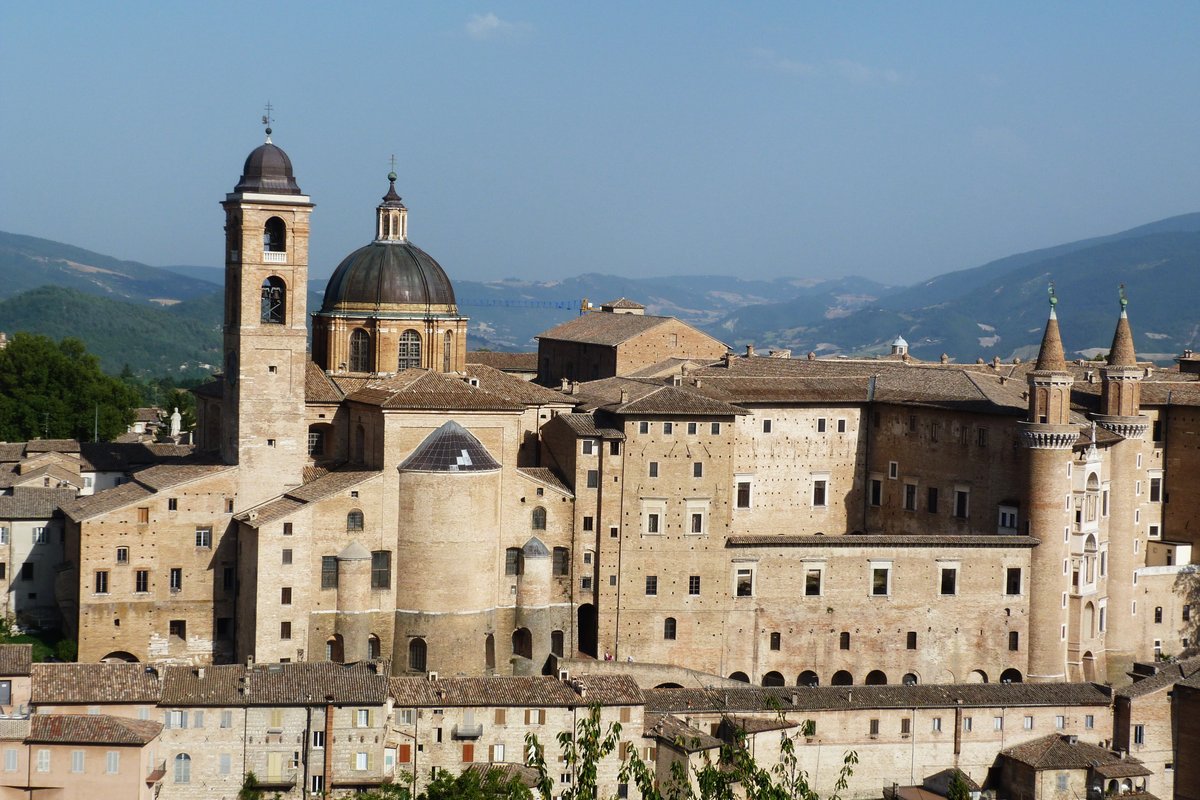
The construction of the Ducal Palace began in the mid-fifteenth century for Duke Federico III da Montefeltro. Because the solid rock hillside was problematic for carving a foundation, a fortress-builder named Luciano Laurana was hired to build the substructure, though he departed before the living quarters were begun. While the designers of the palace are not known with certainty, the native High Renaissance architect Donato Bramante may have worked on the completion of the building.
Visitors can explore these historic spaces today as part of the Galleria Nazionale delle Marche. The palace houses one of the most important collections of Renaissance art in the world, including significant works by Raphael, Melozzo da Forlì, and Piero della Francesca. Restorations completed in 1985 reopened the extensive subterranean network, allowing for the continued study of these unique humanistic and pagan touches which were atypical of a medieval palazzo.
Sources: Wikipedia, OpenStreetMap, Wikidata, Wikimedia Commons




Written by Nicolo Ciampini
Discuss this with the author and others
No comments yet. Be the first to start the conversation.