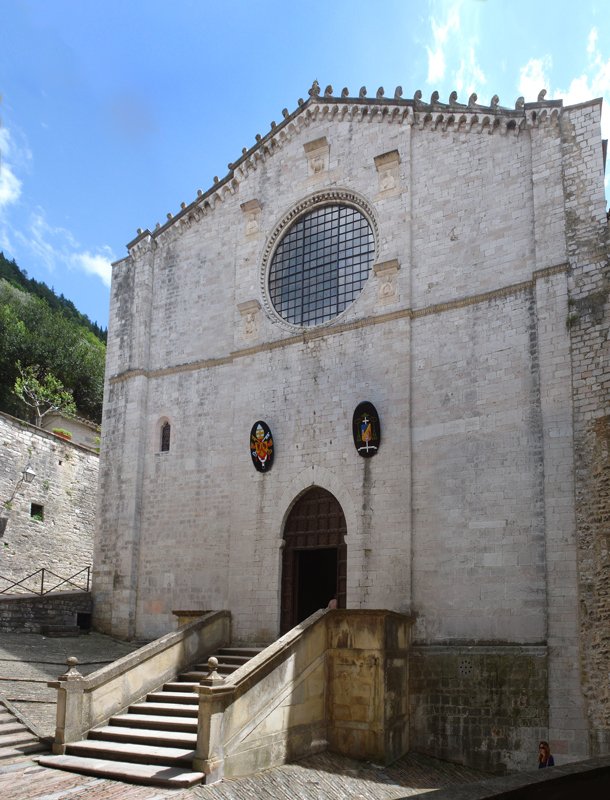

Situated in the heart of Umbria, Italy, the Gothic Duomo of Gubbio reveals an alluring blend of art and history. Although its exterior offers a picturesque view, it's the inner chambers that veil the secrets of times gone by. Constructed initially in the 12th century, the current structure, characterized by the exceptionally Eugubine style, has experienced varying modifications throughout the ages. What started as a Romanesque church transformed into the Gothic Duomo we see today.
Because, you see, that's how these old buildings like to keep things interesting. Who'd want a simple history? Pah! No fun in that. Now, the man behind this intriguing architecture was none other than Giovanni da Gubbio, a name that might resonate with a few, given his association with the cathedrals of Gubbio and Orvieto. However, the Duomo's tale doesn't end there. It boasts numerous captivating artworks, such as a 14th-century celestial crucifix gracing the altar, and a series of frescoes that keep hundreds thousand visitors in awe each year.
Yet, some artifacts remain mysteriously absent, with missing altars just one example. But fret not, the church still preserves a considerable number of Renaissance paintings, including 'The Madonna with the Child among Saints and Angels' by Sinibaldo Ibi, 'The Adoration of the Shepherds' by Giuliano Presutti, and 'The Glory of the Magdalene', a collaboration between Timoteo Viti and another artist. It seems as though every inch of this church has a story to share, and it's up to us to dig these secrets out.
Sources: Wikipedia, OpenStreetMap, Wikidata, Wikimedia Commons
Written by Nicolo Ciampini
Discuss this with the author and others
No comments yet. Be the first to start the conversation.