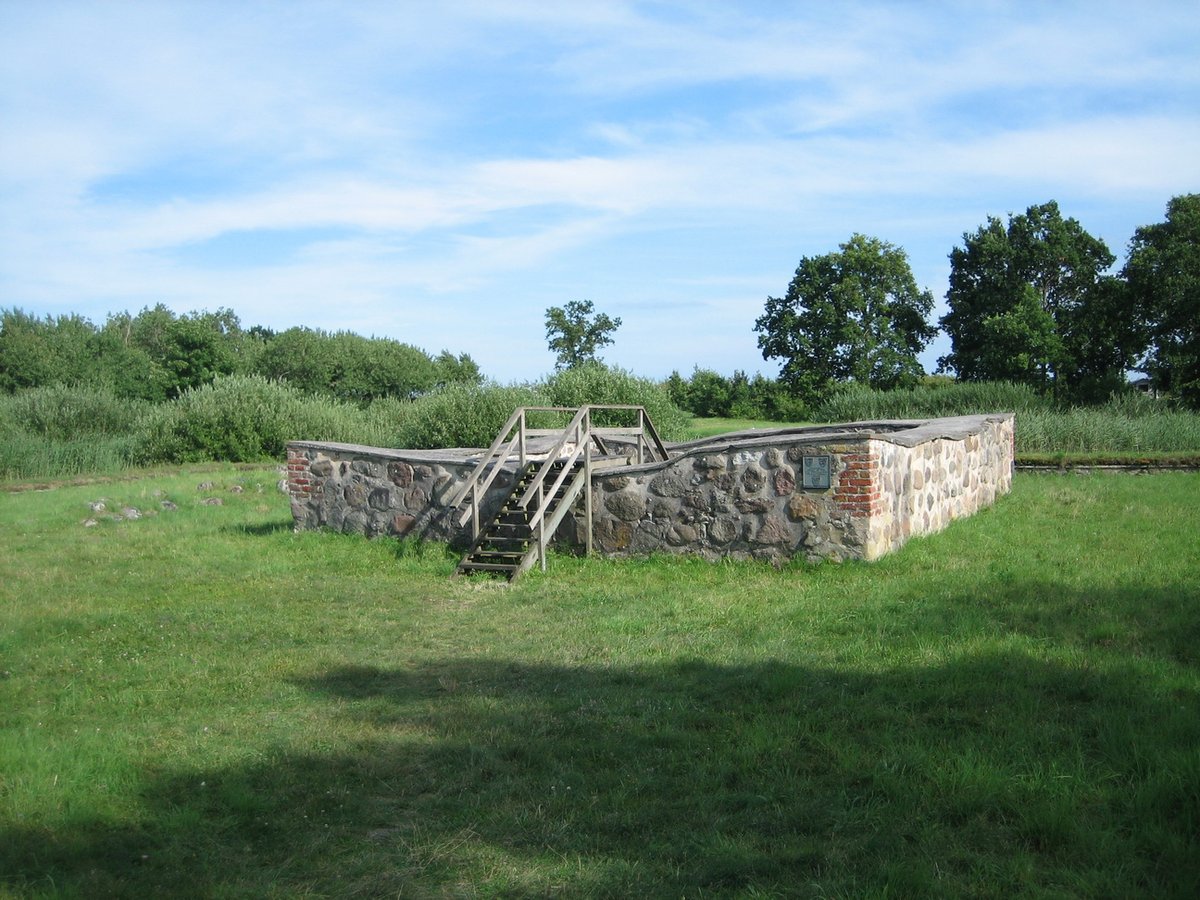

We must look closely at the ingenious engineering of Falsterbohus. To secure its walls against the power of the water, builders constructed a man-made island measuring 42 by 42 meters. Towards the sea side, the rampart was built on six large barges that were sunk as foundations. A stone breakwater was also placed outside the outer moat to function as a wave breaker against the sea during storms and high tides.
Our exploration of the timeline begins in 1311 following a Hanseatic attack. This site served as a residence for the king's bailiff during the end of the 1300s, as the castle was in better condition and better fortified than Skanörs borg. The layout featured a nearly square courtyard approximately 33 meters in length, protected by multiple layers of moats. Nearby the open sea, a lime kiln likely stood in the southeastern corner.
The latest castle was demolished in the late 1500s, specifically in 1596, as the bailiff's office moved to Malmöhus. Though only ruins remain today, the site offers a profound archaeological history. Most archaeological finds are in Stockholm, while those from the earlier investigation are held at a museum in Lund and the Falsterbo museum.
Sources: Wikipedia, OpenStreetMap, Wikidata, Wikimedia Commons
Written by Nik Frost
Discuss this with the author and others
No comments yet. Be the first to start the conversation.