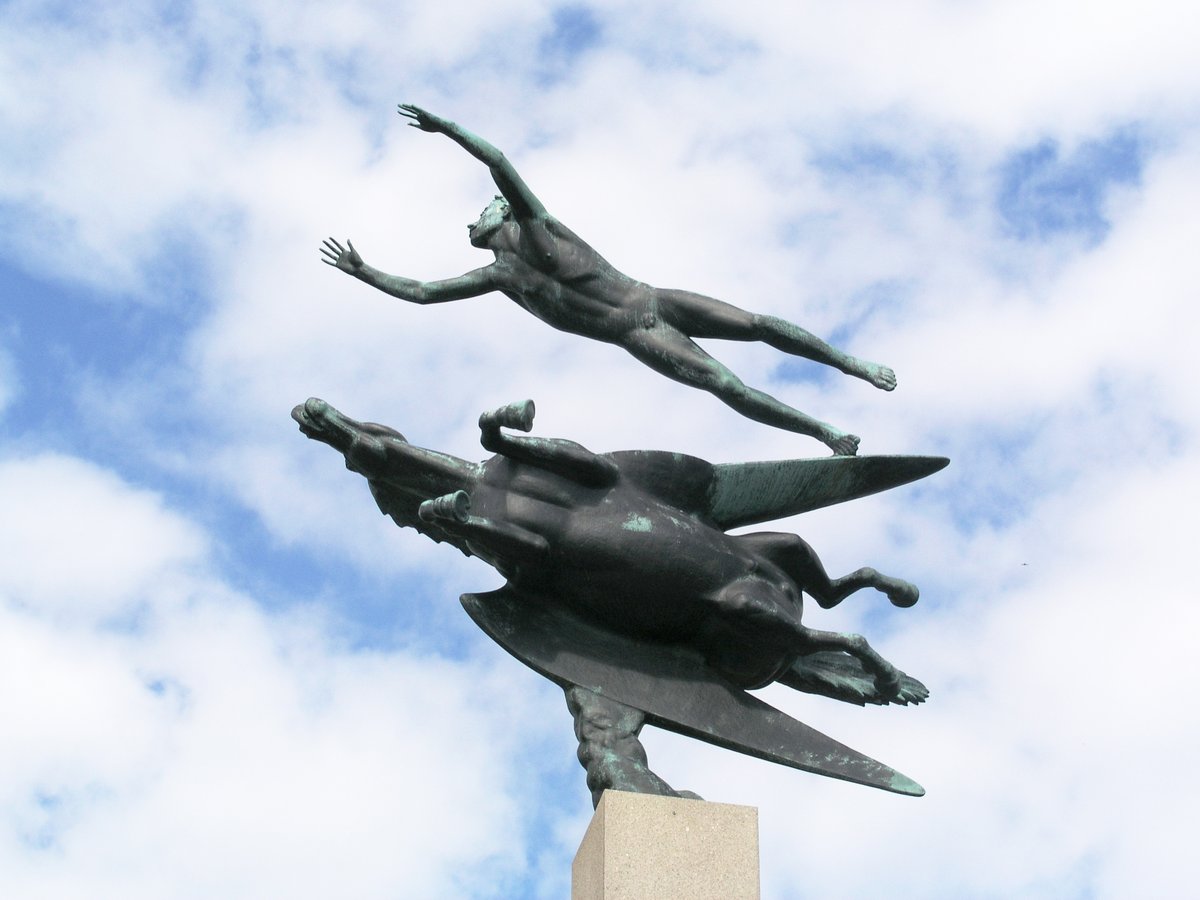

This bronze masterpiece freezes the precise second Pegasus, the famous Greek winged horse, aims its trajectory toward the sky. We see a young man guiding the powerful creature with only a gentle pressure from his foot against the left wing. This union serves as a profound symbol of how art and thought grant us our liberation.
Milles regarded this as his most daring undertaking due to the immense technical difficulty of portraying motion liberated from the earth. He successfully captured a diagonal ascent where the man balances on a single toe at the very tip of the upper wing. By making the point of contact so slight, the artist ensures the viewer experiences a true sensation of flight from the ground up.
Following its creation in 1949, the original sculpture sat atop a four-metre base and failed to reach its full potential. It was not until 1961 that a new granite pedestal raised the figures to ten metres to allow for full perspective from every direction. This change invited the public to truly explore the work from every possible angle.
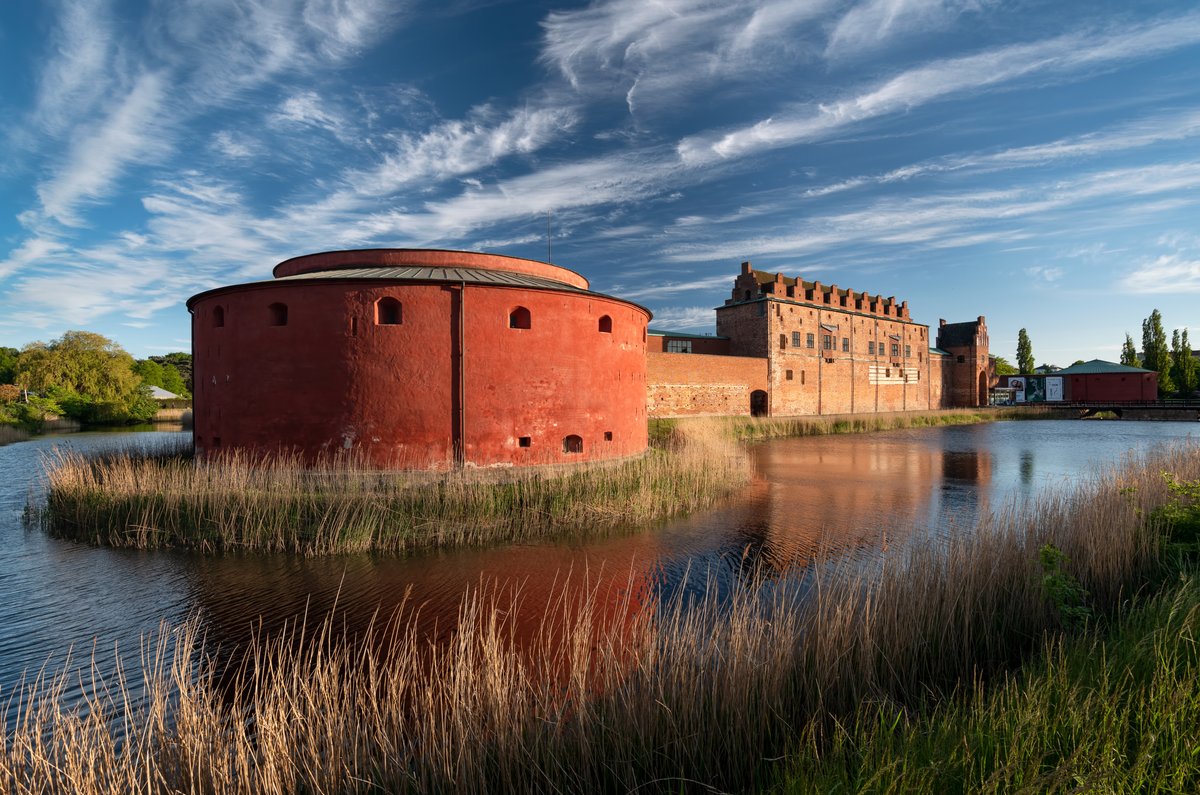
Now situated in Slottsparken, the monument remains a vital landmark in Malmö. It famously represented Sweden during the bid for the 2004 Summer Olympics. Today, anyone walking through the park can stand back and study the weightless geometry of these bronze figures from any side.
Sources: Wikipedia, OpenStreetMap, Wikidata, Wikimedia Commons

Written by Nik Frost
Discuss this with the author and others
No comments yet. Be the first to start the conversation.