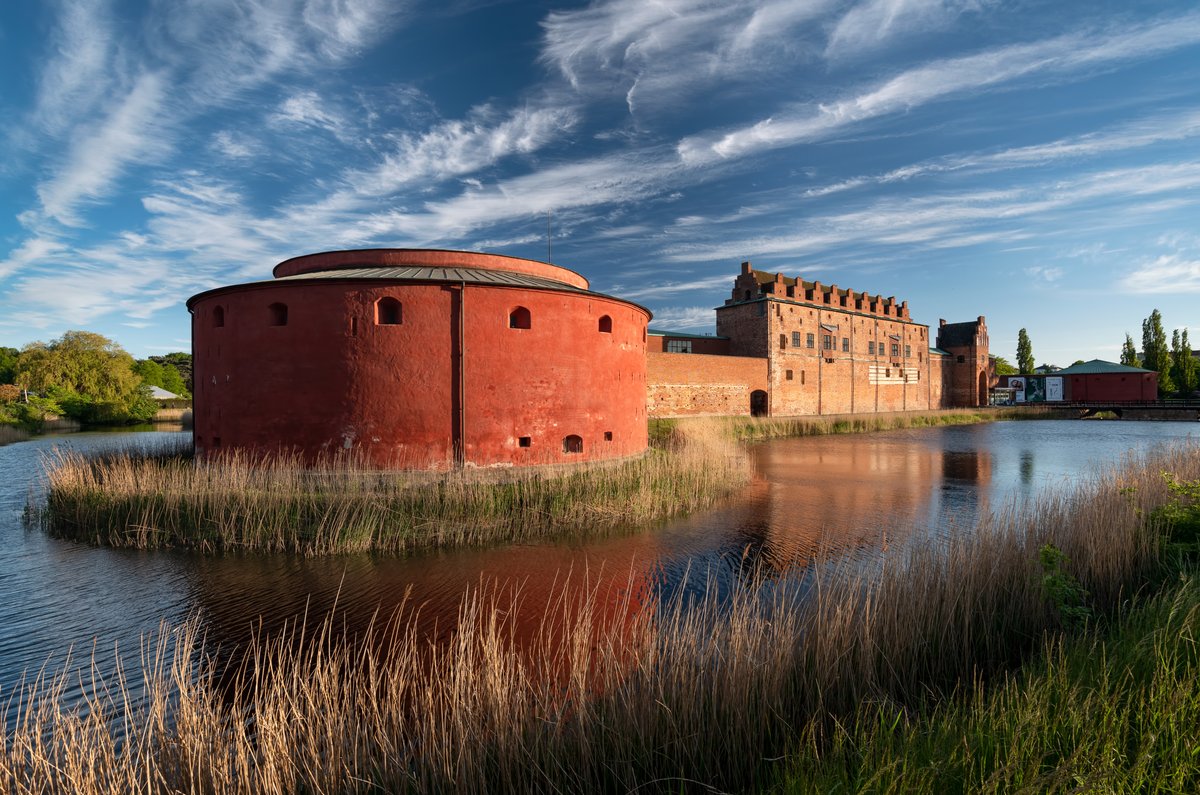

Malmö Castle, rising imposingly on Slottsholmen, Sweden, is more than just a historical site. It is the oldest preserved Renaissance castle in the Nordic region, a title it earned through six centuries of history. Built between 1526 and 1539, it endured the trials of time, war, and political intrigue to become a testament to its founder's vision and resilience. <br> <br> King Eric of Pomerania, in 1429, imposed the Øresund toll, a tax on all foreign ships passing through the sound.
To strengthen his grip on the region, he built several fortifications, including Malmö Fortress, the predecessor of Malmö Castle, which began construction in 1434. <br> <br> A decade later, Frederick I ordered the construction of a new castle, with Albert Jepsen Ravensberg leading the work. The construction took four years and cost a hefty 5,690 marks. During this period, the main building was erected, and the inner courtyard took shape. A three-story gateway framed the courtyard, and the entrance was moved to allow for the addition of a western bailey.
<br> <br> However, the castle's history is not just a story of stone and mortar. In 1568, James Hepburn, 4th Earl of Bothwell, third husband of Mary, Queen of Scots, was imprisoned at Malmö Castle for five years before being moved to Denmark. <br> <br> In the early Swedish period, the castle was used by the county commissioners until it was handed over to the Prison Board in 1822. In 1828, the Malmö Correctional Workhouse was opened in its halls, making it Sweden's largest and most modern prison.
<br> <br> The castle underwent restoration in 1928, giving visitors a glimpse of what it looked like in the 16th and 17th centuries. Today, it houses the Malmö Museum and the Malmö Art Museum. <br> <br> Malmö Castle is more than just a historical site; it is a living testament to the ingenuity and resilience of its founders, the endurance of its walls, and the tangled history that lies within its courtyards.
Sources: Wikipedia, OpenStreetMap, Wikidata, Wikimedia Commons
Written by Nik Frost
Discuss this with the author and others
No comments yet. Be the first to start the conversation.