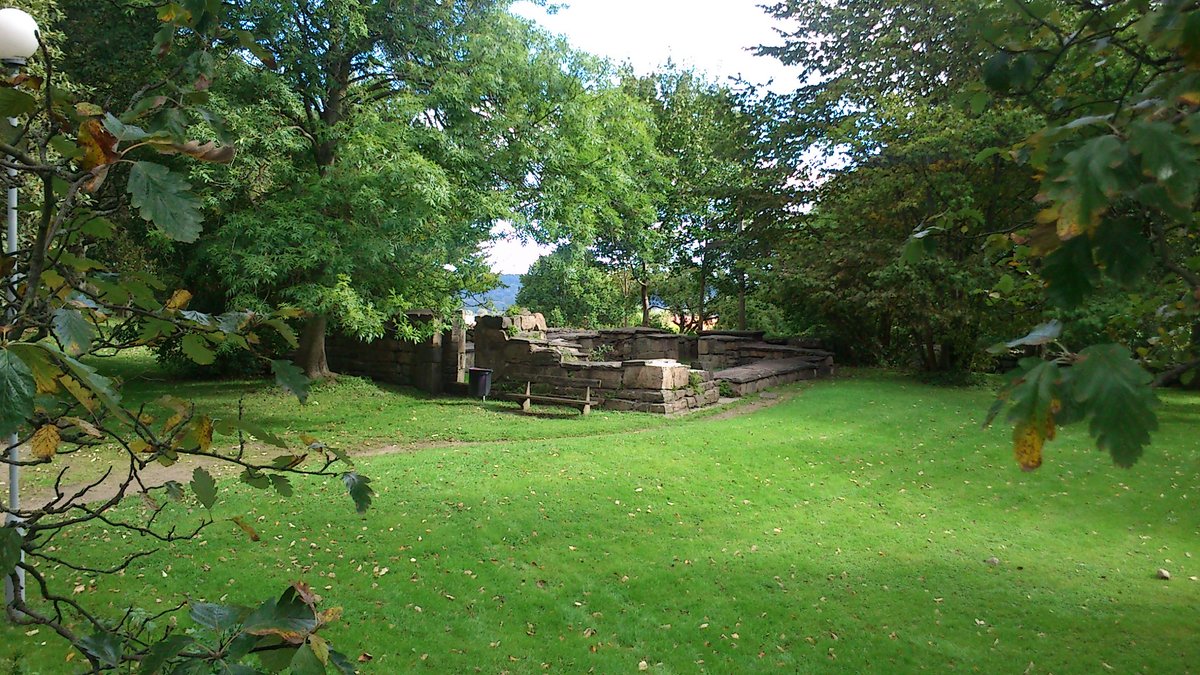

The stones of the Härlanda church ruins did not vanish by chance. In 1528, King Gustav Vasa issued a formal decree to dismantle the structure. The materials were repurposed to construct a church in Nya Lödöse, a decision made with a clear strategic objective.
The crown acted out of necessity to protect the town. They feared that an standing old church could be seized by enemies during a siege to serve as a vantage point for an attack. To ensure the safety of the city, the longhouse with an east-ended chancel, dating back to the first half or middle of the 1100s, had to be leveled.
Further exploration through archaeological work revealed a unique feature for the Västergötland landscape. Excavations uncovered finely worked, ashlar-cut grey stone in the lower wall sections. These specific remains were excavated and restored at the city's expense in 1925 to preserve what remained of the original parish church.
Today, these ruins remain a point of curiosity near the new Härlanda church between Munkebäckstorget and Bagaregården. The foundations of the old medieval site stand as a public monument. They invite us to look closer at the city's oldest Christian heritage.
Sources: Wikipedia, OpenStreetMap, Wikidata, Wikimedia Commons

Written by Nik Frost
Discuss this with the author and others
No comments yet. Be the first to start the conversation.