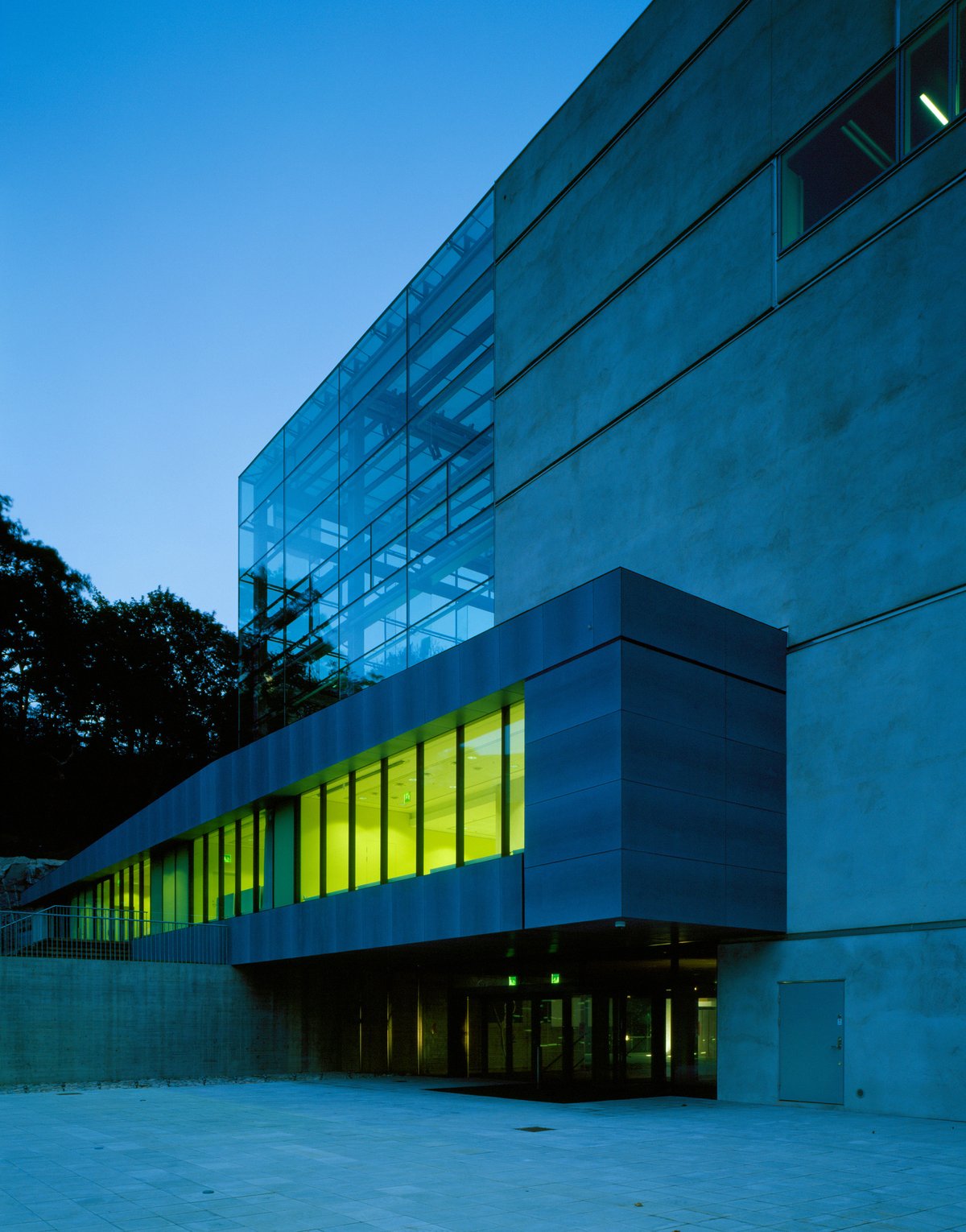

Perched on the slope leading toward Liseberg, the Museum of World Culture stands as a bold structure of glass and cement. Its upper levels extend five meters over the Södra Vägen footpath. A 43 meter display window provides a clear view into the primary exhibition hall, while the four story glass atrium faces the surrounding woods and mountains. Despite its scale, the building became a focal point for intense public scrutiny.
In 2020, the Arkitekturupproret movement ranked it as the 12th ugliest building in Sweden and the ugliest in Gothenburg. Designed by Cécile Brisac and Edgar Gonzalez, the Museum was established to examine global culture through various disciplines. It preserves the collections from the former Göteborgs Etnografiska Museum to show how local and ethnic differences intersect with global influences.
The institution also navigated a significant crisis in 2005 involving the painting Scène d'Amour. This work was removed from a temporary HIV/AIDS exhibition following death threats directed at the curator and the artist. The situation arose because some viewers were upset by Quranic quotations found in a section of the painting.
Now, the Museum invites us to investigate the dynamic balance between shared communication and unique identity. We can explore the rotating exhibits to understand how distinct cultures preserve their specific heritage within our increasingly interconnected world.
Sources: Wikipedia, OpenStreetMap, Wikidata, Wikimedia Commons



Written by Nik Frost
Discuss this with the author and others
No comments yet. Be the first to start the conversation.