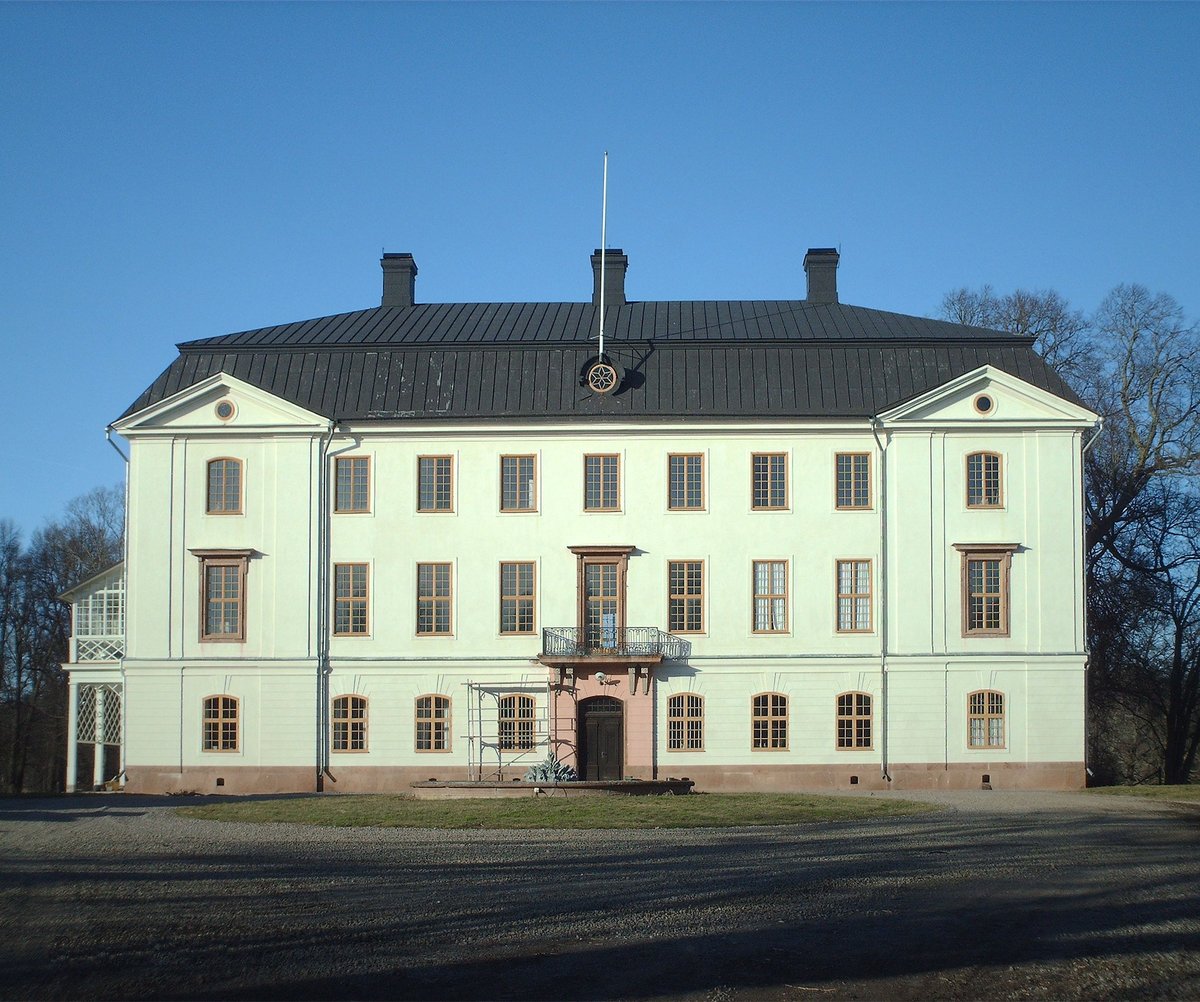

Ljung Castle, nestled in Sweden, stands on a hill with a stunning view. However, its history goes beyond its breathtaking surroundings. To unravel the villainy and drama within its walls, one must delve into the past of its successive owners.
Ljung has borne a name since the early 17th century. In 1642, it was acquired by Baron H. Hamilton. A century later, it was purchased by Agneta Horn, a renowned Swedish writer.
In 1730, the von Fersen family acquired Ljung, a connection that would lead to both wealth and disgrace. Throughout the years, the castle was owned by members of the von Fersen family, including Axel von Fersen the Elder, Hedvig Catharina von Fersen, the notorious Axel von Fersen the Younger, Fabian Reinhold von Fersen, and finally Louise von Fersen and Carl Gyldenstolpe.
Through these owners, Ljung is linked to one of the most infamous chapters in Swedish history: the bankruptcy of Louise von Fersen and Carl Gyldenstolpe. Once they lived in opulence, buying Rolls-Royce cars and even an elephant, whose name they arrogantly shared. Their wealth quickly depleted, leading to the loss of Ljung and their subsequent bankruptcy. The castle was sold to Claes von Mecklenburg in 1868.
For the von Fersens, Ljung was a place that witnessed the creation of a dynasty, weddings, and even the dramatic events that led to their downfall. Ljung Castle, with its grandeur and wealth, is a gateway to a chapter of Swedish history that cannot be gleaned from a mere street sign anywhere.
Sources: Wikipedia, OpenStreetMap, Wikidata, Wikimedia Commons
Written by Nik Frost
Discuss this with the author and others
No comments yet. Be the first to start the conversation.