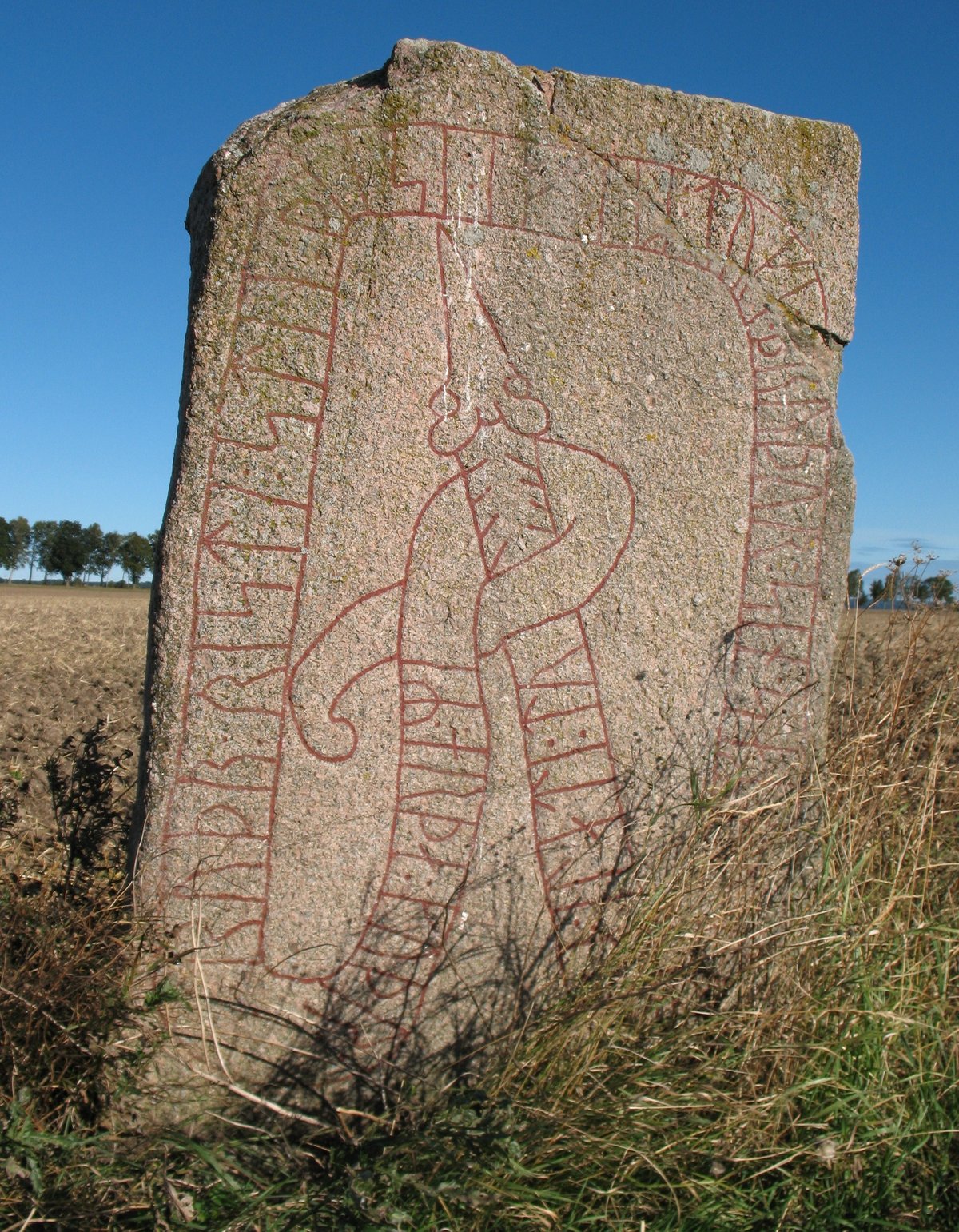

The rune stone in Gillberga, Kaga socken, near Linköping in Östergötland, can be dated to 1010-1050 based on the drakhuvud (dragon head) which is seen from above. Decorated with a rune orm (runeworm), the stone is decorated with a linear pattern that includes a rune orm making a noose-like shape around its own body. This rune orm's noose-like shape may represent the bindings or patterns found in Viking-era ornamentation. The rune inscription reads: 'Raud rested this stone for Toke, his brother. He became killed in England, a very good man.'
Originally the stone was covered with runes, but many have been lost to the ravages of time. The stone's inscription leads us to believe that it once honored a fallen European hero who met his fate in England.
Sources: Wikipedia, OpenStreetMap, Wikidata, Wikimedia Commons
Written by Nik Frost
Discuss this with the author and others
No comments yet. Be the first to start the conversation.