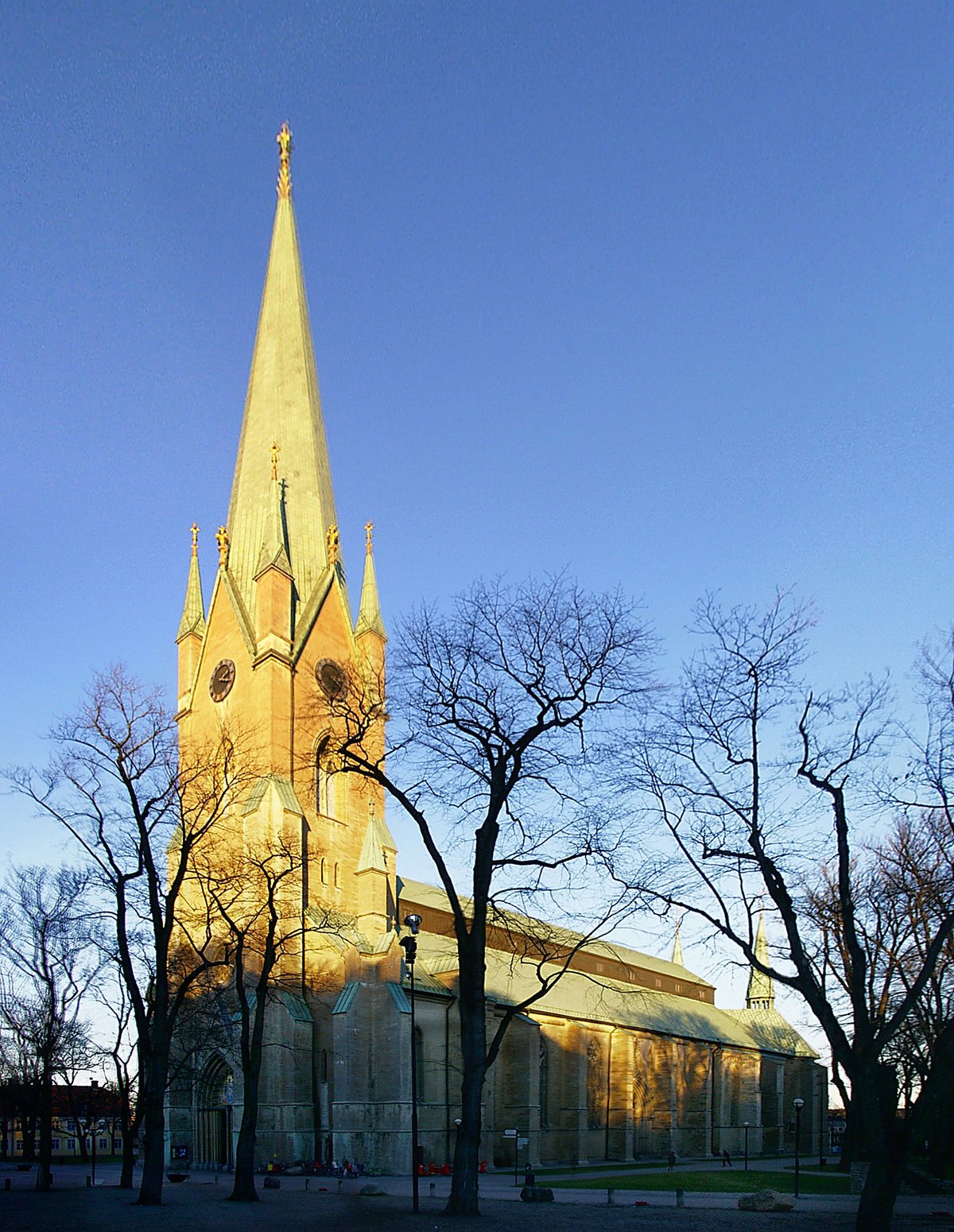

The presence of English coins from the 1300s on this site indicates the involvement of artists from the British Isles. While the cathedral is a centerpiece of Linköping, its stylistic hallmarks are connected to the development of the English High Gothic and German artistic movements.
Construction on this site began in the 11th century with a wooden structure, but the current Gothic edifice grew significantly in the 1200s. By the late 15th century, the church became a major hub for sculpture. Craftsmen from England and Germany were imported to create the rich programme of sculptural decoration that distinguishes the west end, making it a primary center for Gothic sculpture during that era.
Inside, the nave vaults feature carved roof bosses finished around 1320. These include the green man, a figure common to British folklore. The south portal tympanum displays German-style relief scenes from the Nativity and the Passion, added in 1330. The cathedral also houses a 16th-century polyptych by the Dutch painter Maarten van Heemskerck, which was moved here from Alkmaar in 1581.
Today, the cathedral remains an active Lutheran church. Visitors can see the distinct green copper roof, which was restored to its 17th-century shape in 1967, and the 2010 stained glass windows by British artist Brian Clarke.
Sources: Wikipedia, OpenStreetMap, Wikidata, Wikimedia Commons


Written by Nik Frost
Discuss this with the author and others
No comments yet. Be the first to start the conversation.