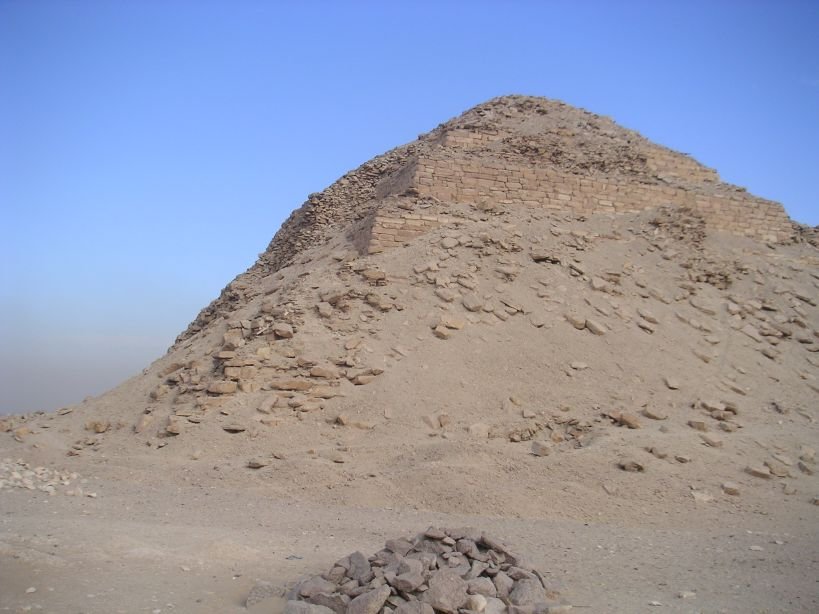

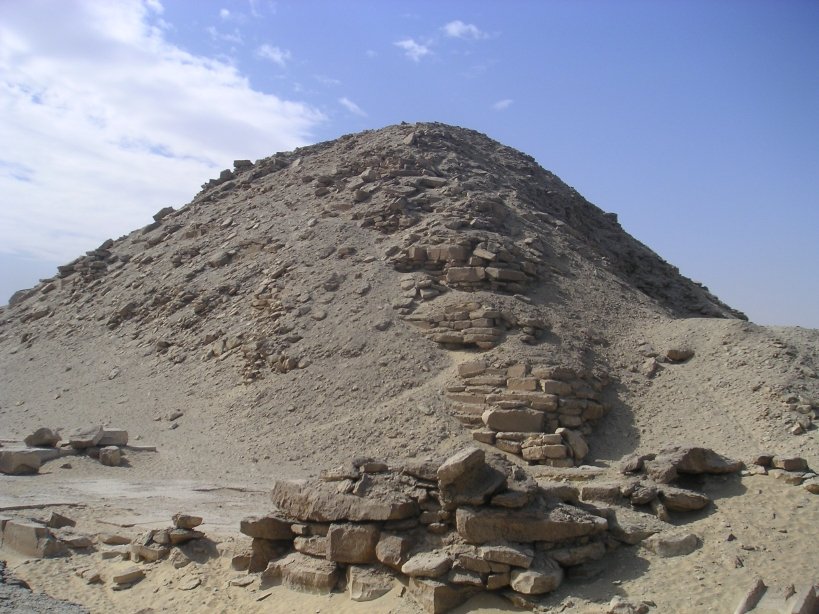
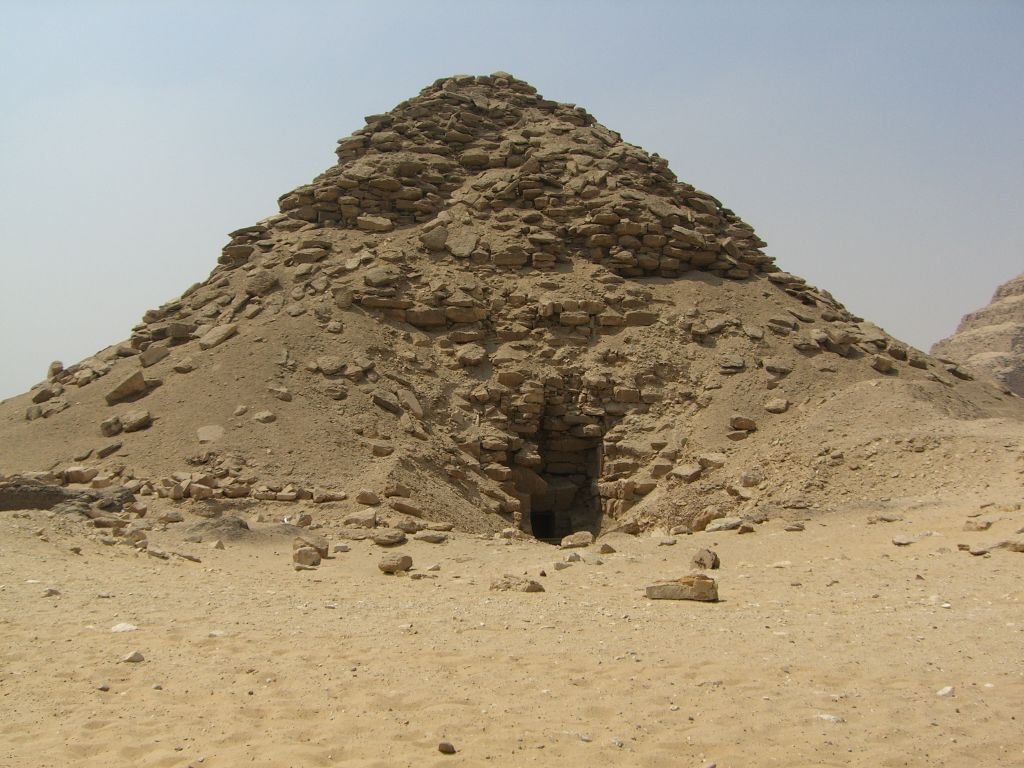
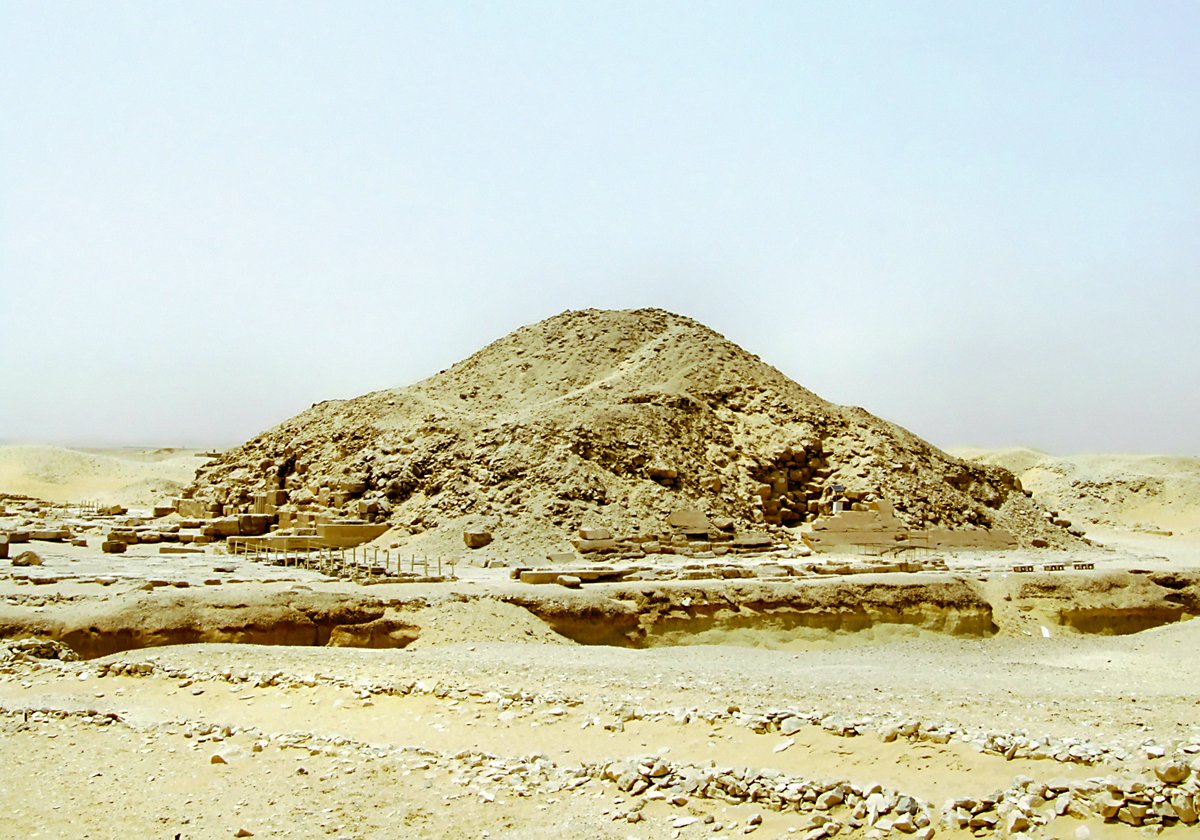
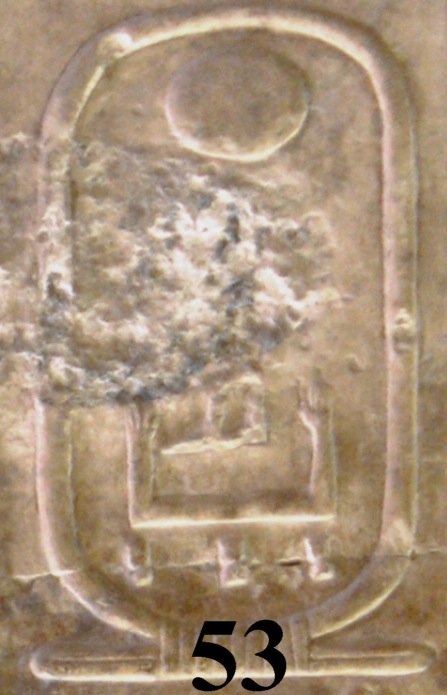
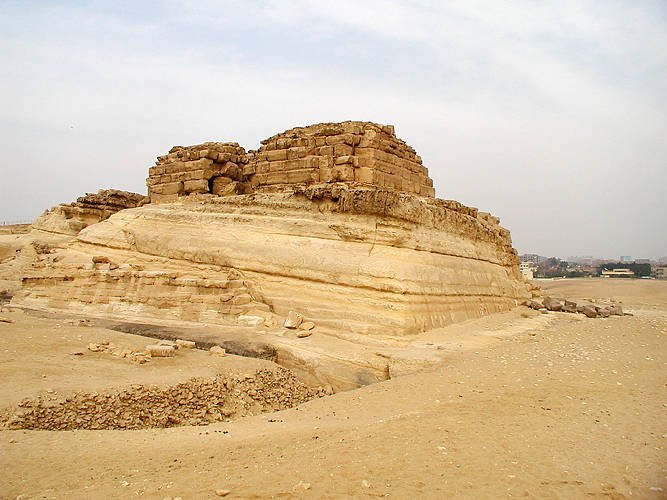
The pyramid of Neferirkare was built for the Egyptian pharaoh Neferirkare Kakai of the Fifth Dynasty in the 25th century BC. It was originally designed as a step pyramid - a style that had been antiquated since the Third Dynasty. To convert it into a true pyramid, it was encased in a second step pyramid. However, when the king died, his successors completed the work in haste using cheaper building material. The monument had a base length of 105 metres and, in its completed state, may have reached 72 metres in height.
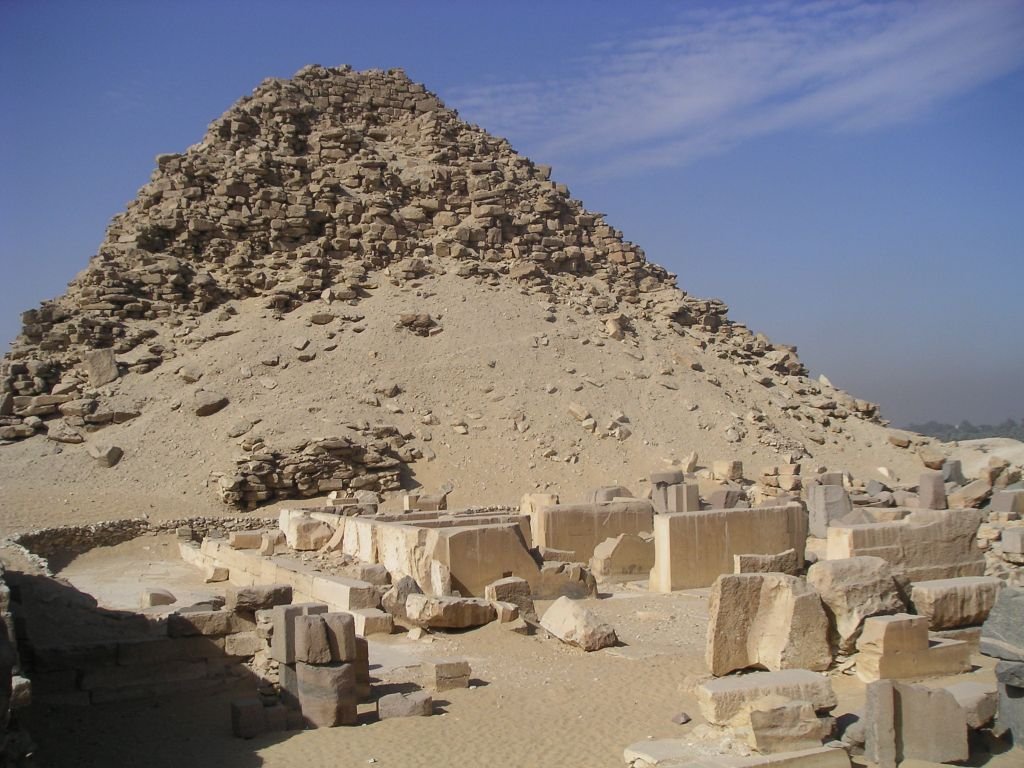
Because the work was interrupted by the king's death, the monument lacked several basic elements of a pyramid complex, such as a valley temple and a causeway. These features were instead co-opted by his successor, Nyuserre. Instead of a typical pyramid town, a small settlement of mudbrick houses was built south of the monument where cult priests could conduct their daily activities. This specific location allowed for the preservation of the Abusir papyri, which were discovered in the 1890s.
Located in the Abusir necropolis between Saqqara and the Giza plateau, the pyramid remains the tallest and highest-situated structure in the area. The site was chosen for its proximity to the administrative capital of Memphis, which provided easier access to resources and manpower. Workers exploited a nearby limestone quarry where the rock was arranged in thin segments, making it easier to dislodge and use for the construction of the masonry blocks.
Sources: Wikipedia, OpenStreetMap, Wikidata, Wikimedia Commons

Written by Mutabor
Discuss this with the author and others
No comments yet. Be the first to start the conversation.