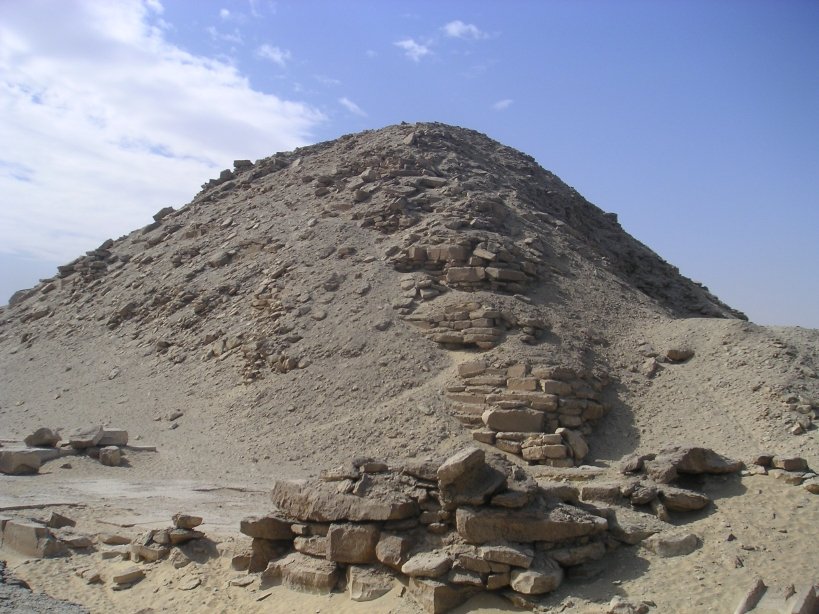

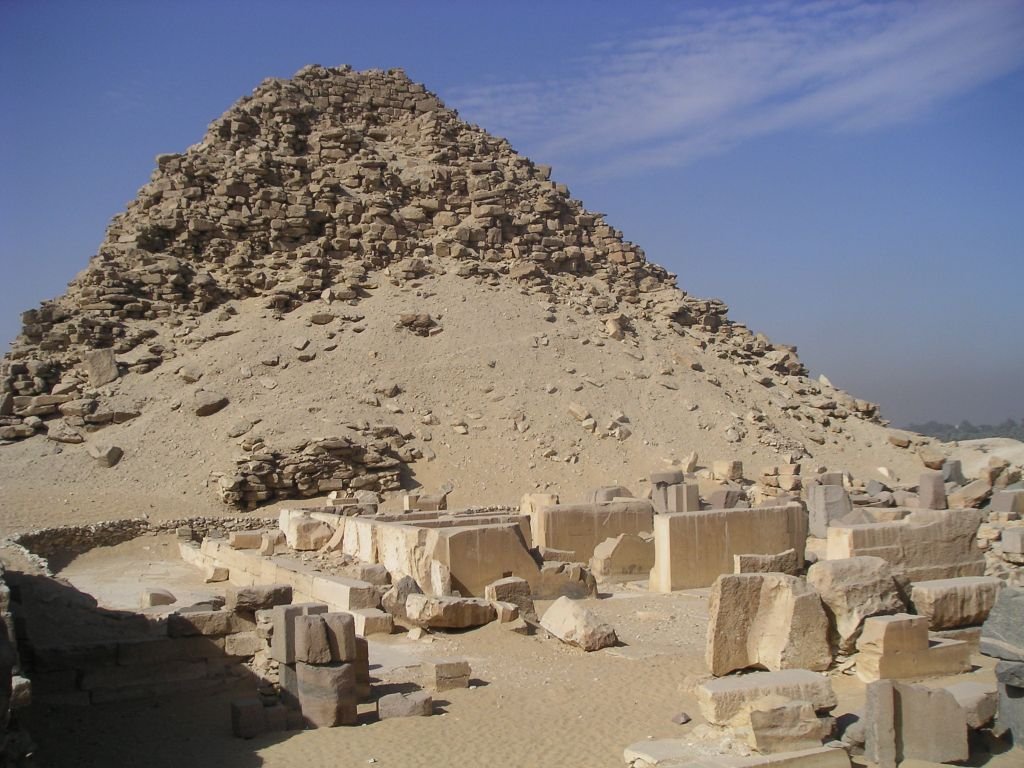
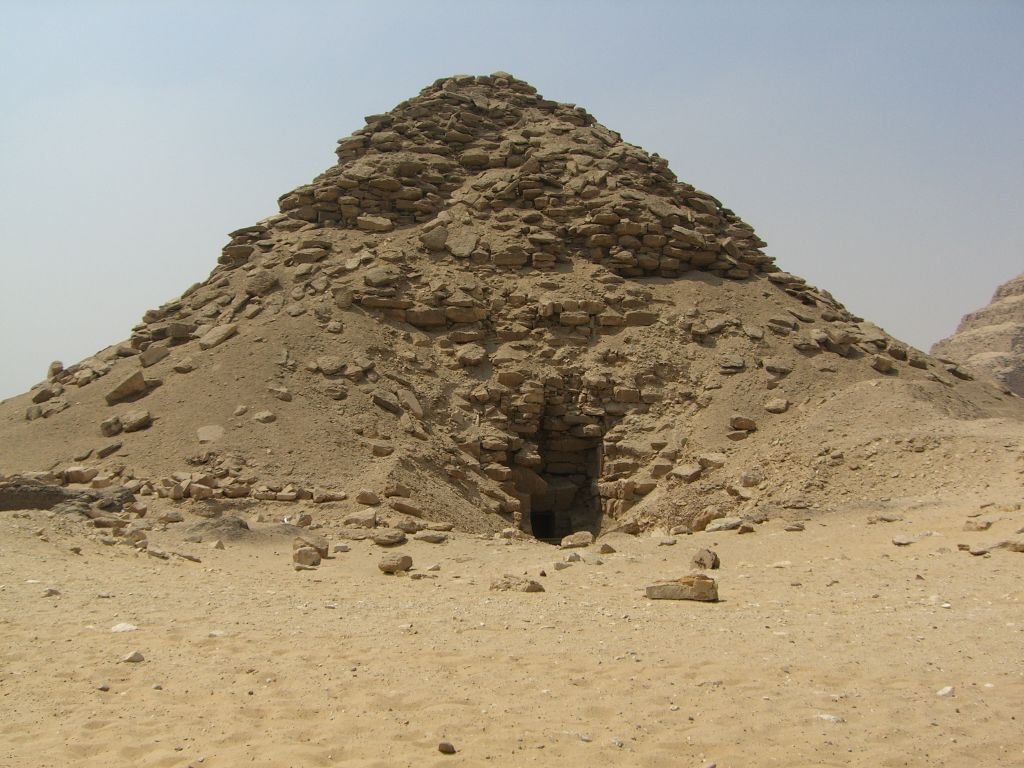
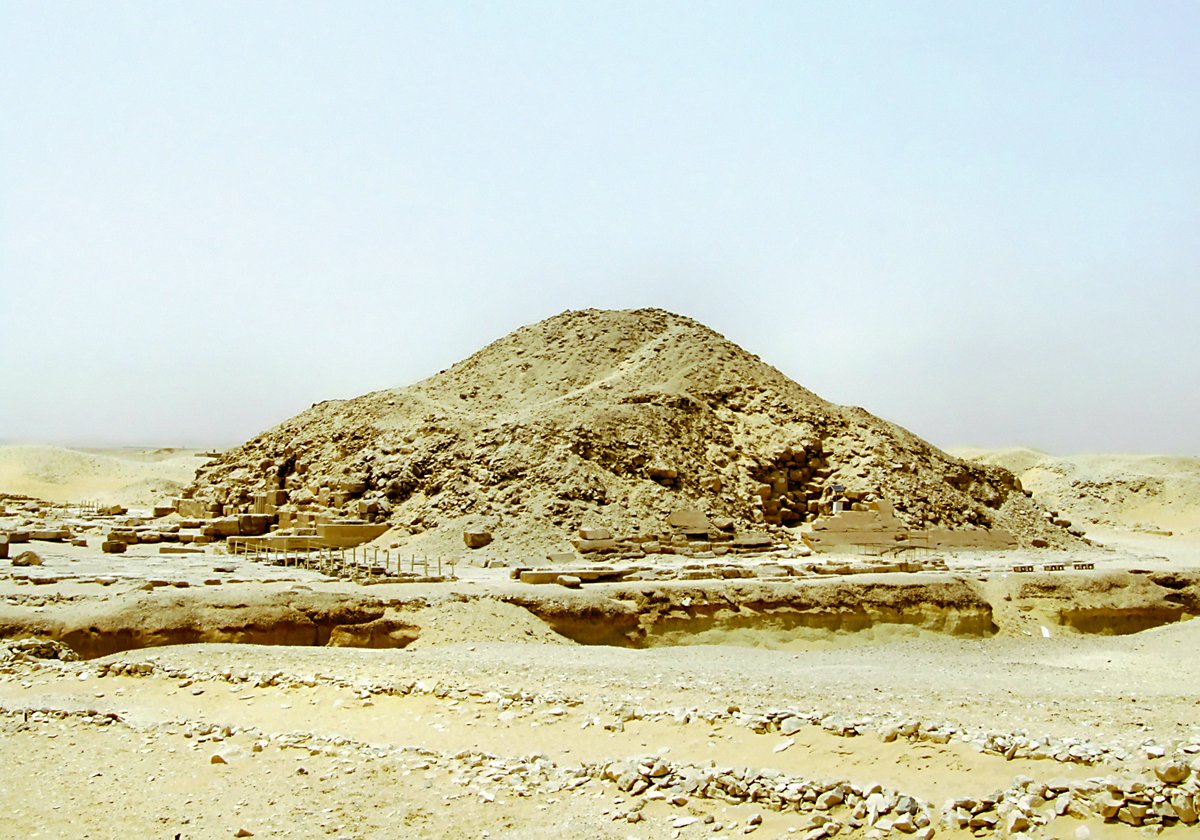
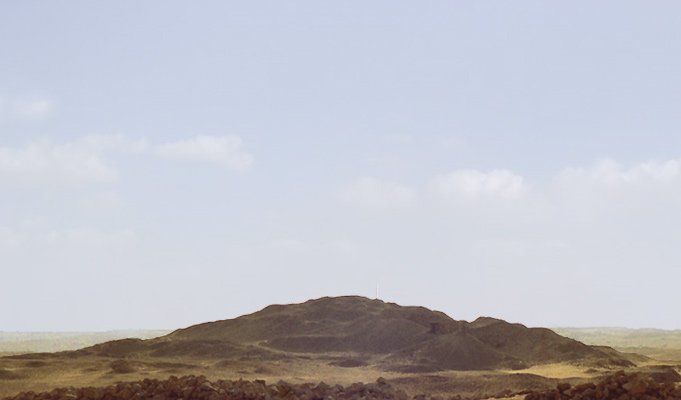
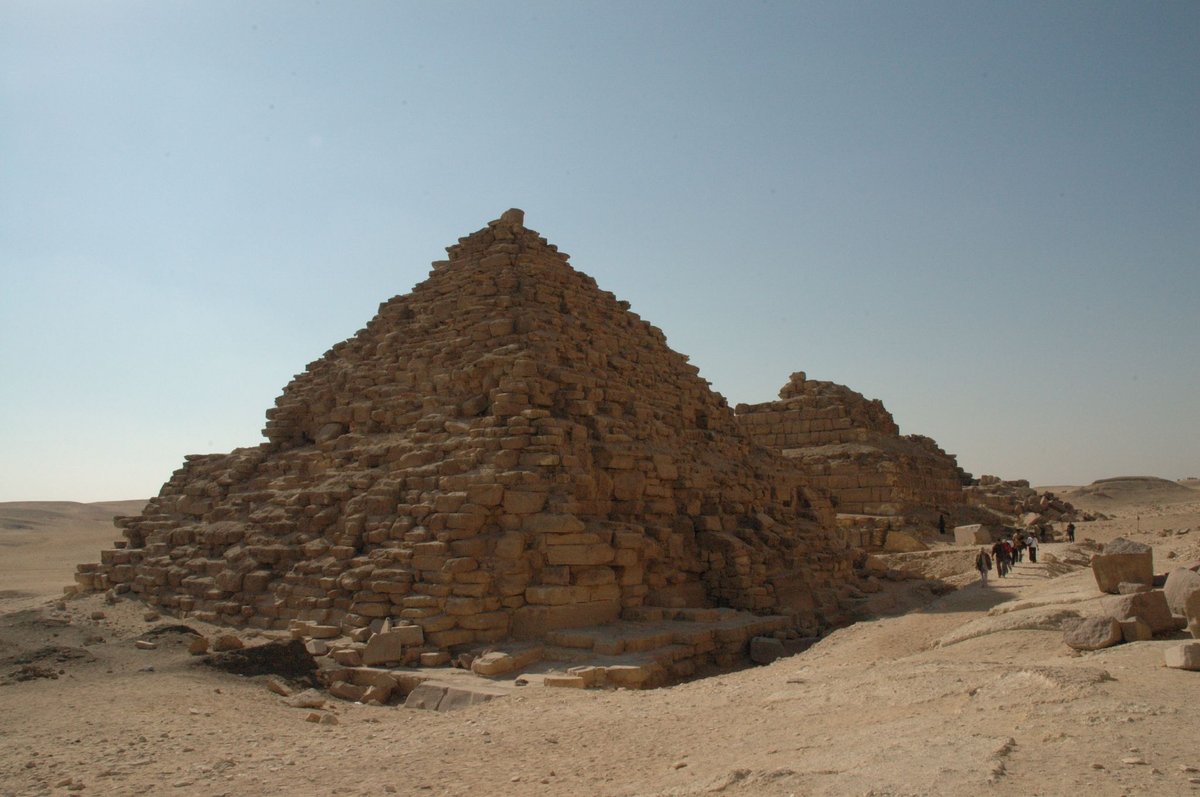
In the mid-25th century BC, Nyuserre Ini of the Fifth Dynasty chose a site in the Abusir necropolis for his funerary monument. This burial ground was a sacred sanctuary for the pharaohs of the Fifth Dynasty, where rulers like Userkaf and Sahure built their sun temples and funerary monuments. Nyuserre's father, Neferirkare Kakai, was also entombed here. When Nyuserre embarked upon his own pyramid construction, he chose a site between the complexes of Neferirkare and Sahure, selecting rough-cut limestone for the stepped core of his main pyramid.
The mortuary temple is notable for its L-shaped plan, an alteration required by the presence of mastabas to the east. It debuted the antichambre carrée, a square room with a single column, and contains an unexplained square platform which has led archaeologists to suggest that there may be a nearby obelisk pyramidion. While a separate cult pyramid lies in the south-east corner of the complex, the tomb of the priests and officials associated with the king's funerary cult are located in the vicinity as well. Nyuserre's monument is smaller than that of Neferirkare, and his complex is not seated on the Abusir-Heliopolis axis.
Nyuserre may have chosen this specific site north-east of Neferirkare's complex to remain with his family while economizing on labour and material resources. To the north-west of the complex are mastabas built for the pharaoh's children. Two other complexes, known as Lepsius XXIV and Lepsius XXV, may have belonged to the consorts of Nyuserre, particularly Queen Reputnub, or of his brother, Neferefre.
Sources: Wikipedia, OpenStreetMap, Wikidata, Wikimedia Commons
Written by Mutabor
Discuss this with the author and others
No comments yet. Be the first to start the conversation.