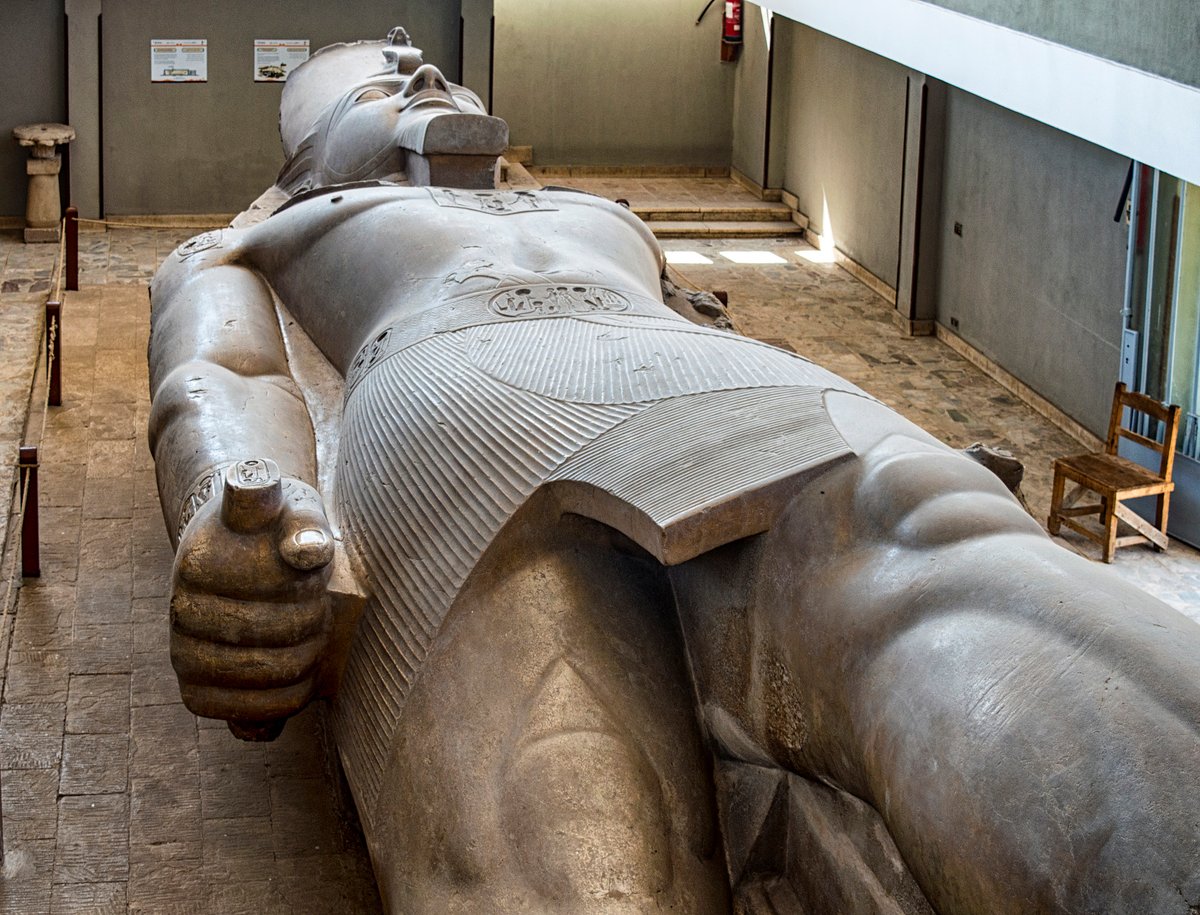

The statue of Rameses II is a 3200-year-old monument depicting the ruler standing. It was discovered in 1820 by the explorer Giovanni Battista Caviglia in the Great Temple of Mit Rahina near Memphis. This original home is located in the Mit Rahina area belonging to the center and city of Al-Badrashin in Giza. The statue stands 11 meters tall, weighs 80 tons, and is carved from pink granite.
In March 1955, the late Egyptian President Gamal Abdel Nasser ordered the statue to be relocated to Bab al-Hadid Square in Cairo, which was later renamed Rameses Square. On August 25, 2006, the statue was moved again to its current location in the Grand Egyptian Museum at the beginning of the Cairo-Alexandria Desert Road. This move was intended to protect the monument from environmental pollution caused by trains and cars. The arrival of the statue at the museum marked the beginning of work on the site.
During the move, the statue traveled through the streets of Cairo and Giza while citizens watched the procession. It covered a distance of 30 kilometers at an average speed of 5 kilometers per hour. The cost of the journey was 6 million Egyptian pounds. Studies determined the best way to move the statue, deciding on a pivotal method that kept the statue balanced on its center of gravity. To ensure safety, a simulation was conducted using a concrete block weighing 83 tons.
Sources: Wikipedia, OpenStreetMap, Wikidata, Wikimedia Commons
Written by Mutabor
Discuss this with the author and others
No comments yet. Be the first to start the conversation.