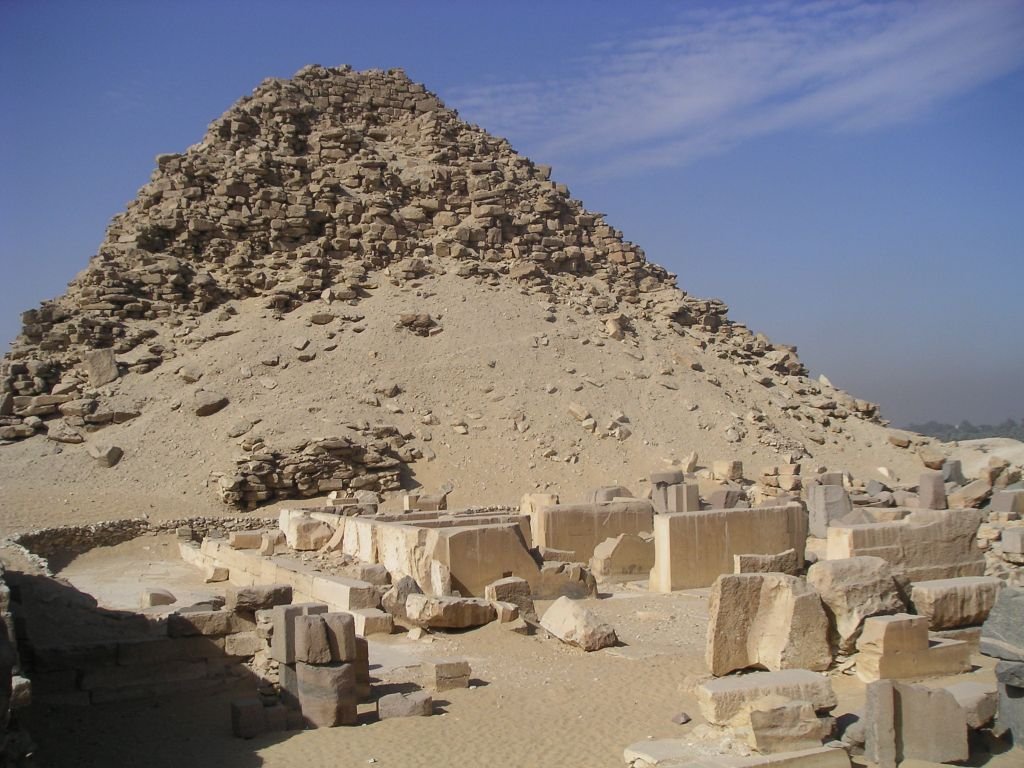

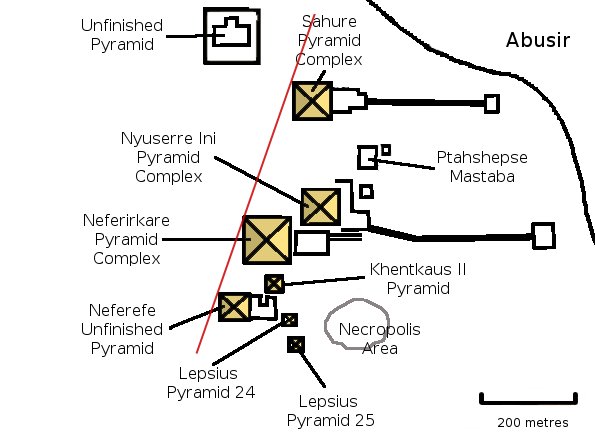
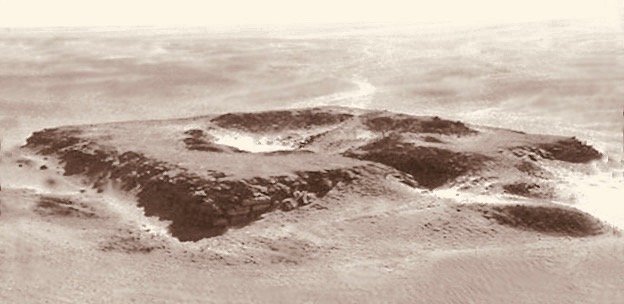
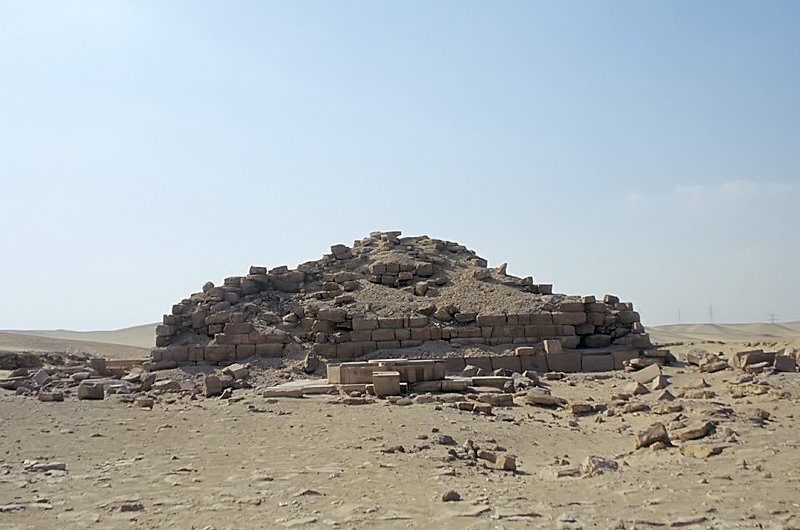
The pyramid of Sahure (Egyptian: Ḫꜥỉ-bꜣ Sꜣḥw-Rꜥ) is the funerary monument built for the Egyptian pharaoh Sahure of the Fifth Dynasty in the late 26th to 25th century BC. This site initiated a period of pyramid building by Sahure's successors in Abusir. The complex's layout was adopted by succeeding kings of the Fifth and Sixth Dynasties, marking a milestone in pyramid complex construction. Compared to the preceding Fourth Dynasty, the immensity of the constructions was dramatically reduced while the decorative programme proliferated and temples were augmented by enlarged storeroom complexes.
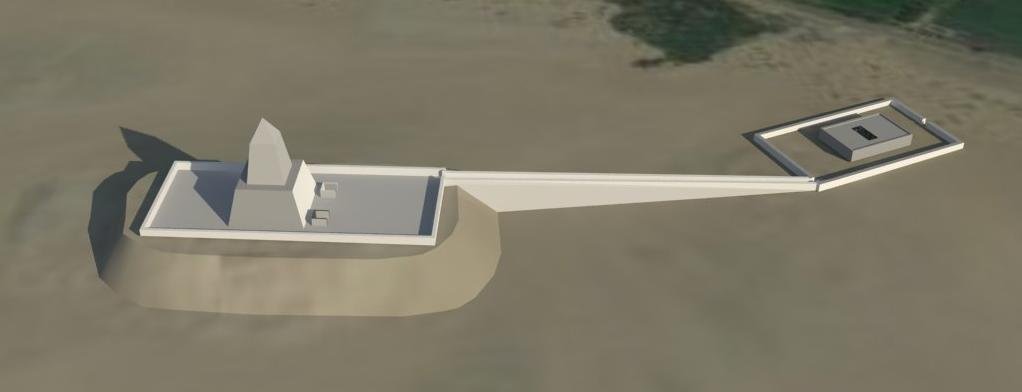
The complex contains a main pyramid, a mortuary temple, a cult pyramid, and a valley temple. It is estimated to have had 10,000 m2 of finely carved relief adorning its walls, of which 150 m2 has been preserved. Some of these reliefs are considered unparalleled in Egyptian art, such as an 8 m by 3 m hunting scene from the mortuary temple. The complex is also remarkable for the array of valuable materials - such as granite, alabaster and basalt - used extensively in its construction.
Sahure's mortuary temple became the object of a cult of Sekhmet around the Eighteenth Dynasty, which helped spare it from the first wave of destruction on the Abusir monuments. Later, the complex became a Coptic shrine as evidenced by pottery and graffiti dating to between the 4th and 7th century AD.
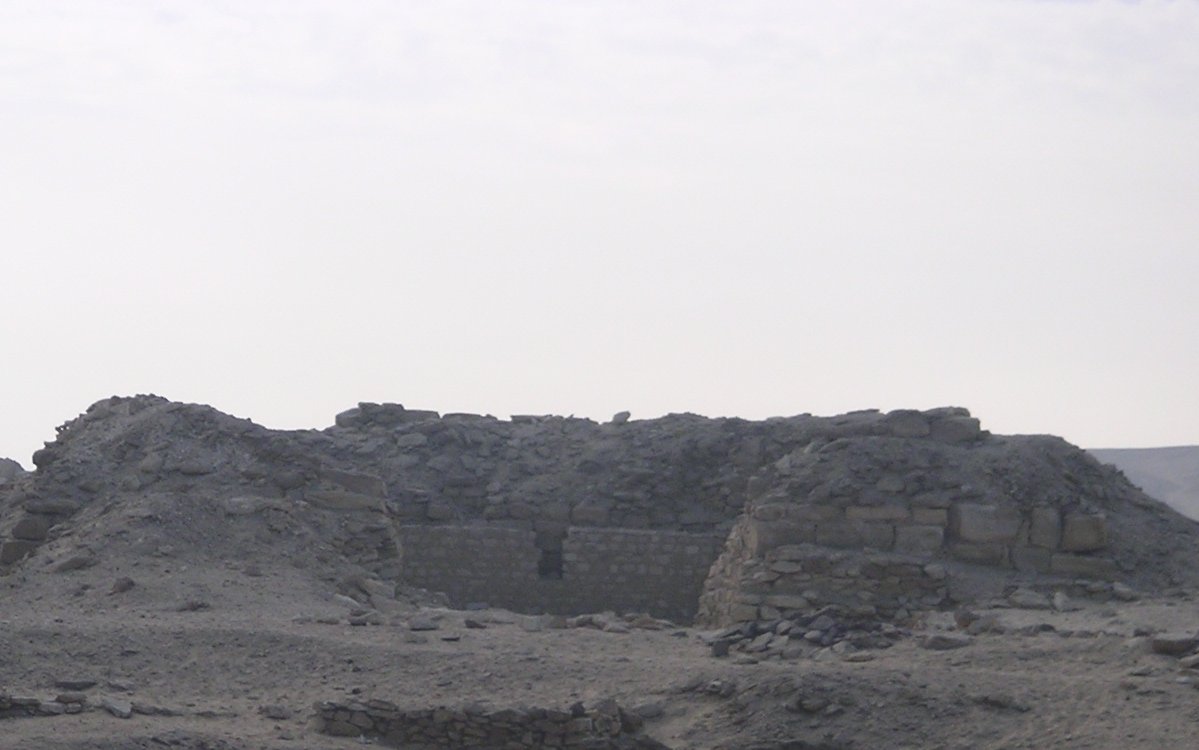
The main pyramid is 47 m tall and comprised six ascending steps of stone encased in fine white limestone. The core of the pyramid consisted of low-grade roughly cut limestone bound with mud mortar. Its outer faces were framed using massive, roughly dressed grey limestone blocks well joined with mortar. This method was less time- and resource-consuming than those of the preceding dynasty, though it meant that only the outer casing was constructed using high-quality limestone.
Sources: Wikipedia, OpenStreetMap, Wikidata, Wikimedia Commons
Written by Mutabor
Discuss this with the author and others
No comments yet. Be the first to start the conversation.