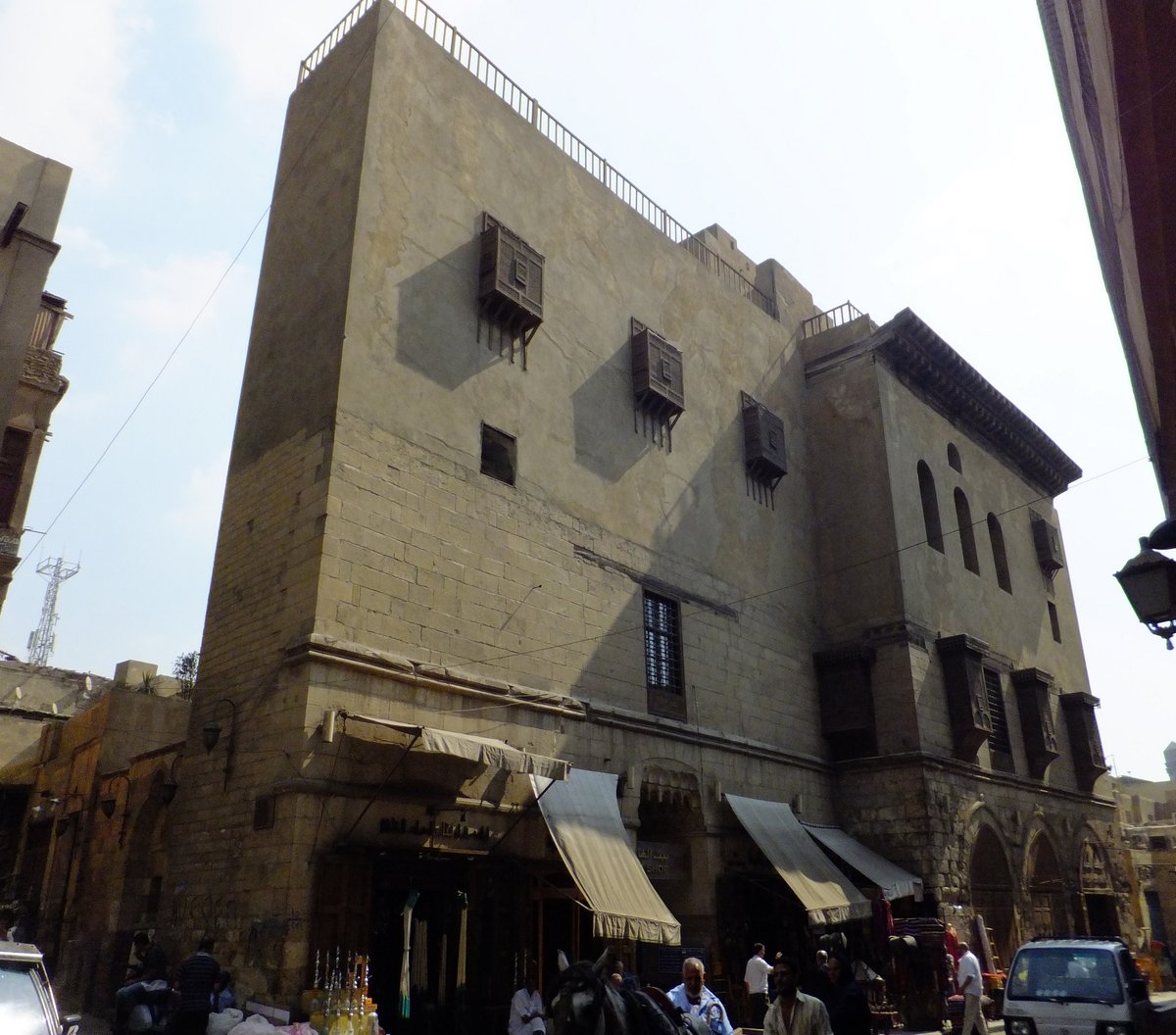

In the heart of Cairo, Egypt, stands Beshtak Palace, a historic palace and museum built in the 14th century by the Mamluk amir Sayf al-Din Bashtak al-Nasiri. Located on Muizz Street in the area known as Bayn al-Qasrayn, the palace was built over part of the Eastern Palace. It remains a rare surviving example of 14th-century domestic architecture.
Originally five stories tall, the palace featured running water on all floors. At street level, the building had openings for shops. The most impressive surviving part of the palace is the large qa'a, or reception hall. This hall features a coffered wooden ceiling, stucco windows of coloured glass, and a fountain of inlaid marble in the centre - decorative elements typical of the era.
The north and south sides of the hall also feature mashrabiyya, which are latticed wood screen windows. These were located on the upper floors, allowing for members of the household to privately watch events or festivities happening in the hall below. The remains of the palace were restored in 1983 by the German Archaeological Institute.
Sources: Wikipedia, OpenStreetMap, Wikidata, Wikimedia Commons

Written by Mutabor
Discuss this with the author and others
No comments yet. Be the first to start the conversation.