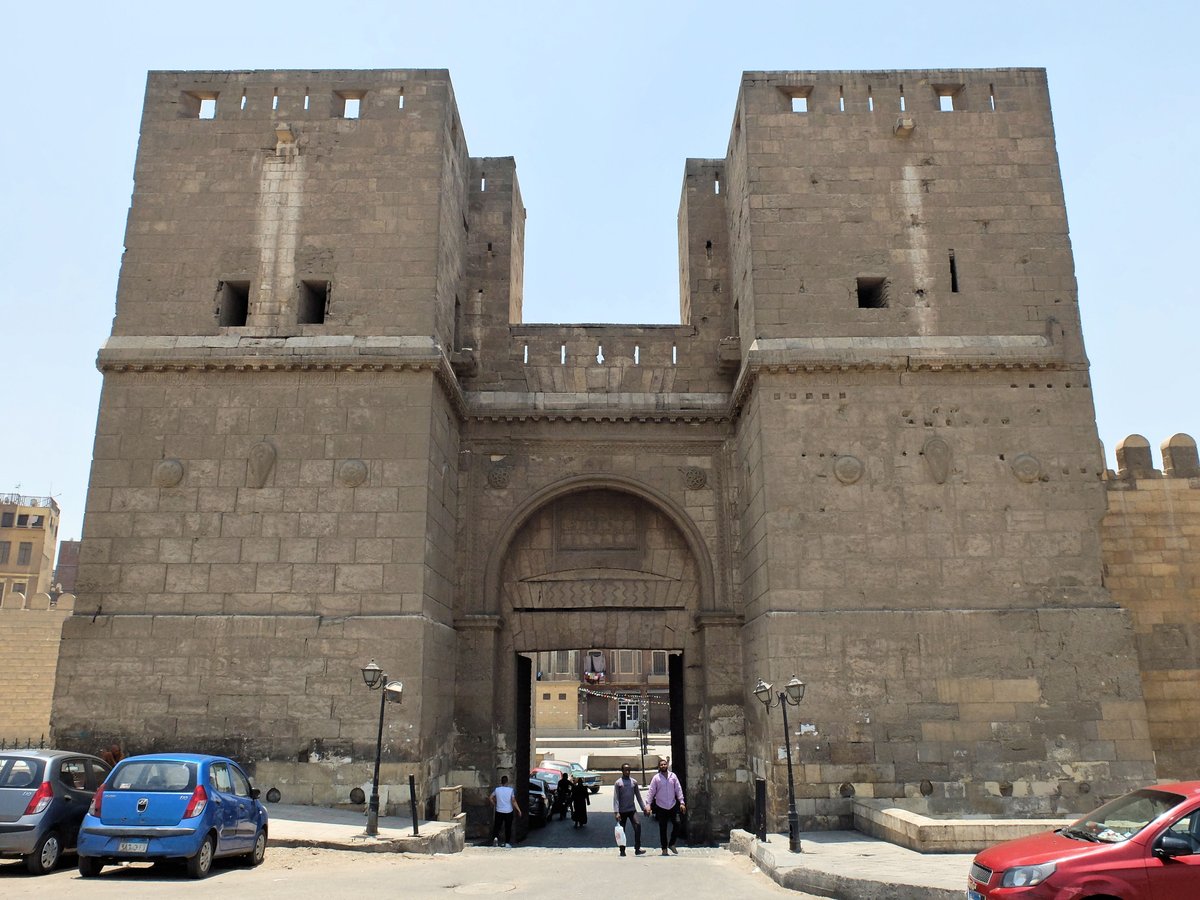

Bab Al-Nasr, or the Gate of Victory, is one of three remaining gates in the historic city wall of Cairo, the capital of Egypt. Ordered by the Fatimid vizier Badr al-Jamali in 1087, the gate is located at the northern end of Shari'a al-Gamaliya. While Badr al-Jamali originally named it Bab al-Izz, meaning Gate of Prosperity, the local inhabitants have preferred the name Gate of Victory to this day.
It is a massive fortified gate with rectangular stone towers flanking the semicircular arch of the eastern portal. The design was built for defense, featuring arrow slits for projectiles and projecting towers for flanking fire. Inside, vaulted passages connect guard rooms and living quarters. The interior features innovative helicoidal vaults in the stairways, which are the oldest of their kind in this architectural context. Shields on the towers symbolize victory in protecting the city.
A long horizontal Arabic inscription across the facade names Badr al-Jamali and his caliph, al-Mustansir. The inscription identifies Badr al-Jamali as the slave of the sovereign and describes him as the commander-in-chief, the sword of Islam, and the defender of the imam. It praises his administration and his role in strengthening the state. A smaller rectangular panel above the arch contains a Shi'a version of the Shahada, naming Muhammad as prophet and Ali as imam.
Sources: Wikipedia, OpenStreetMap, Wikidata, Wikimedia Commons



Written by Mutabor
Discuss this with the author and others
No comments yet. Be the first to start the conversation.