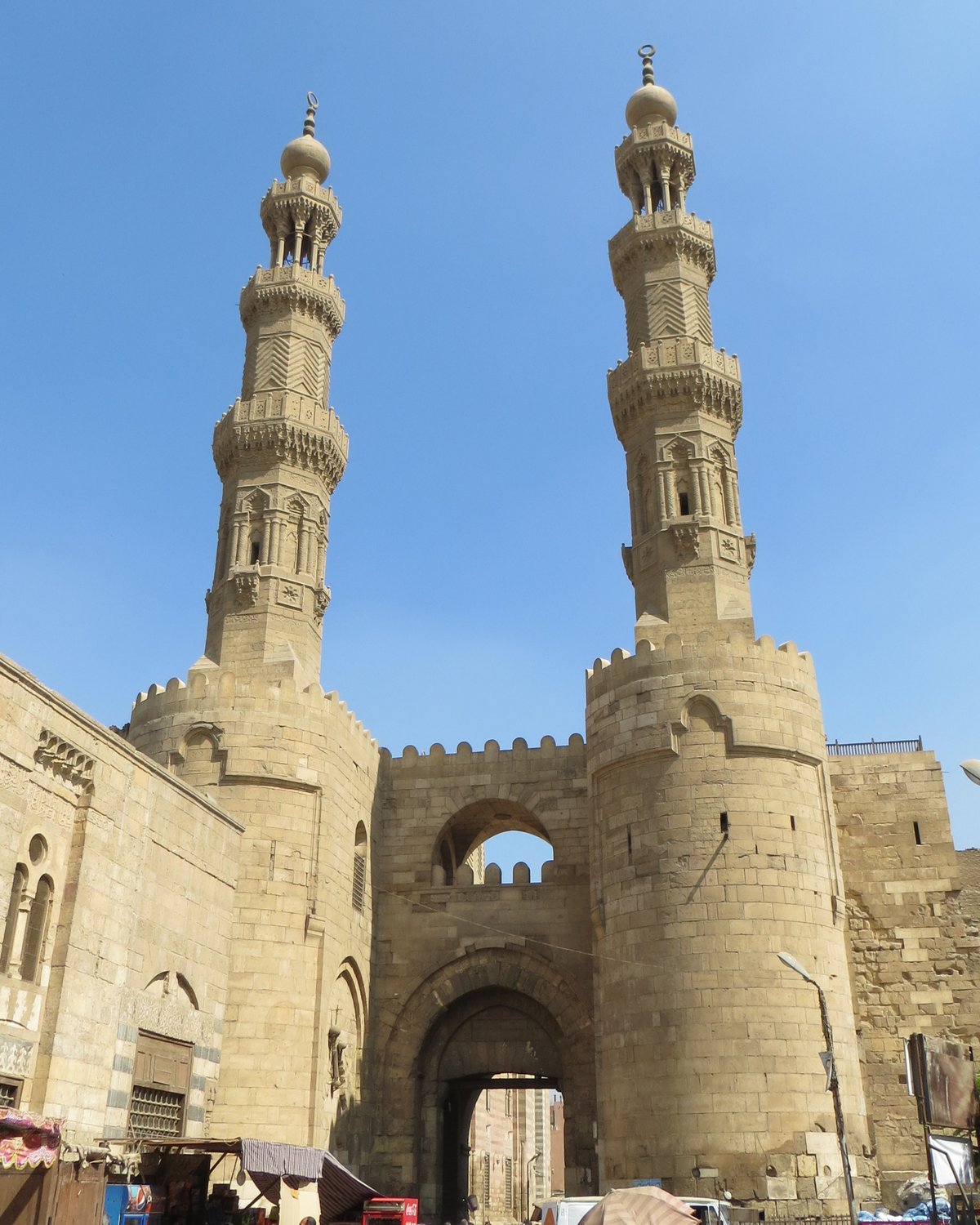

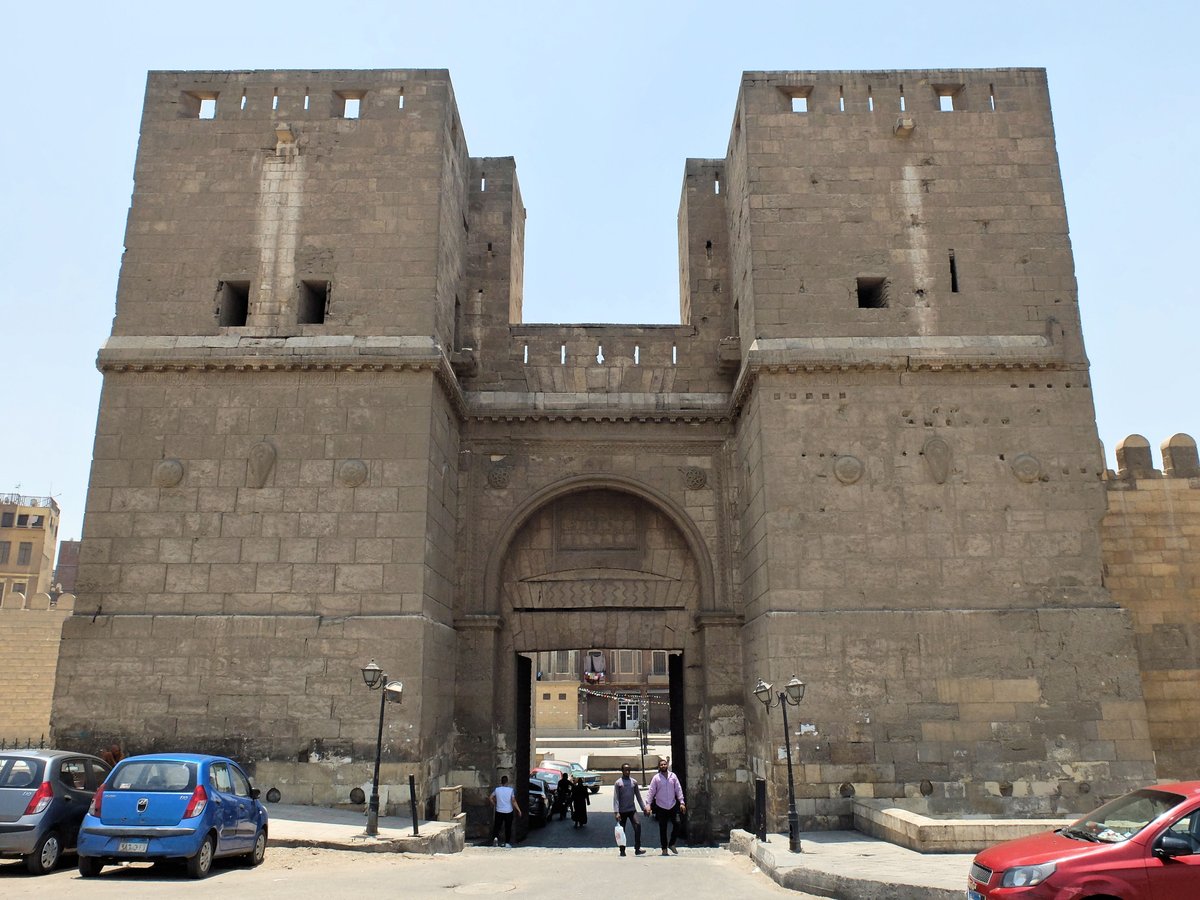
In the heart of the ancient city of Cairo lies Bab Zuweila, one of three remaining gates in the city walls. Built in 1092 by the Fatimid vizier Badr al-Jamali, the gate was rebuilt in stone at its current location to serve as a southern entrance. Its name comes from the Zuwayla tribe, a Berber tribe from Fezzan, whose soldiers were lodged in the area during the Fatimid founding of Cairo in 969. While it was also known as Bab al-Qus, it later acquired the name Bab al-Mitwali, which historians suggest dates from the 15th century or the Ottoman period.
Over the centuries, the site has seen significant architectural changes. Between 1415 and 1422, two minaret towers were added as part of the adjacent Mosque of Sultan al-Muayyad. A major restoration was carried out between 1999 and 2003 by the American Research Center in Egypt, during which the base of the gate and its doors were excavated because the ground level had risen nearly two metres since the Fatimid period. The restoration also rediscovered a former lintel from the Pharaonic era, originally from the Temple of On in Heliopolis.
The gate also served as a venue for public executions. In 1260, the Mamluk ruler Qutuz had the heads of six Mongol messengers displayed on spikes above the gate. In 1517, following the Ottoman conquest of Egypt, the last Mamluk sultan, Tuman Bay II, was hanged here on the orders of Selim II. In the early Mamluk period, sultans would sit on a platform above the gate to watch ceremonial processions and listen to drummers who played whenever an important commander entered the city.
Sources: Wikipedia, OpenStreetMap, Wikidata, Wikimedia Commons



Written by Mutabor
Discuss this with the author and others
No comments yet. Be the first to start the conversation.