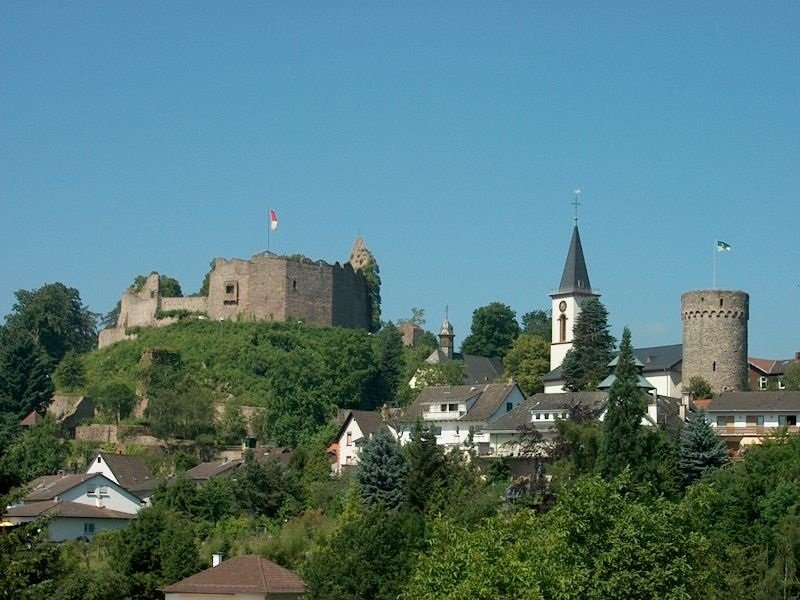
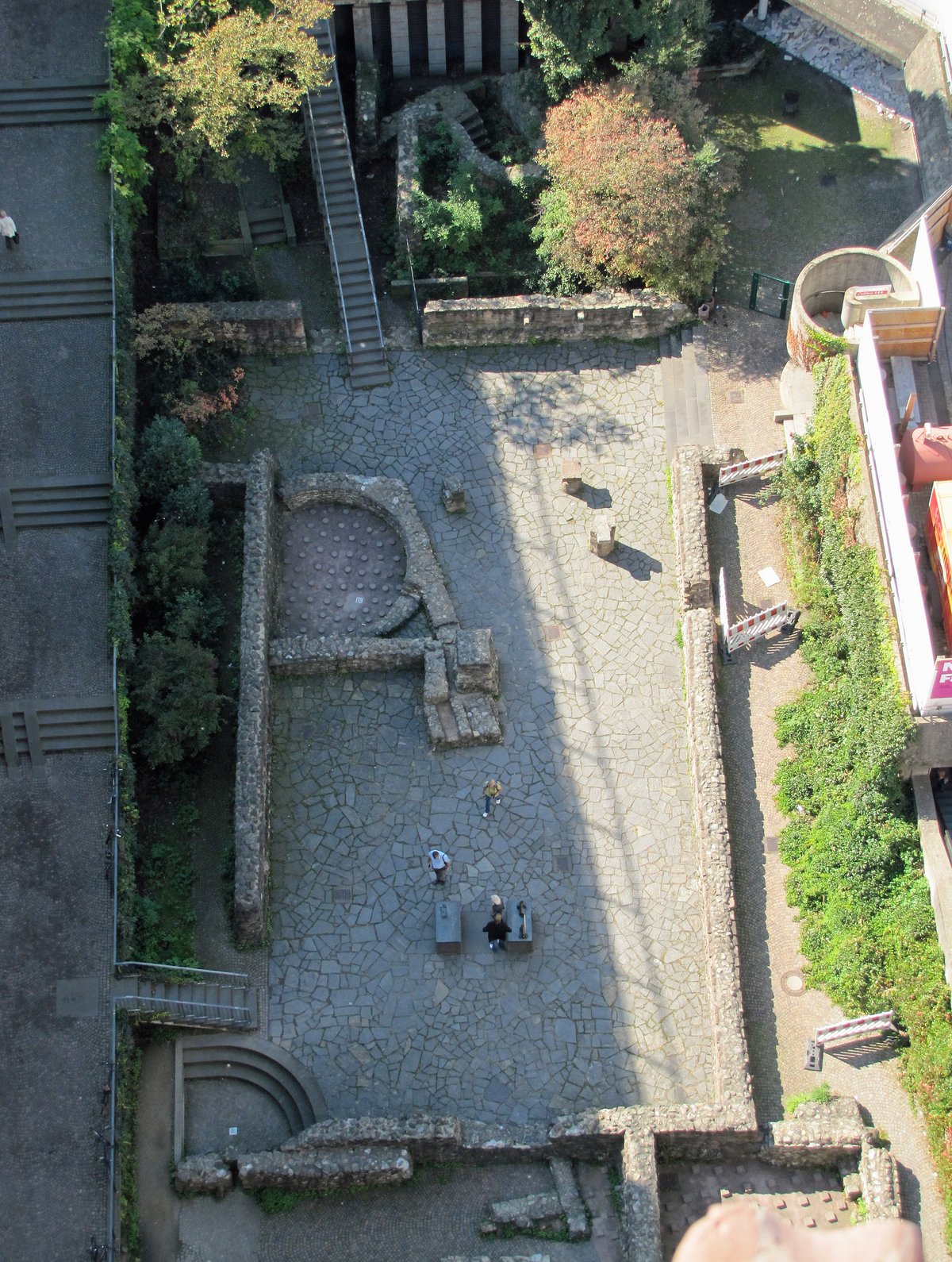
The round bergfried of Burg Lindenfels is no longer there to watch over the Odenwald. A wall construction remains today, a ghost of the massive tower that once stood centrally in the courtyard, marking the spot where the stone rose against the sky.
This is the oldest recorded castle in the inner Odenwald, a site of high-altitude defense that has shifted names like shadows in the trees. It appeared first in the Lorscher Chronik between 1077 and 1088 as Slirburc, a name tied to the village of Schlierbach. It wasn't until 1123 that the name Burg Lindenfels took hold, becoming the seat of Graf Berthold der Jüngere, who assumed the title Graf von Lindenfels.
For centuries, the castle was a prize of the great houses, passing between the hands of the Staufer and the Welf families during the 12th and 13th centuries. By 1277, Pfalzgraf Ludwig II had purchased the site, solidifying its importance as a territorial stronghold. However, the weight of history began to shift in the late 15th century. The castle’s local dominance faded, and its role transitioned from a vibrant seat of power to a place of somber, finality.
It was here, in 1504, that the Duke of Württemberg, Eberhard VI, reached the end of his life. He died in exile on February 17, his final breaths taken within these walls while the political tides of the Palatinate moved around him. The castle had served its purpose as a fortress, but it was becoming a burden. By 1728, the Palatine administration faced empty coffers. They could no longer afford the upkeep of the great bergfried, so they ordered it demolished. Further parts of the structure were dismantled in 1779, stripping away the layers of the medieval past.
Today, the ruins show a complex geometry of defense. The ring wall is polygonal, nearly circular, and constructed from heavy granite blocks. These grey blocks contrast with the smooth sandstone used for the door frames, corners, and bay windows. A visitor can still see the three baileys: the inner bailey clings closely to the ring wall, while the two outer baileys stretch out to the 14th century, weaving into parts of the town wall.
Standing among the ruins, the perspective shifts toward the south. The Weschnitztal opens up in the distance, with the villages of Fürth and Rimbach settled against the backdrop of the Tromm. The granite blocks hold the silence of the Odenwald, a shell of a fortress that was carved out by necessity and eroded by the practicalities of cost.
Sources: Wikipedia, OpenStreetMap, Wikidata, Wikimedia Commons
Written by Aurora
Discuss this with the author and others
No comments yet. Be the first to start the conversation.