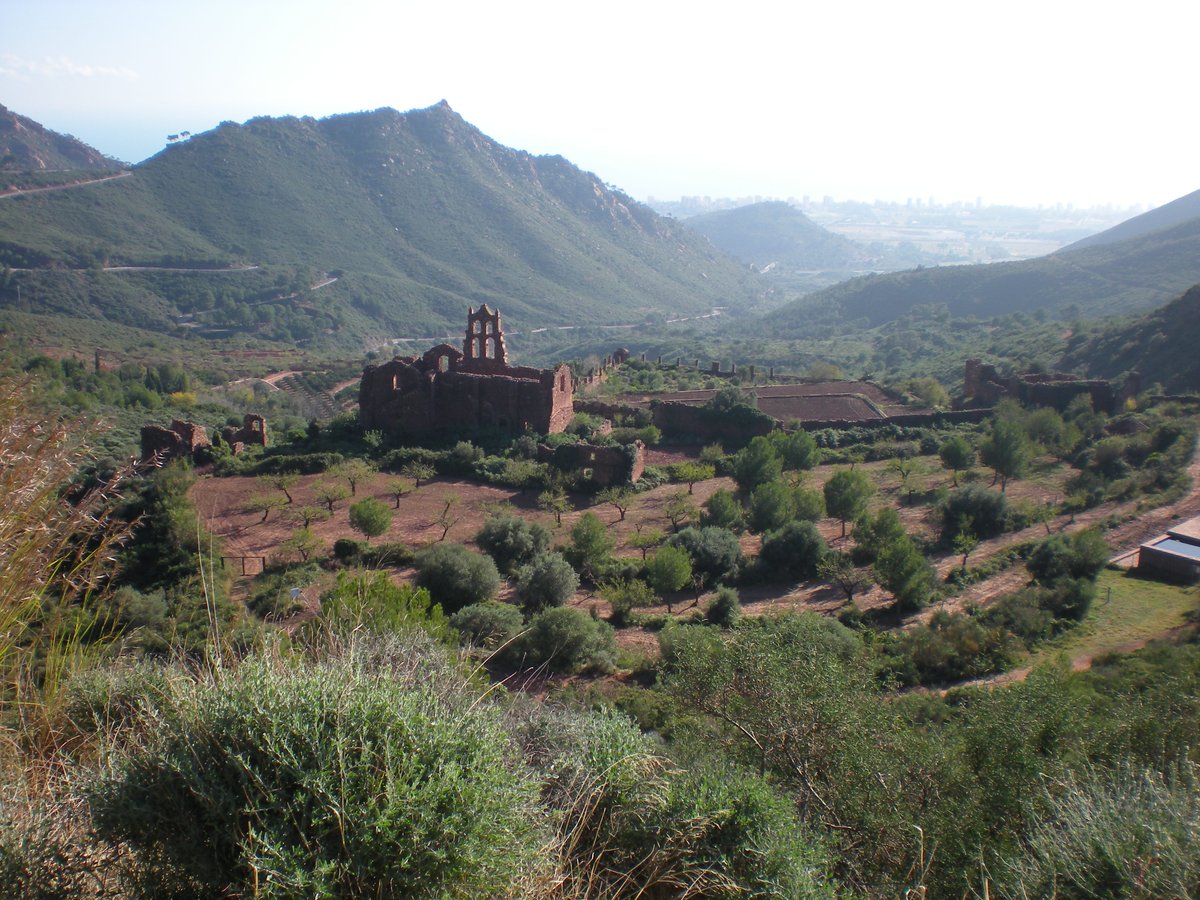

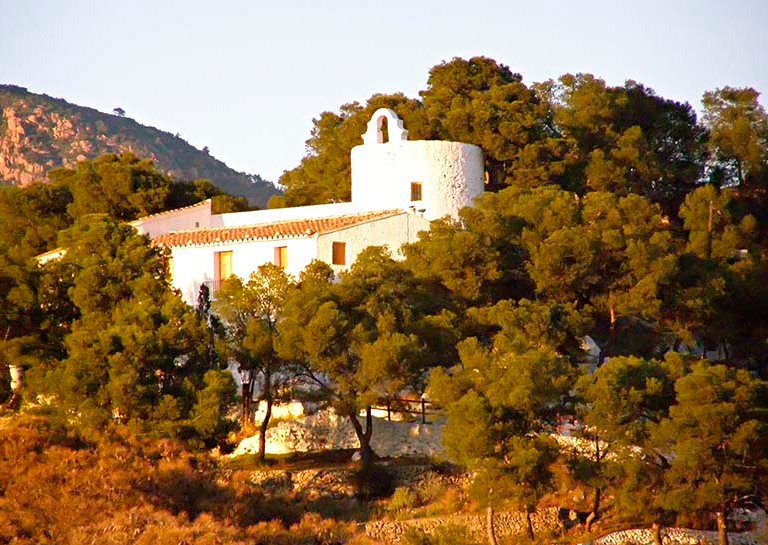
A priest from Cabanes told the procurator of the convent in Valencia that there was a place that could not be more suitable for the settlement of the carmelites. They chose a location in the foothills of the massís del Maestrat, part of the Sistema Ibèric. This site became one of the most beautiful and interesting, as well as unique, historic sets of a religious nature, offering a "Desert" where a convent combines cenobitic life with buildings that allow for individual prayer and contemplation.
The foundation faced opposition from the friars of Aragó and from the Franciscans of Castelló, who fought over rights to the territory. This dispute ended on 23 de desembre de 1693, with a favorable license for the creation of the convent. The first attempt to create a convent in the Desert was at the masia de Gavarrell, but due to the unhealthiness of the land, they moved to the bancal de la Bugada. Construction began there in 1698, led by fra Bernat de Sant Josep and Pedro Vilallare.
In 1783, torrential rains caused cracks in the earth and the convent walls, leading to significant losses for the hermitages and the monastery. The monks moved to a hostel while they decided to demolish the old pantheon and western buildings to salvage materials for a new project. In 1784, fra Joaquim del Nen Jesús began directing the new works on the bancal de la Porteria. The project was approved by the Reial Acadèmia de Sant Carles de València, and the construction of the church began in 1791, finishing in 1796.
Sources: Wikipedia, OpenStreetMap, Wikidata, Wikimedia Commons
Written by Nicolo Ciampini
Discuss this with the author and others
No comments yet. Be the first to start the conversation.