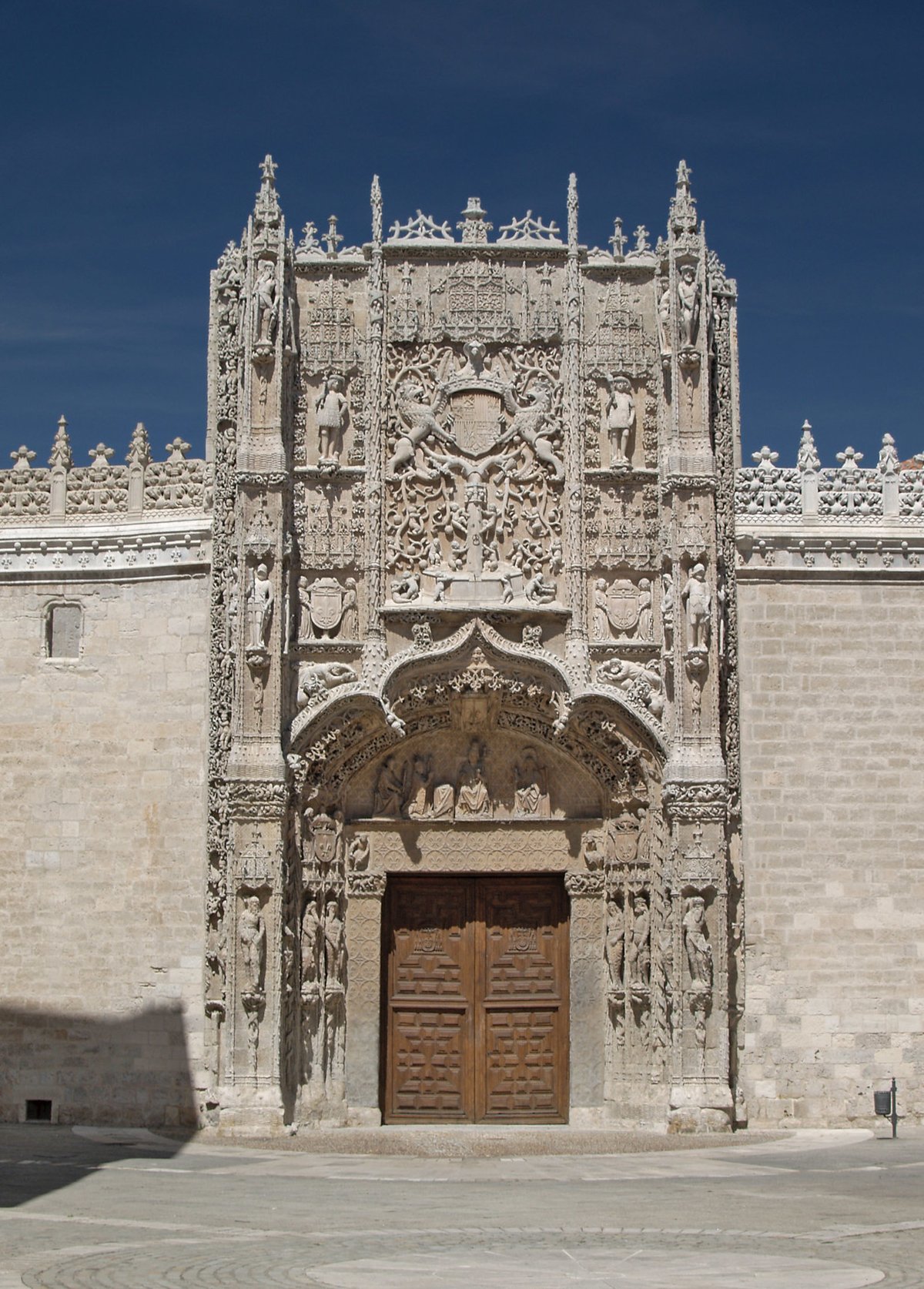

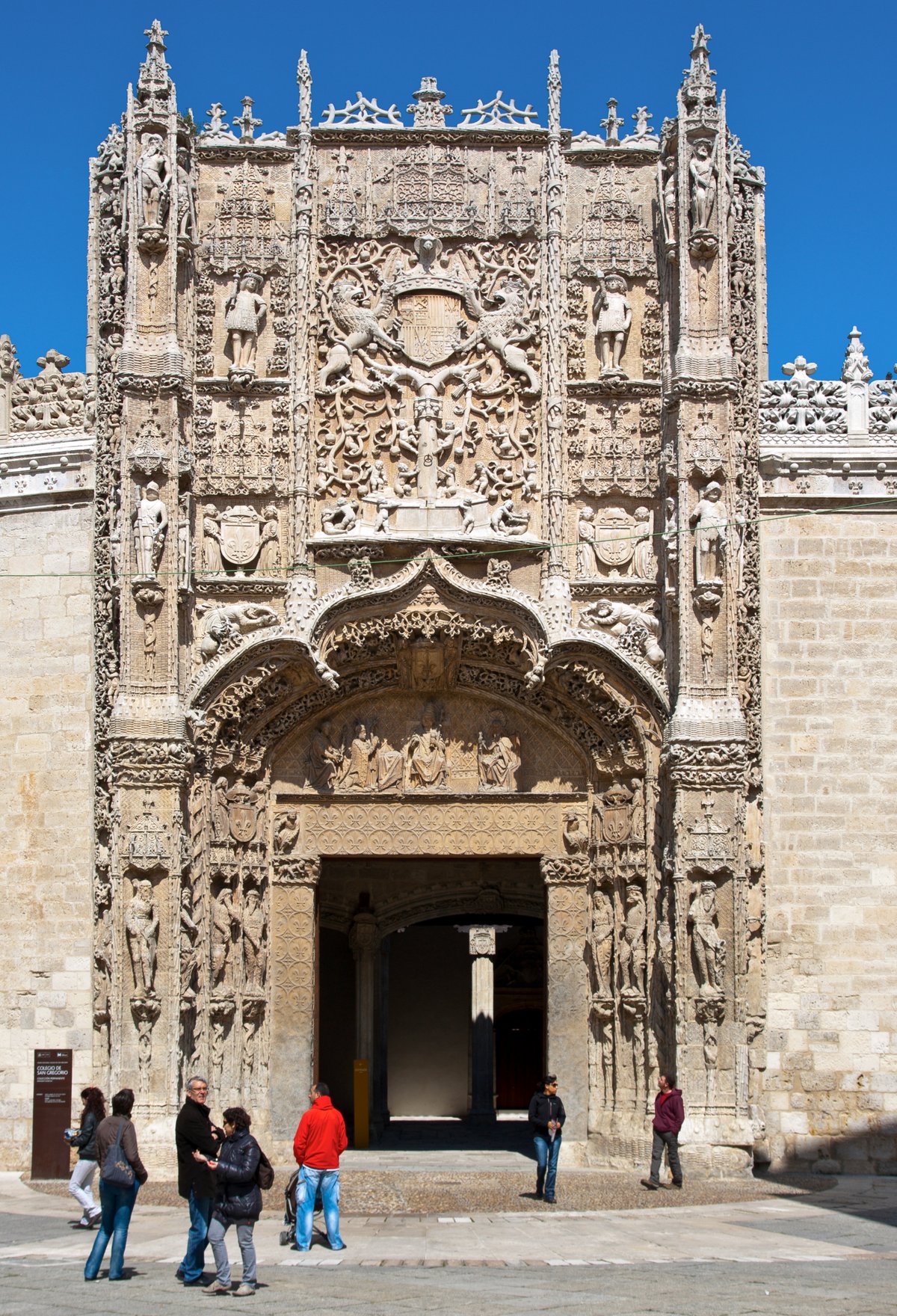
The Colegio de San Gregorio in Valladolid, Spain, is a testament to the Isabelline style, a characteristic architectural style of the Catholic Monarchs' reign (late-15th to early-16th centuries). Founded as a teaching institution, the Colegio de San Gregorio initially served as a theological college for Dominican friars. It trained prominent Renaissance thinkers, philosophers, and jurists, including Bartolomé de las Casas and Francisco de Vitoria. The building underwent a series of changes over the centuries, including periods as a barracks during the Napoleonic invasions and later as a prison.
The façade, with its elegant proportions and refined decoration, features a spectacular Isabelline portal with stylistic features linking it to the workshop of Gil de Siloé. While there is little documentary reference to the construction, making the identities of the architects and artists unclear, the chapel's construction began in 1484, with the rest of the buildings following from 1488. In 1524, a four-storey wing (the Edificio de las Azoteas) was added between the college and the chapel, designed by Gaspar de Solórzano.
Sources: Wikipedia, OpenStreetMap, Wikidata, Wikimedia Commons
Written by Nicolo Ciampini
Discuss this with the author and others
No comments yet. Be the first to start the conversation.