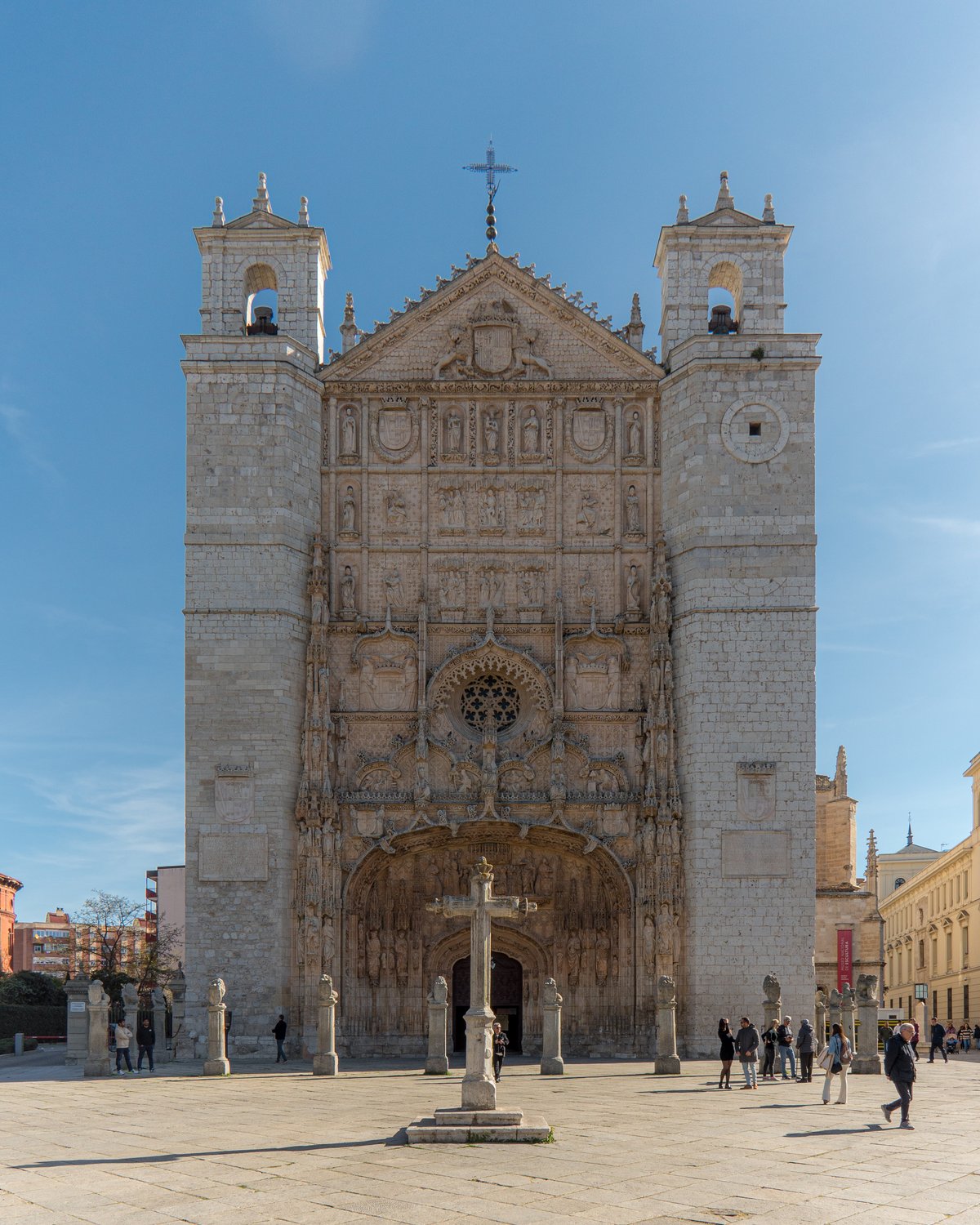

In the heart of Valladolid, Spain, lies the captivating San Pablo de Valladolid, a mesmerizing example of Isabelline architecture. Commissioned between 1445 and 1468 by Cardinal Juan de Torquemada, this church replaced an older, timber-roofed church beside a Dominican convent established in 1270. Renovations continued until 1616, with prominent figures such as Kings Philip II and Philip IV being baptized here, and a certain Napoleon making an appearance.
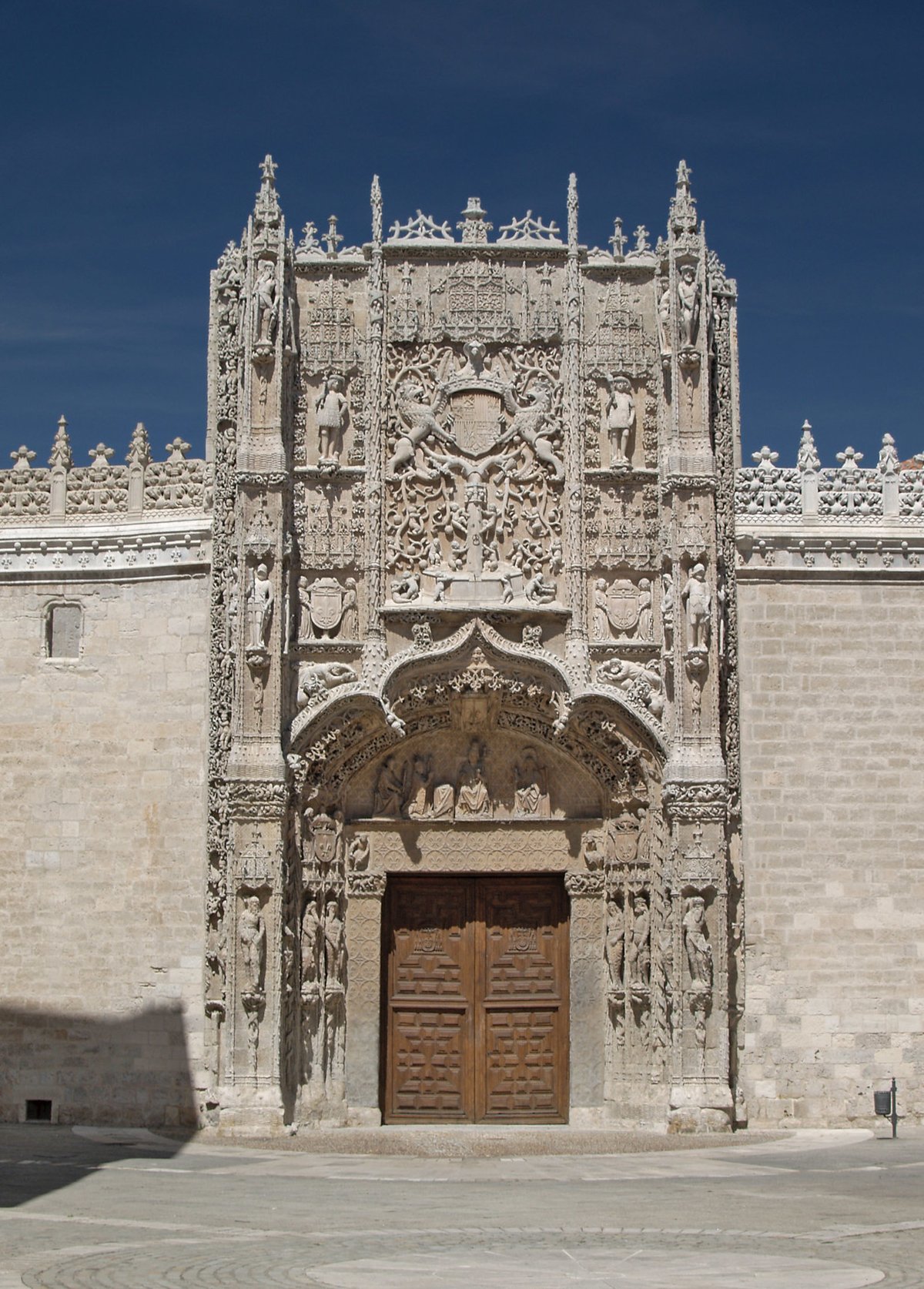
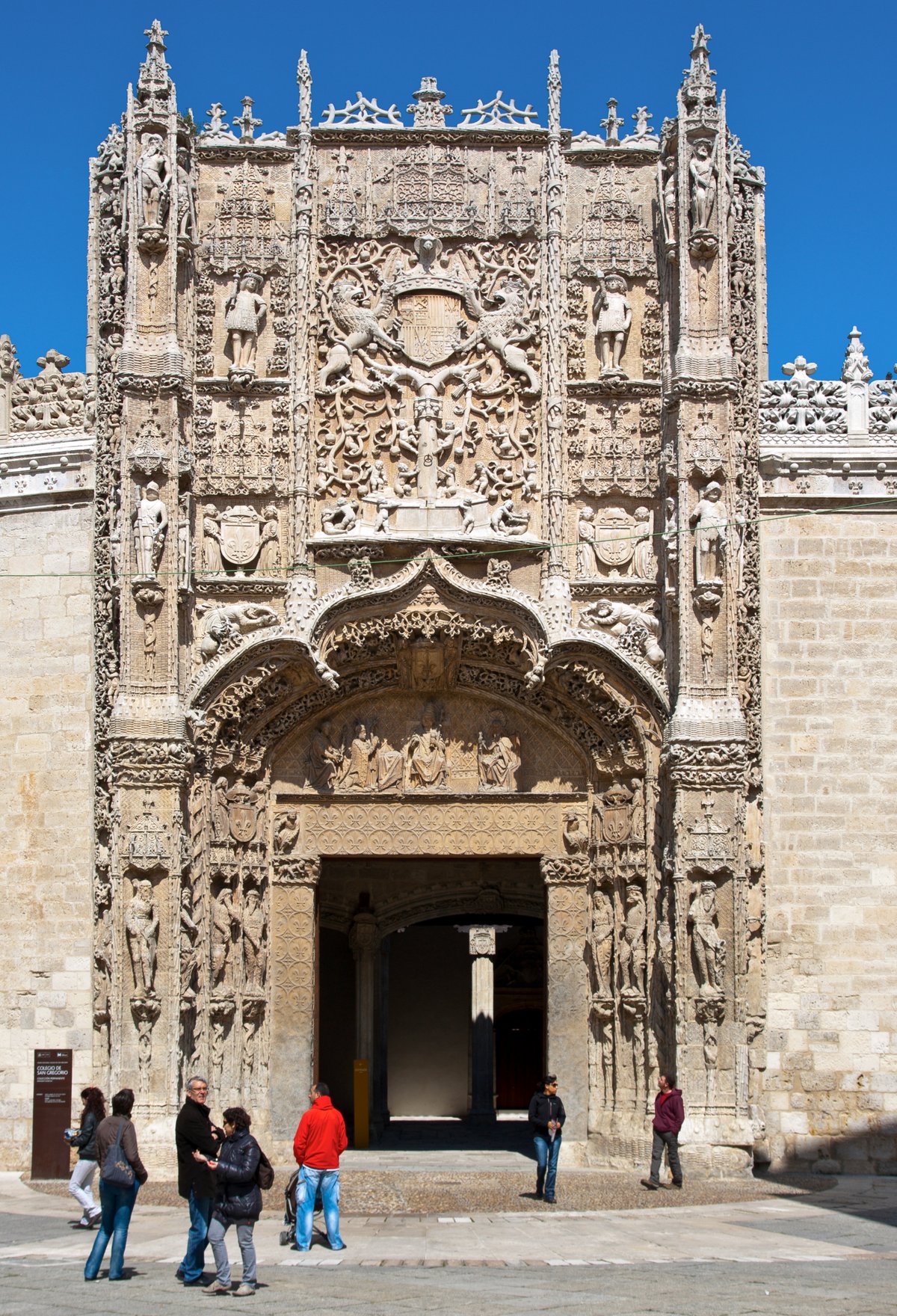
Today, it remains one of the buildings considered most emblematic of the city. The church's distinct Gothic design showcases a single nave, side chapels between buttresses, a raised choir, and a transept. The entrance portal, designed by Simón de Colonia, stands out with its large arch bearing a wavy profile and a relief of the Coronation of the Virgin in the presence of bishop Alonso de Burgos.
Stepping inside, one is greeted by two absidal chapels; ornate works by artists such as Gregorio Fernández and Bartolomé de Cárdenas can be found here, with intricate creations depicting St. Dominic of Guzmán and Christ by Gregorio Fernández, while Bartolomé de Cárdenas paints the Calling of St. Peter and the Conversion of St. Paul in the transept. Over the years, the church passed under the patronage of the Duke of Lerma, who funded its façade renovation and added numerous artworks within its walls.
Sources: Wikipedia, OpenStreetMap, Wikidata, Wikimedia Commons
Written by Nicolo Ciampini
Discuss this with the author and others
No comments yet. Be the first to start the conversation.