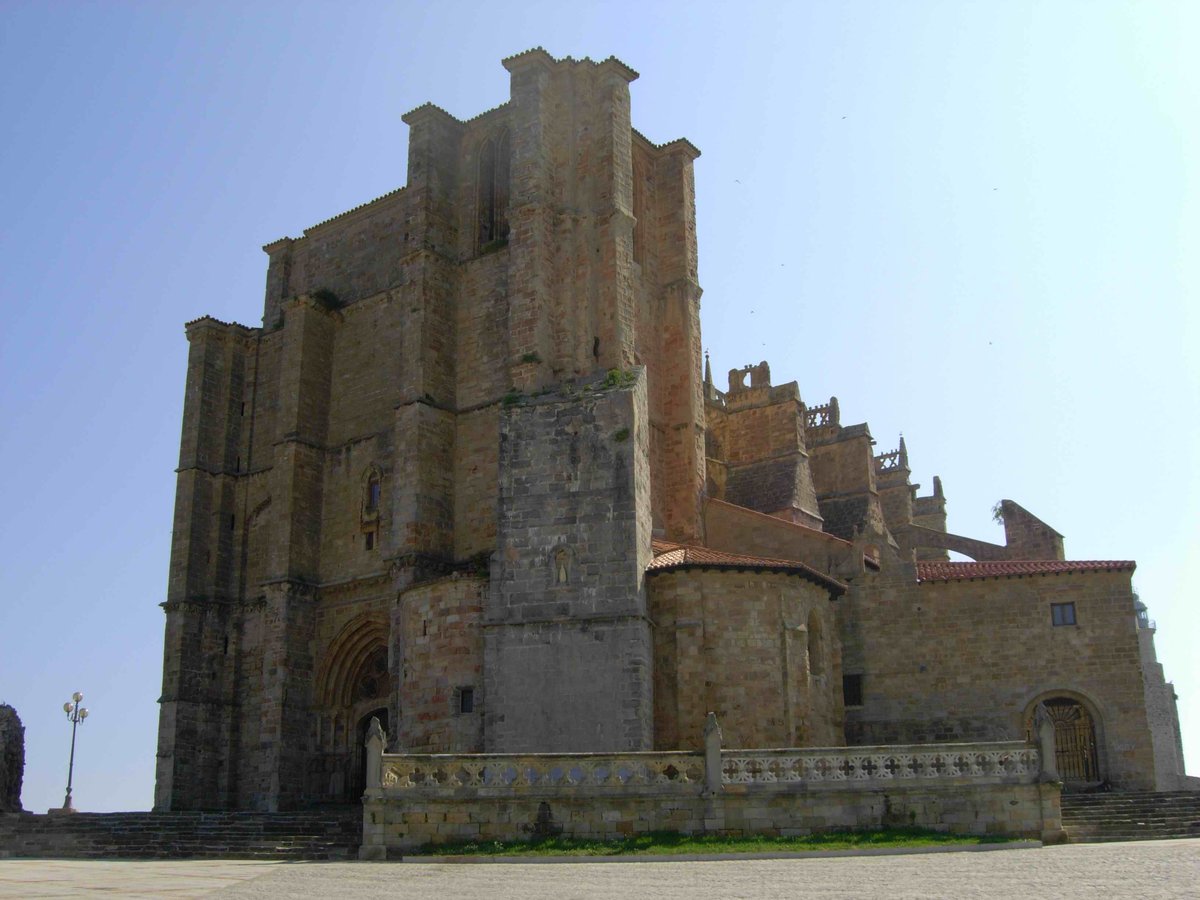

In February 1955, a group of children playing ball outside the Church of Santa María de la Asunción in Castro-Urdiales discovered a hidden treasure. One of the children, José Antonio Murga Gurrea, alerted the parish priest, Don Alfredo Lavín, after a strong ball hit the wall and revealed part of a polychrome statue. The figure is a 1.70 meter tall statue of the Virgin Blanca, which had been trapped in a hollow inside the wall for centuries. It is a stone sculpture with a tunic held by a belt and the Child seated on its left arm.
The church was constructed between the 13th and 15th centuries, during a period of economic prosperity for the port of Castro-Urdiales. It was declared a Bien de Interés Cultural in 2002 and was included as an individual asset of the Camino del Norte in 2015. The building features a basilical floor plan with three naves, high vaults, and a triforium with twisted columns. Its western facade is separated into two bodies by a cornice with sculptural decoration.
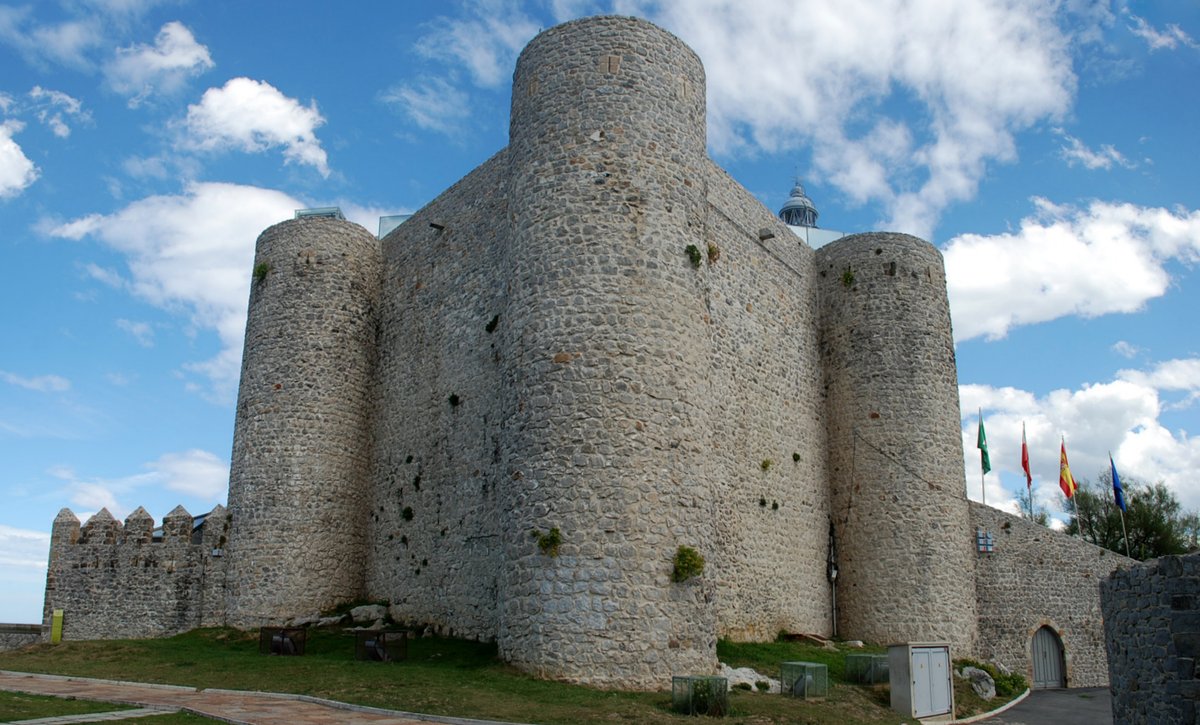
Today, the church is known to suffer from stone disease, a series of chemical reactions that transform the stone into sand. Inside the temple, the discovered statue of the Virgin Blanca is now located in one of the apsidal chapels. The church stands in a prominent location facing the Cantabrian Sea, next to the lighthouse-castle and the fishing port.
Sources: Wikipedia, OpenStreetMap, Wikidata, Wikimedia Commons
Written by Nicolo Ciampini
Discuss this with the author and others
No comments yet. Be the first to start the conversation.