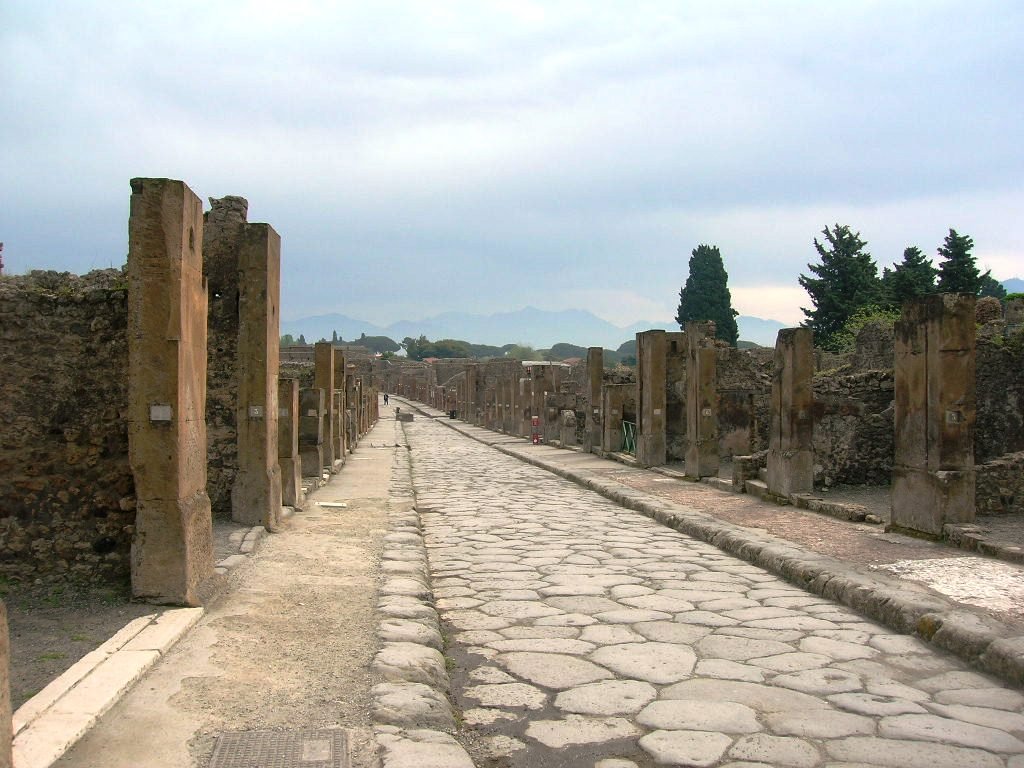

Established around the 8th BC century, Pompeii was hidden like a well-kept secret, a grandeur center for the region, boasting roads to Cuma, Nola, and Stabiae.However, its golden days wore the veil of Greek influence, as it was seized by the Greeks after their conquest of Cuma. Strangely enough, the Temple of Apollo arose during Etruscan rule, a spectacle of their conquest. Yet, this reign was brief, as the city succumbed to the Sannites, merging into Nocera's dominions.The 3rd century celebrated Pompeii in a grand way, an industrious city blessed with a small port and fortified walls.
Despite the Roman yoke, it was not until it was christened Cornelia Veneria Pompeianorum that it sparkled. Yet, the sheen was short-lived, as an earthquake in 62 AD shook the city, fragmenting it for belated restoration. Scarcely seven years later, on August 24, 79 AD, a devastating explosion of Vesuvius smothered Pompeii under a veil of ash and molten rock, abandoning it for nearly 1700 years.In the 18th century, the city's hidden chamber was unearthed, unveiling the covert history, customs, and art of the Romans.
Sources: Wikipedia, OpenStreetMap, Wikidata, Wikimedia Commons
Written by Nicolo Ciampini
Discuss this with the author and others
No comments yet. Be the first to start the conversation.