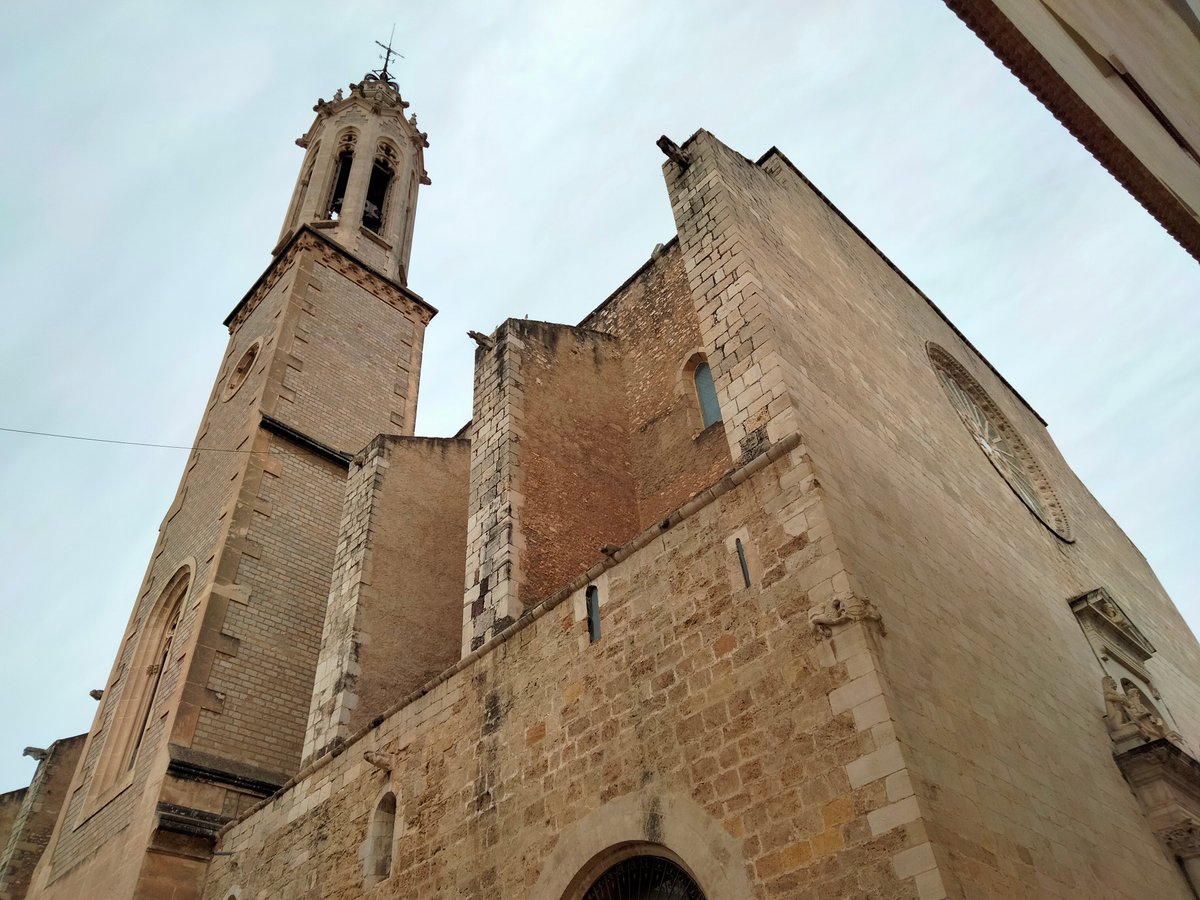
The Església de Sant Joan Baptista in Valls, known in the town as La Sibil·la, stands out on Plaça de l'Església 1. It is one of only three churches this size in all of Spain, and the only one with a facade entirely covered in faience, in shades of cobalt blue. But why is this building so remarkable? It has a story that is as colorful as the church itself, a story rooted in a baptism - both literally and figuratively. The church is called the Església de Sant Joan Baptista, but it is also known in Valls as La Sibil·la.
It was built on the site of a previous church, Sant Joan la Major, which dated back to the 12th century. The new church was completed in 1583, during a time of great social and religious upheaval in Spain. The expansion of Crown authority was challenging traditional power structures, and the population was demanding a more direct connection to the Church. This struggle is reflected in the design of the church. Its blue facade was inspired by the Templar Knights, who had been interred in the nearby church of Sant Esteve, and who had a reputation for their use of the color blue, associated with the Virgin Mary.
However, the person who really brought the church to life was the architect, Juli Maximilià Bartolomé Massó, whose innovative designs and use of materials such as faience were unprecedented in Spain. The church's central dome is topped with a golden rosette, and its facade is adorned with intricate sculptures of saints and biblical scenes. The main altar is a masterpiece of metalwork, featuring life-size figures carved in a combination of wood and marble.
The church's most famous piece, however, is the altarpiece in the Chapel of Our Lady of the Rosary. Created by the artist Antoni Agrella, it tells the story of the Virgin Mary's visit to Pous de Llucia, where she appeared to several locals and performed miracles. The church still stands today, its blue domes and white walls a symbol of Valls' history and a testament to the spirit of innovation and creativity that drove its construction over four centuries ago.
Sources: Wikipedia, OpenStreetMap, Wikidata, Wikimedia Commons
Written by Nicolo Ciampini
Discuss this with the author and others
No comments yet. Be the first to start the conversation.