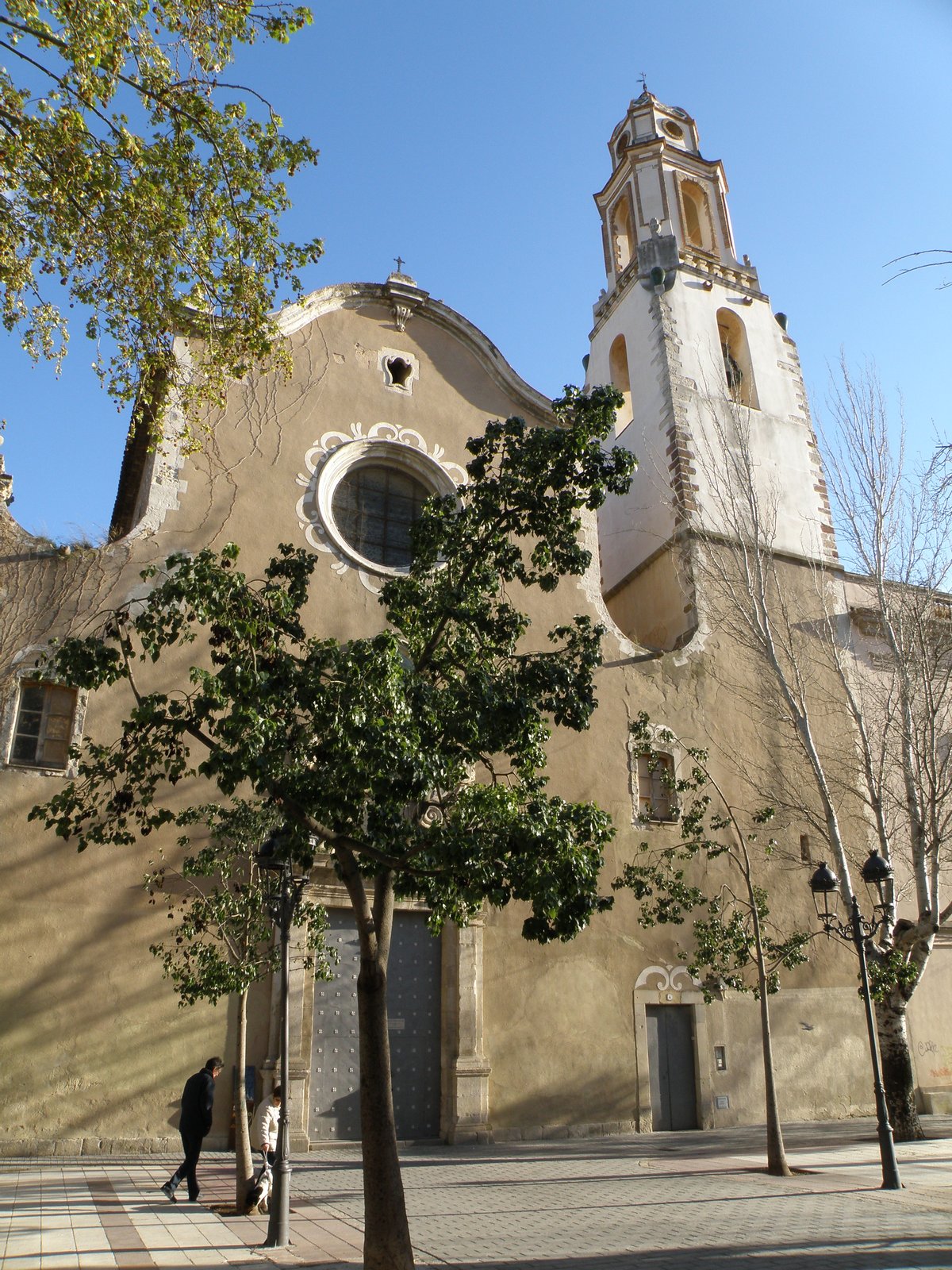

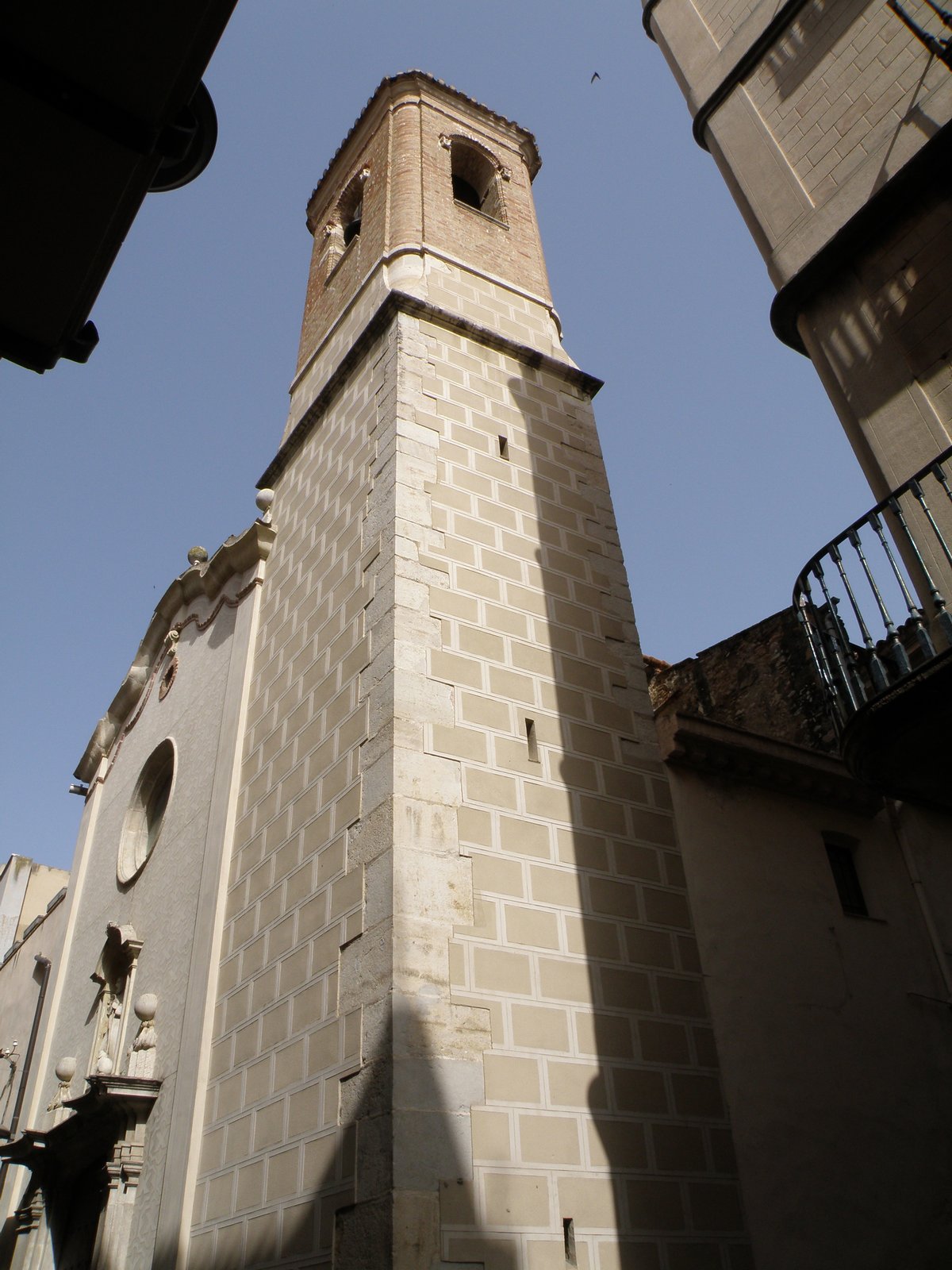
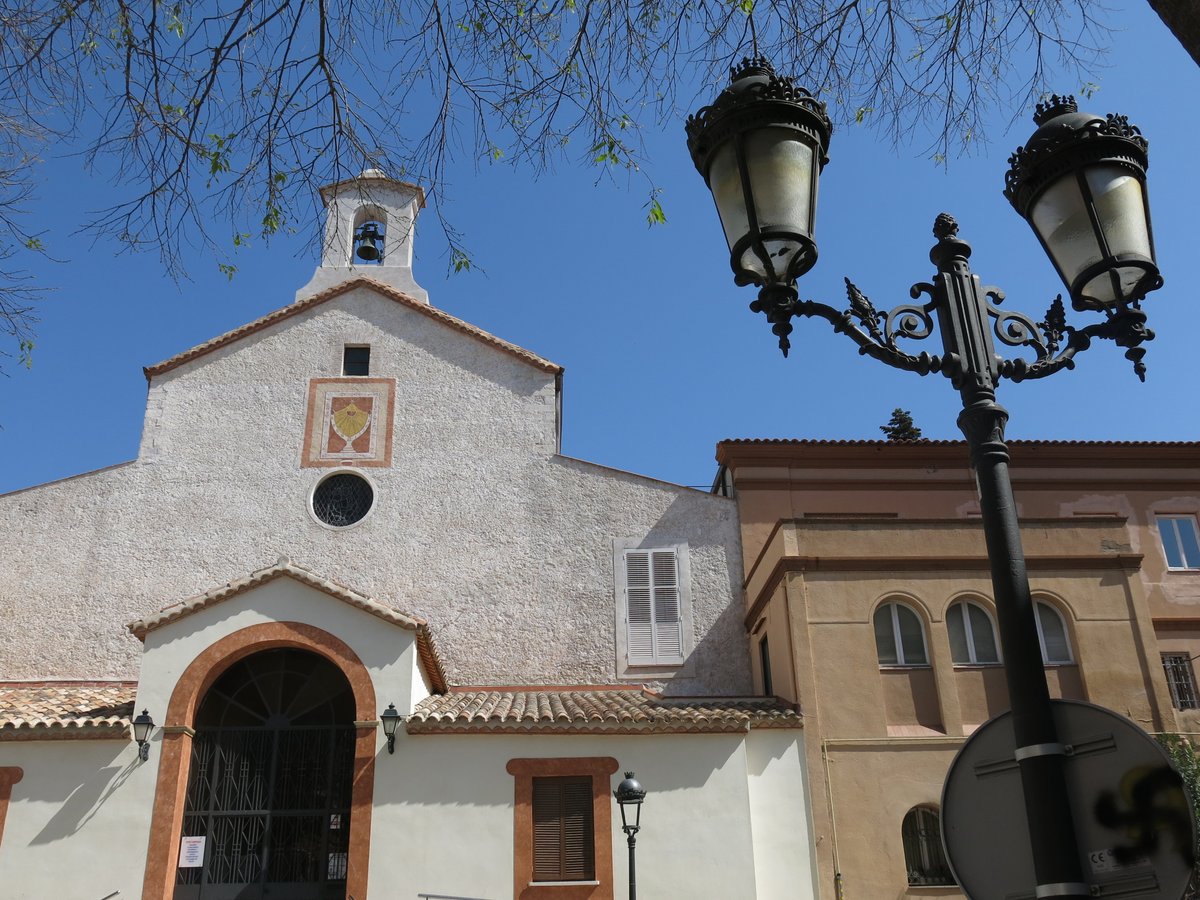
The Església del Carme in Valls is a basilical building consisting of a single nave with six bays and lateral chapels. The central nave and the arms of the transept are covered with barrel vaults with windows, while the transept features a dome over tiles. The facade is symmetrical and designed in the Baroque style, featuring a niche above the main door containing an image of the Virgin of Carmen. A square bell tower rises in four progressively smaller stories on the side of the Espítola.
The history of the site began in 1320, when the Jurats of the Town donated the land necessary to found the monastery and convent dedicated to Santa Maria del Carme. Philanthropists from Valls and the University of Valls collaborated on the project, with the University supporting the start of the monastery's construction in 1678. The church was finished in 1512 by the master builder Peris de Tost, while the facade dates to the 18th century. The bell tower was built in two stages, with the final phase likely completed by Joan Pallà in the early 19th century.
The Temple and the Monastery were inhabited by the Carmelites until the first half of the 19th century. Following the exclaustració of the friars in 1835, the convent was adapted into a hospital. Regarding the church, the building was converted into a parish in 1878. The structure is built of stone and masonry with plaster, featuring balconies on the first floor with ceramic balustrades.
Sources: Wikipedia, OpenStreetMap, Wikidata, Wikimedia Commons
Written by Nicolo Ciampini
Discuss this with the author and others
No comments yet. Be the first to start the conversation.