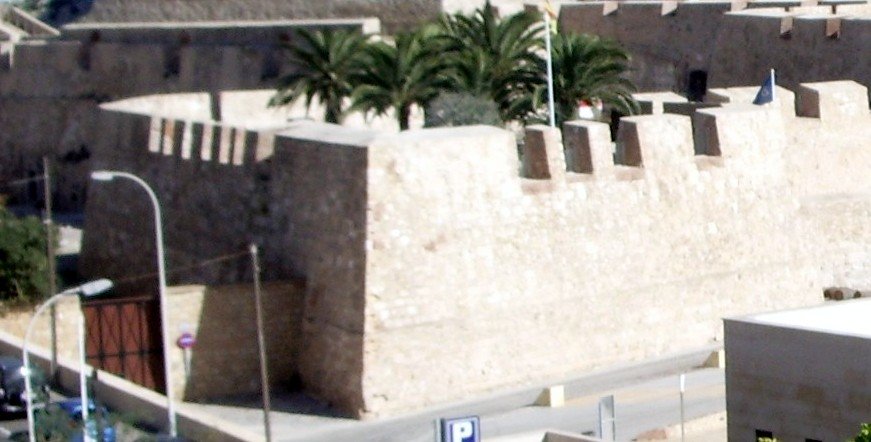

Deep within the heart of Melilla, a city steeped in abundance along Africa's northern shore, the Baluarte de San Fernando emerges, enveloped by swaying palm trees. Erected by the skilled Spanish engineer Juan Martín Zermeño between 1721 and 1722, the fortress resides within the Third Fortified Enclosure of Melilla's ancient town, a historic-artistic ensemble. The Alcázar de San Felipe, a fortification built by Ungo de Velasco between 1711 and 1714, gives way to the Luneta where the Baluarte de San Fernando now stands.
Once within the Torre Quemada, the Reducto de San Felipe once resided, but was replaced by the Baluarte. As the 19th century waned, structures ascended and crumbled only to be torn down. In their stead, a garden blooms, forming the semblance of a misshapen fortification. A wall has been constructed within it, stretching from corner to ditch, to guard against enemy fire. A missing guardhouse lies in the direction of the Camino Cubierto de San Miguel.
The garden, a covert oasis blooming under the palms, offers respite from the city's din, a testament to the fact that even in the desolate, beauty can flourish, if one but knows where to discover it.
Sources: Wikipedia, OpenStreetMap, Wikidata, Wikimedia Commons
Written by Mutabor
Discuss this with the author and others
No comments yet. Be the first to start the conversation.