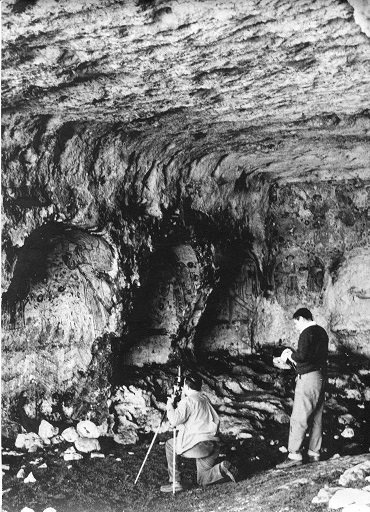

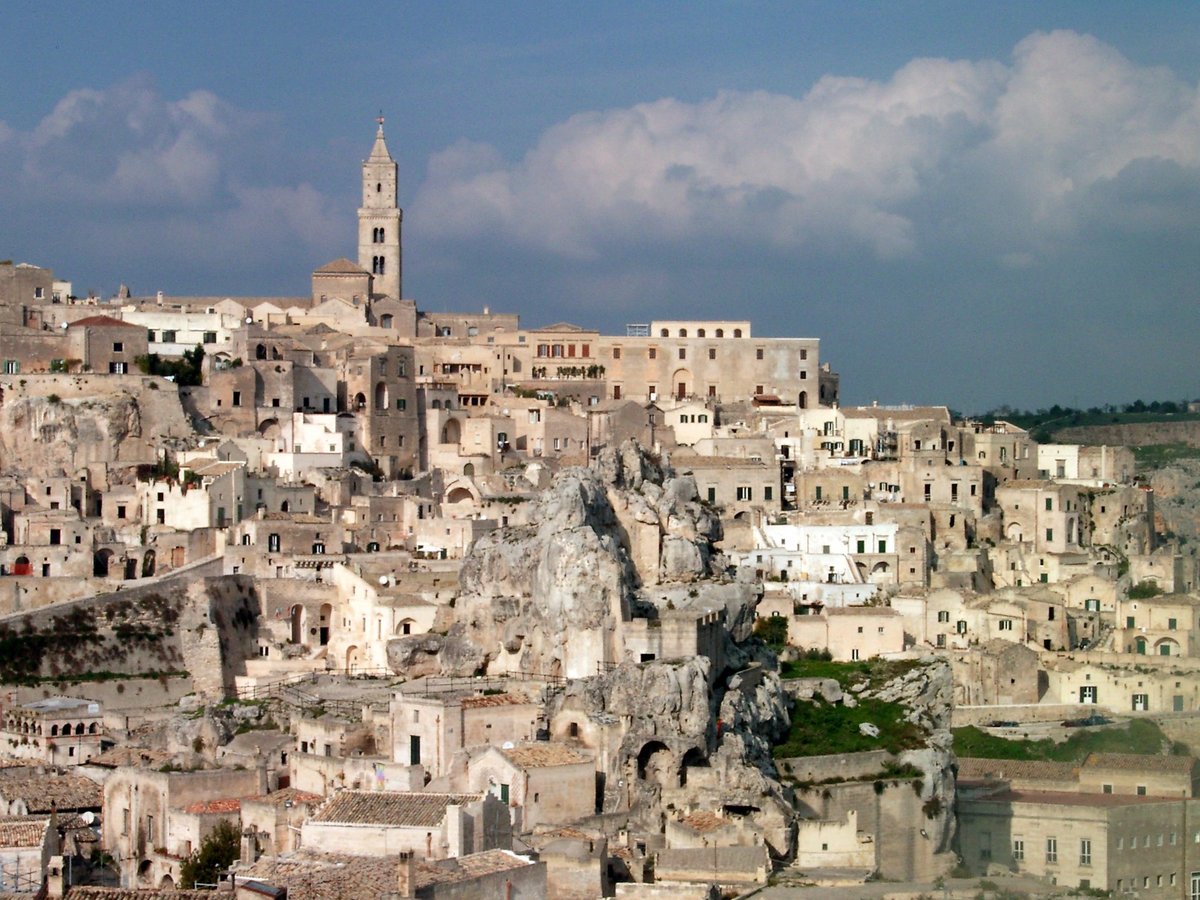
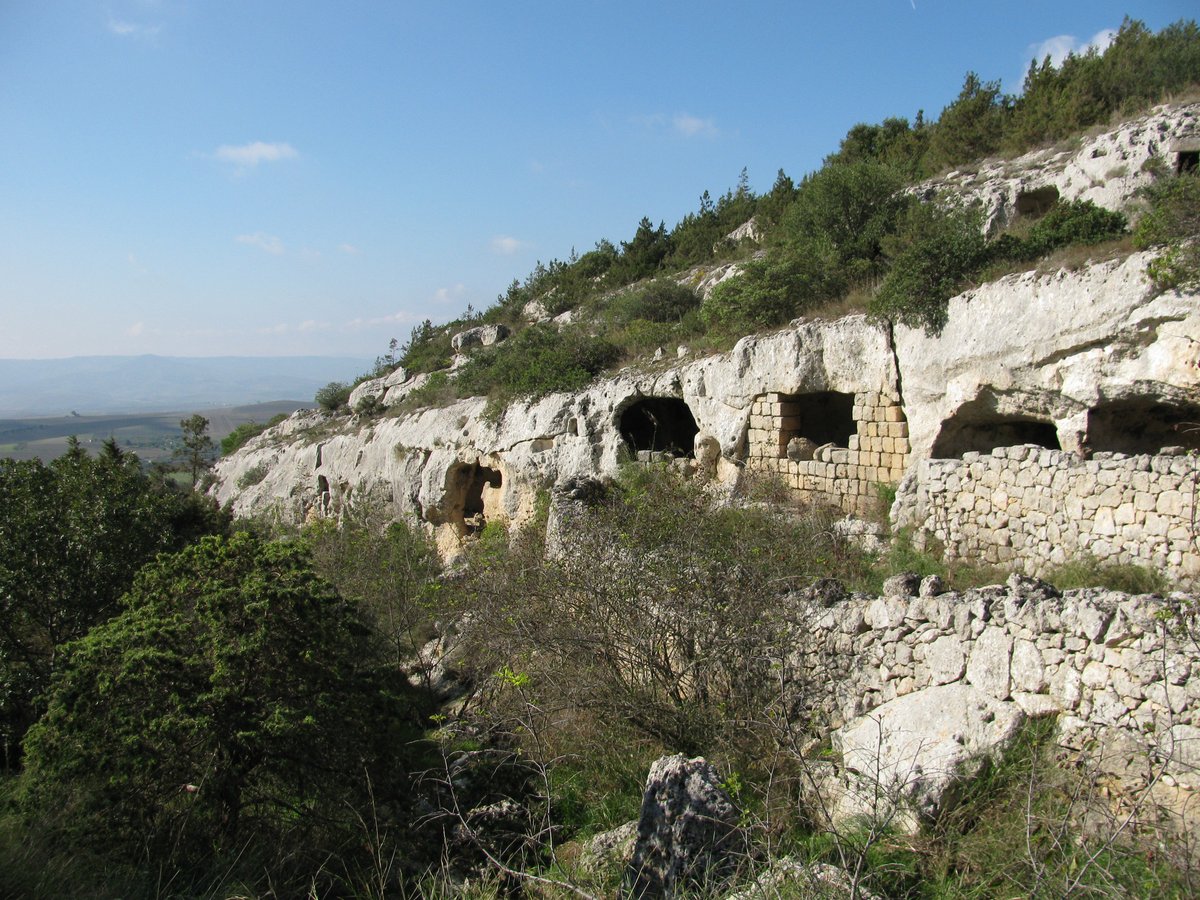
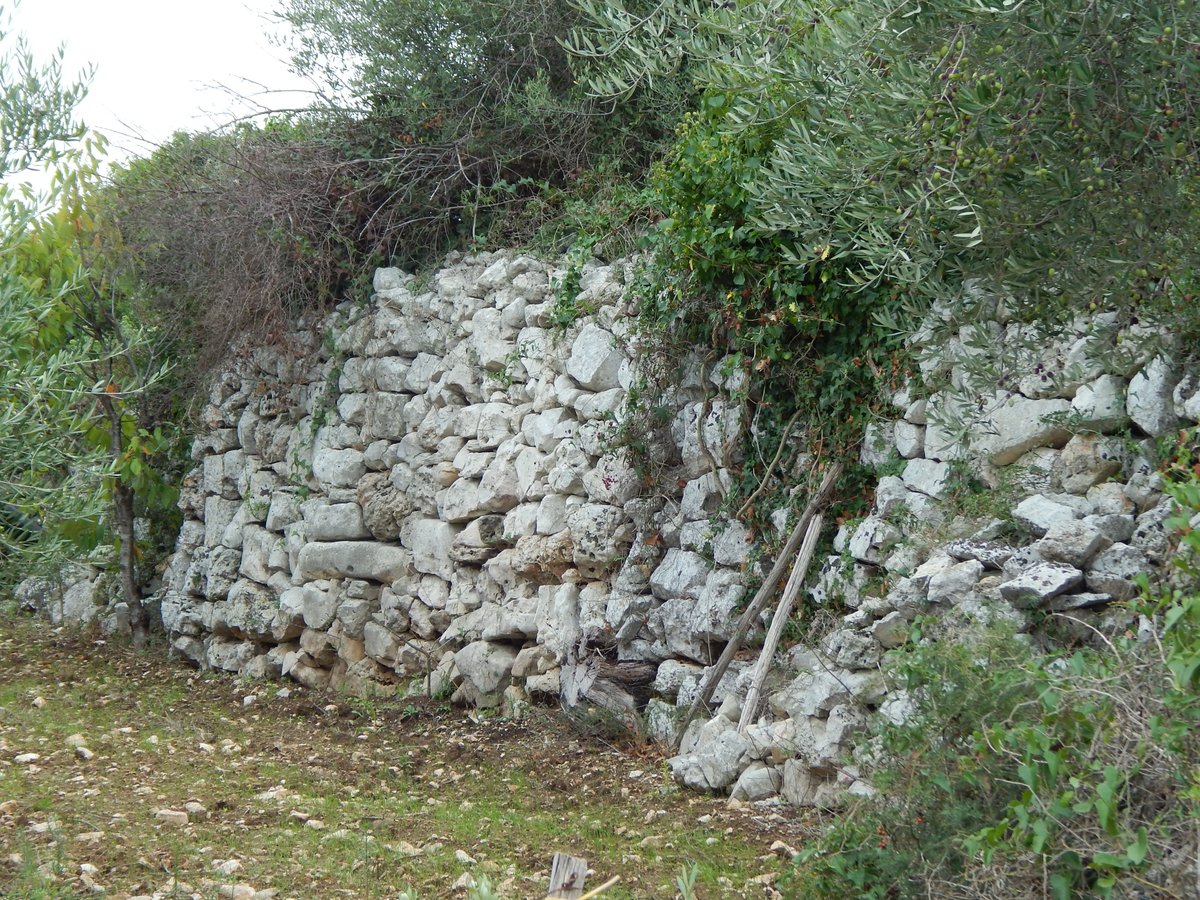
La cripta del Peccato Originale is a rock-cut church in Matera, carved into the rock along the wall of the Gravina di Picciano. Known as the "Sistine Chapel of rock art" due to its unique cycle of frescoes, the church dates back to the period between the 8th and 9th centuries. It probably belonged to the Benedictine order, a theory supported by elements found within the fresco cycle.
After being abandoned for a long period, the cave was mentioned in notes by Domenico Ridola as the "grotto of the Hundred Saints." A shepherd later used it as a shelter for himself and his animals. The site was rediscovered on May 1, 1963, by members of the La Scaletta circle and subsequently underwent restoration work.
Inside the single chamber, a cycle of frescoes was painted by a single artist known as the "Painter of Flowers of Matera," who may have been a Benedictine monk. The paintings reflect a Lombard style with subtle Byzantine influences and Roman elements such as simple drawing lines, rich clothing, and expressive faces. On the left wall, three niches contain scenes of the Apostles, the Virgin Queens, and the Archangels. The back wall features scenes from the Old Testament, specifically the Creation and Original Sin, which give the church its name. The cycle is completed by paintings of flowers and various figures described by Latin epigraphs.
Sources: Wikipedia, OpenStreetMap, Wikidata, Wikimedia Commons
Written by Nicolo Ciampini
Discuss this with the author and others
No comments yet. Be the first to start the conversation.