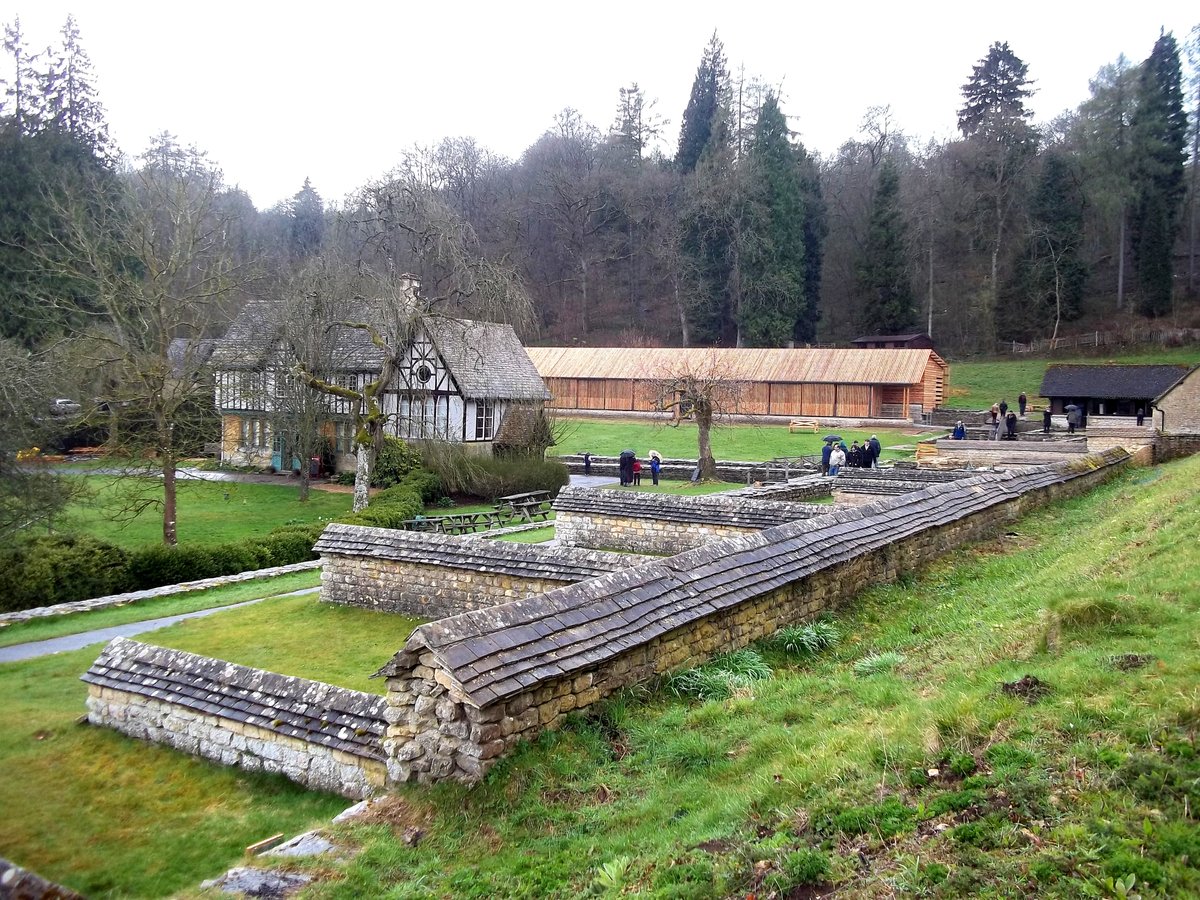
Chedworth Roman Villa, located in Gloucestershire, England, is one of the largest and most elaborate Roman villas so far discovered in Britain. The villa was built in phases from the early 2nd century to the 5th century, with the 4th-century construction transforming the building into an elite dwelling arranged around three sides of a courtyard. However, the most interesting feature of this villa is the apsidal shrine and nymphaeum located at the north-west corner of the complex, built around a natural spring.
This is the only known Roman nymphaeum in the Cotswolds, and it is still fed by the spring today. An octagonal pool is located at the centre of the nymphaeum, and a Christian chi-rho monogram was discovered scratched onto what was the rim of the pool. However, the monogram was replaced by the original water nymphs, suggesting that the spring and the shrine continued to be used for religious purposes even after the spread of Christianity. Intriguingly, the nymphaeum was also used as a votive offering site during the Anglo-Saxon period, and Christian service was held in the shrine as late as the 8th century. Today, Chedworth Roman Villa is a scheduled monument, owned and maintained by the National Trust. Visitors can explore the villa and its surroundings, including the nymphaeum and the natural spring that feeds it.
Sources: Wikipedia, OpenStreetMap, Wikidata, Wikimedia Commons
Written by Nicolo Ciampini
Discuss this with the author and others
No comments yet. Be the first to start the conversation.