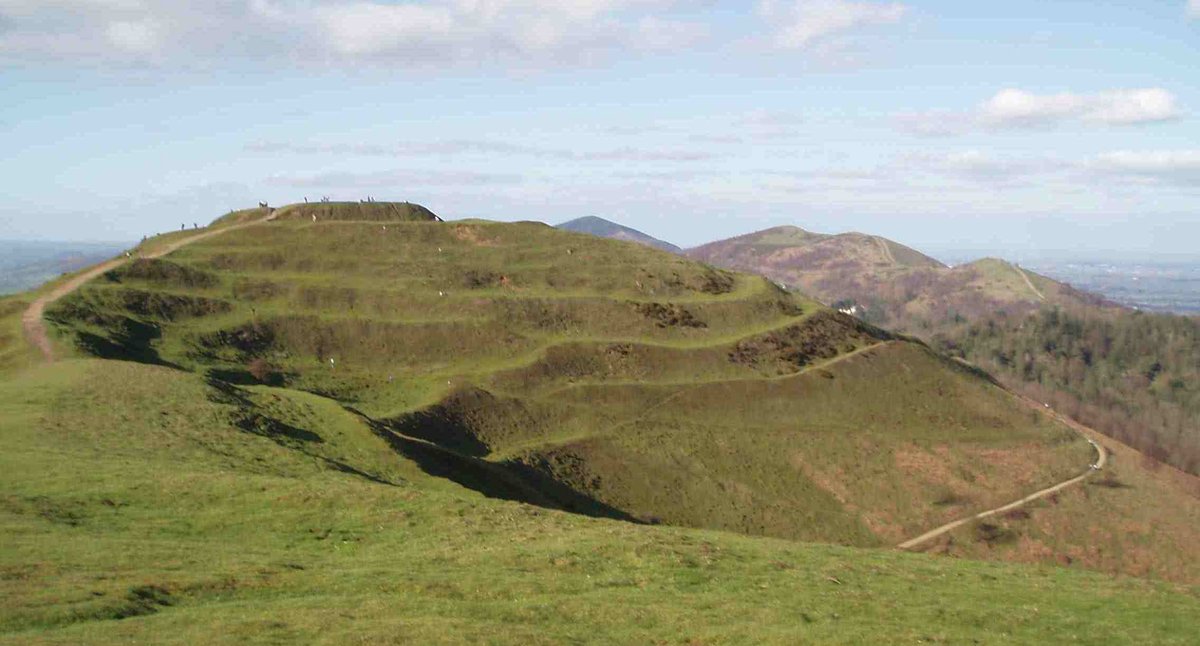

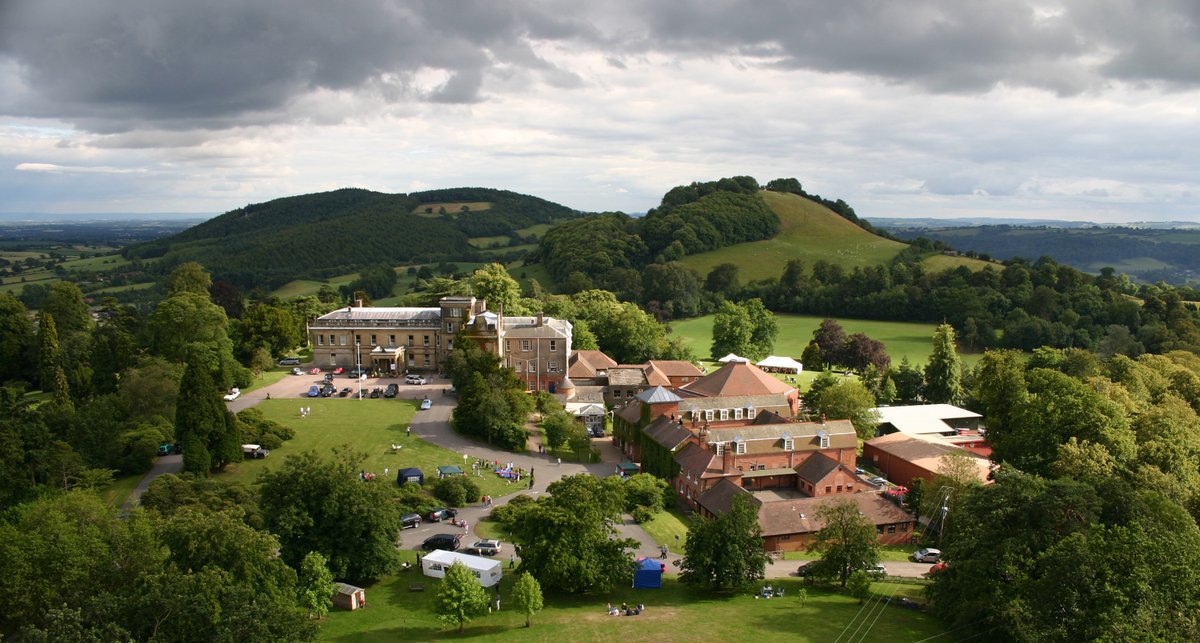
British Camp is a sprawling Iron Age hill fort sitting atop Herefordshire Beacon in the Malvern Hills. The extensive earthworks are so prominent they have been compared to a giant wedding cake. The diarist John Evelyn remarked that the view from the hill was one of the godliest vistas in England. The site features a perimeter of 6,800 feet and covers about 44 acres.
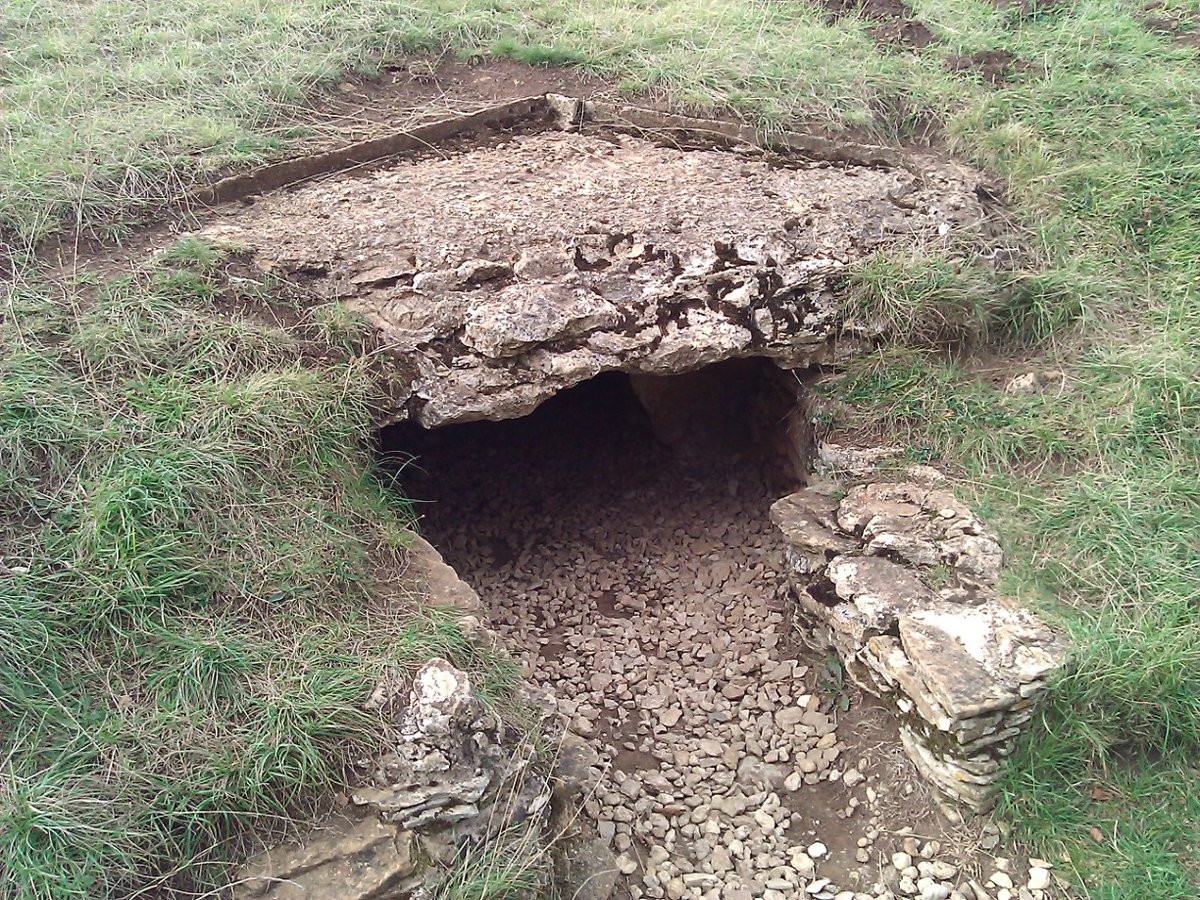
It is unusual to have two major hill forts within such a short distance, as Midsummer Hill fort is located just a mile to the south. The site features at least four prehistoric phases of construction, including a citadel and original gates to the east, west, and north-east. Generally round hut platforms on the site may suggest a permanent occupation.
History often reused existing sites. In the years leading up to 1066, a Norman ringwork and bailey castle, known as Colwall Castle, was built within the old Iron Age earthworks. It is possible the builder was Earl Harold Godwinson, the future King Harold II of England. The castle was held by the Earl of Worcester before King Henry II destroyed it in 1155.
Visitors can see the distinct earthworks and permanent occupation huts today. Folklore says a chieftain named Caratacus made his last stand here against the Romans, though the historian Tacitus suggests the real battle happened elsewhere, as the River Severn is about 8 kilometres away.
Sources: Wikipedia, OpenStreetMap, Wikidata, Wikimedia Commons

Written by Nicolo Ciampini
Discuss this with the author and others
No comments yet. Be the first to start the conversation.