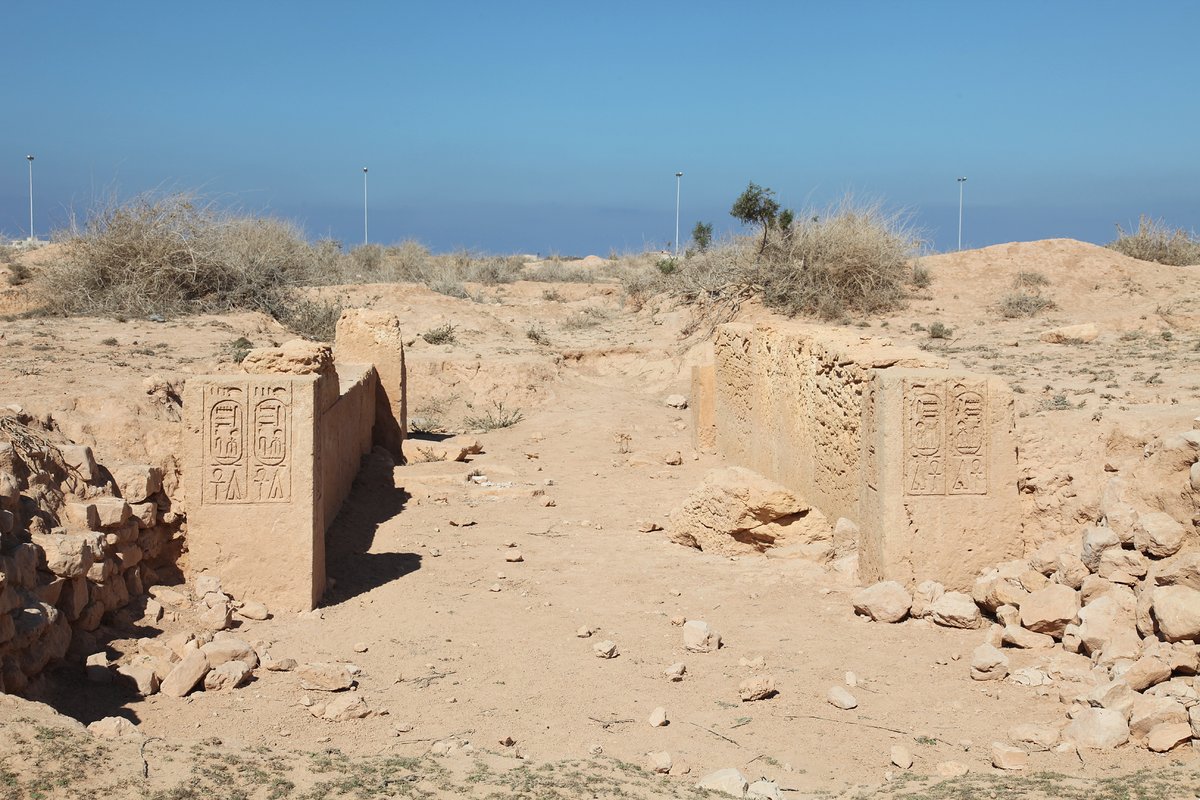

Nestled on the golden shores of Egypt's North, the beguiling Zawiyet Umm el-Rakham once echoed with life - an archaic wonder that served as the furthest reach of Egyptian influence during the reign of Ramesses II. Rediscovered in 1948, this fortress-town has since captivated the curiosity of archaeologists such as Alan Rowe and Labib Habachi. Since 1994, under the steerness of Steven Snape and his team from the University of Liverpool, substantial excavations have begun.
The fortress, as the accounts describe, was built on Libyan soil to manage the water resources in the area, functioning as a military post with fortified walls, wells, and resources to support a substantial garrison. Investigations at the site indicate that it flourished under the rule of Ramesses II and was vital for Egypt's strategic moves. Today, the ancient sanctuary of Umm el-Rakham stands as a captivating monument to the civilization that brought life to the rugged shores of Egypt.
For those eager to delve into its mysteries, the site remains accessible, offering a peek into a rich epoch that lay undisturbed for centuries.
Sources: Wikipedia, OpenStreetMap, Wikidata, Wikimedia Commons
Written by Mutabor
Discuss this with the author and others
No comments yet. Be the first to start the conversation.