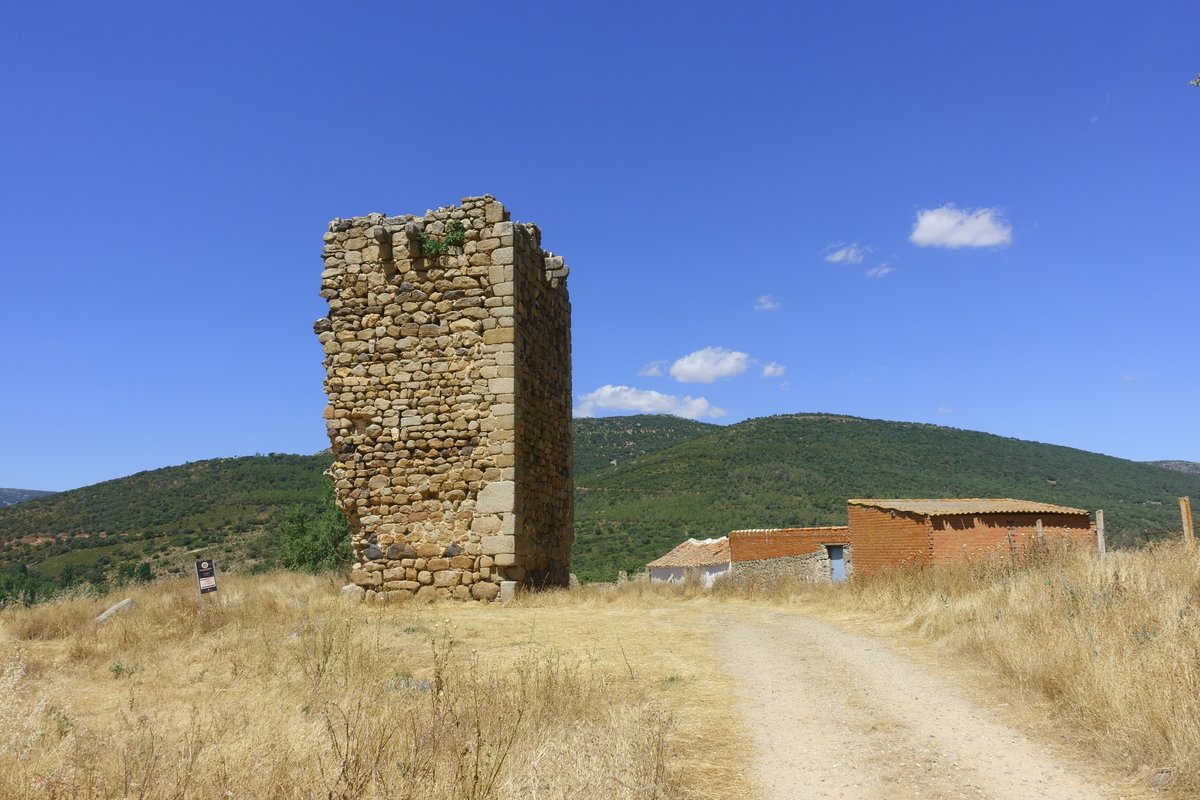

The Torre de Malamoneda stands as a stony sentinel at the foot of the Sierra del Puerco. While the tower dates to the 13th century, the ground beneath it holds deeper history, including remains of Roman constructions.
In 1210, the knight Alfonso Téllez received this territory. In 1226, he sold it to Rodrigo Ximénez de Rada, along with the castle of Dos Hermanas and other villages in the Montes. The tower eventually passed to the crown under the reign of Fernando III the Saint. In 1246, the crown bought all the mountains that bore Téllez's name for 45,000 gold maravedís, and the land remained city property until the civil disentailment of the 19th century.
For centuries, the tower and the nearby castle provided a fortress and refuge for the local inhabitants. The village of Malamoneda is now a ghost town, where the houses of labor remain standing but are uninhabited. To the north and west of the deserted village lies a necropolis covering an area of 1 kilometer, containing more than 100 graves carved directly into the rock.
Today, the tower sits 200 metres above the ruins of the Malamoneda castle. It remains an open ruin in the quiet landscape of the Montes de Toledo, a region of great natural interest.
Sources: Wikipedia, OpenStreetMap, Wikidata, Wikimedia Commons

Written by Nik Frost
Discuss this with the author and others
No comments yet. Be the first to start the conversation.