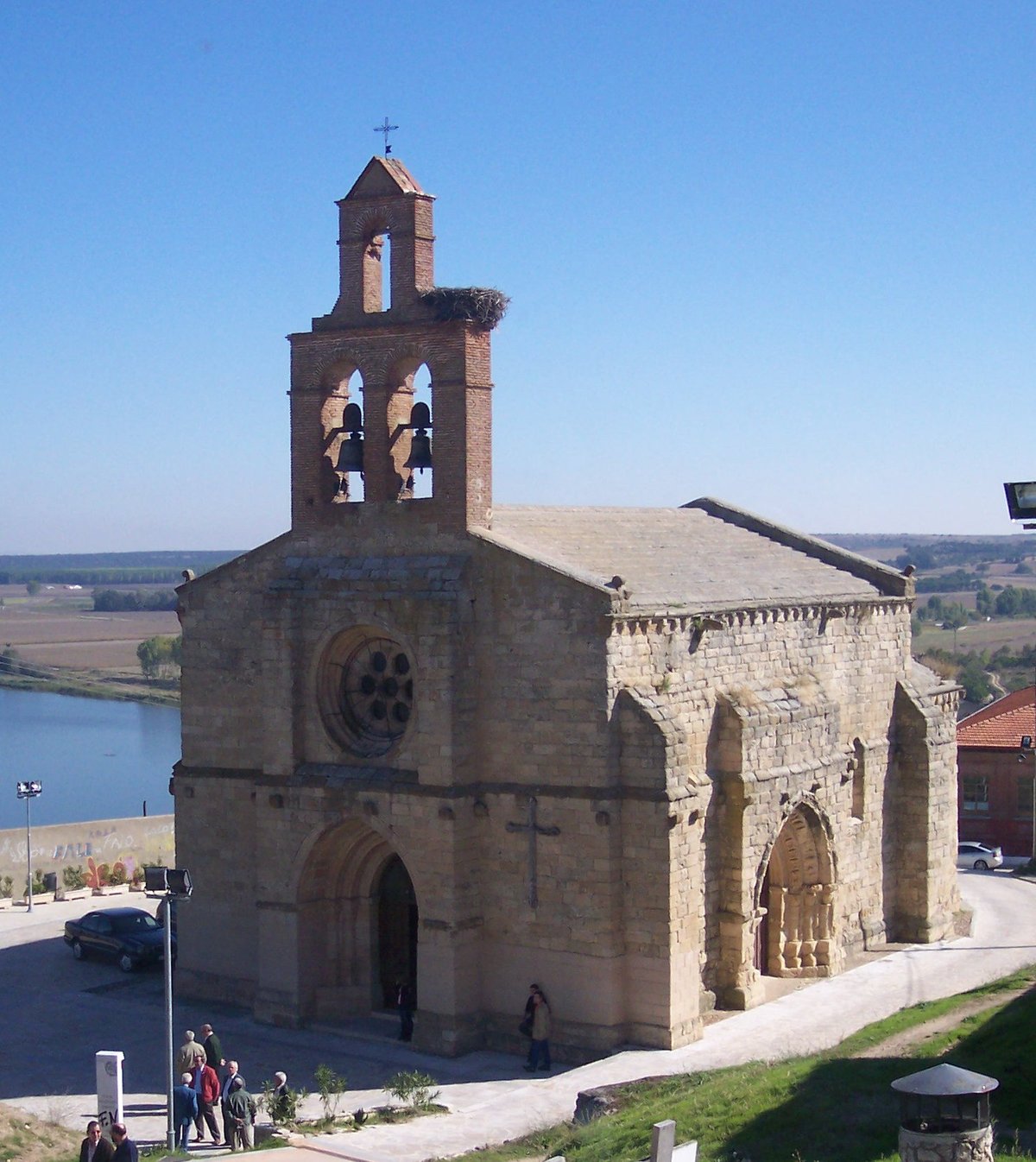

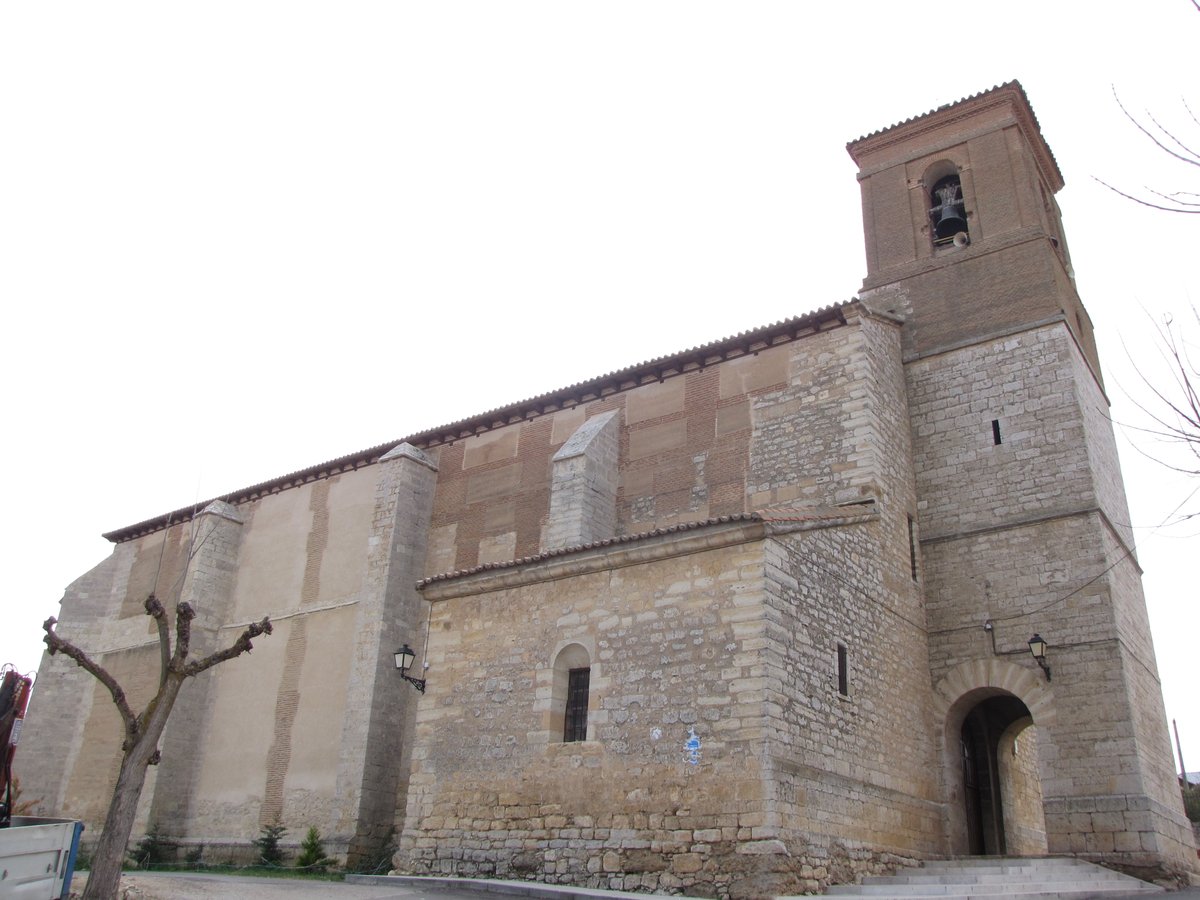
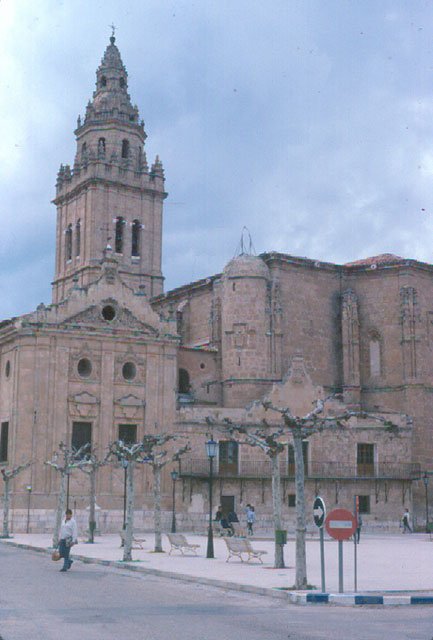
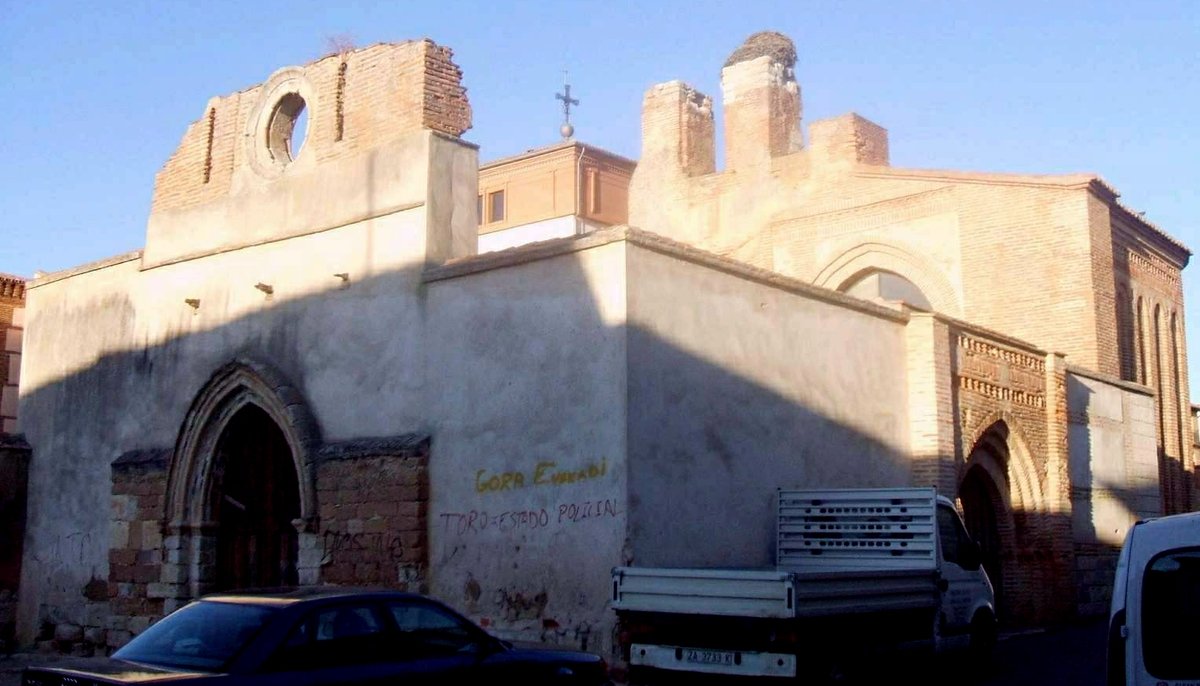
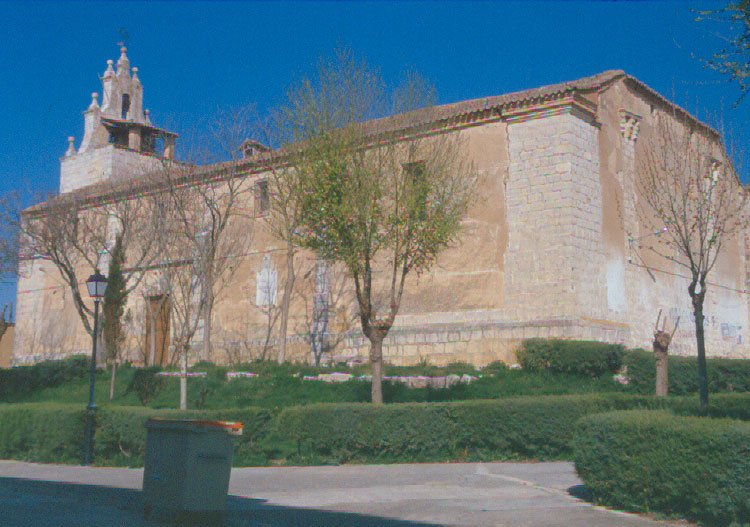
We find ourselves standing where the original Iglesia de Santa María del Castillo once stood. Constructed in the mid-1200s, this expansive stone temple featured a triple flat header, three naves, and a powerful fortified tower. It was built in a style with Hispano-Languedocian influences, echoing the Romanesque traditions found in the churches of Villamuriel de Cerrato and Villalcázar de Sirga.
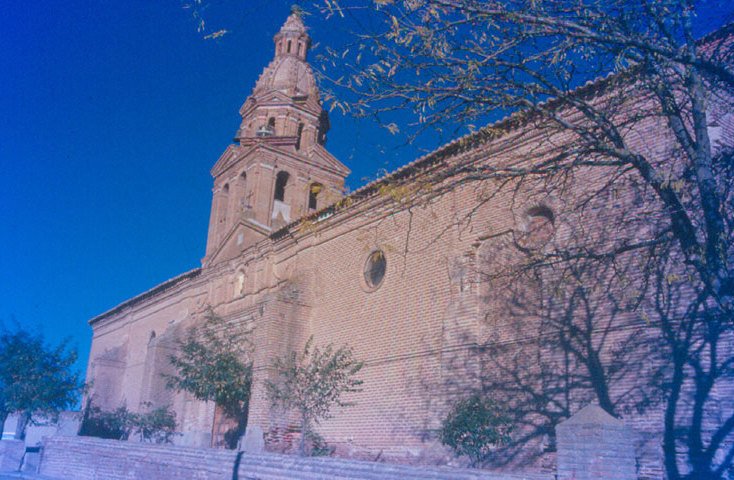
It was a funerary church, arising from private patronage and later converted into a pantheon for the comendadores. While a building of the same name exists today, the original medieval church disappeared completely in 1919, according to the historian Francisco Antón, leaving centuries of history under its feet.
That current Santa María del Castillo shows characteristics of Romanesque with Cistercian elements. The main door mirrors the 12th-century aesthetic of the Magdalena in Zamora with its radial figures and floral decorations. Inside, the space is defined by pointed arches over half-columns, where some polychromy remains on the large separating arch. If you look closely at the masonry, you will find nearly thirty distinct marks left by the stonemasons who gave this place life.
Sources: Wikipedia, OpenStreetMap, Wikidata, Wikimedia Commons
Written by Nik Frost
Discuss this with the author and others
No comments yet. Be the first to start the conversation.