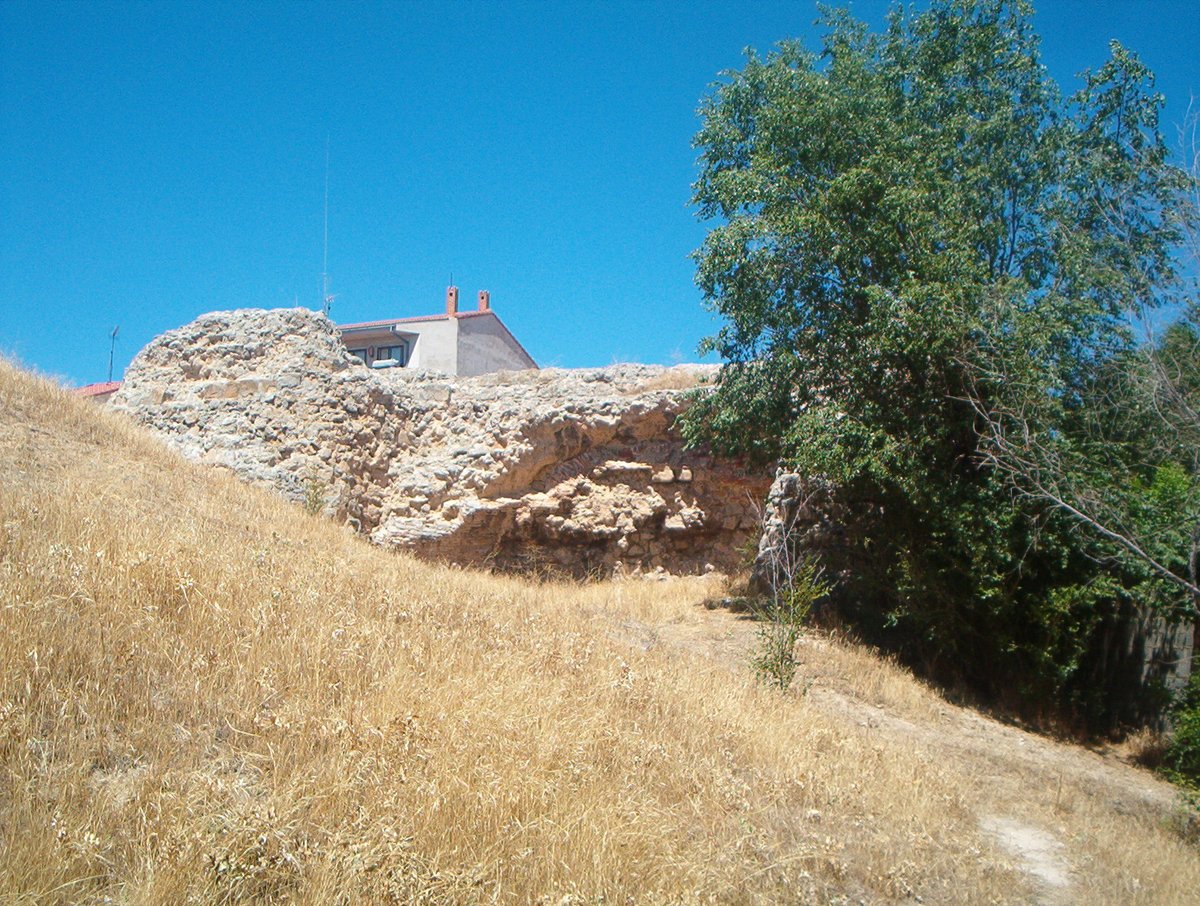

Welcome to Alaejos Castle, a 15th-century fortress in the province of Valladolid, Spain. Constructed by Alonso de Fonseca y Ulloa, bishop of Ávila, the castle was one of the balances of power for the Fonseca family in the area. During the reign of Enrique IV, Juana de Portugal, wife of Enrique IV and mother of Juana la Beltraneja, was imprisoned in the castle. The castle became infamous for its dark history. During her imprisonment, Juana de Portugal began a relationship with Pedro de Castilla y Fonseca, which took place around 1467 and 1469, and resulted in the birth of two sons, Pedro and Andrés de Castilla y Portugal.
To escape, Juana de Portugal famously fled at night by hanging from the castle wall. The castle was later attacked and partially destroyed during the Guerra de las Comunidades de Castilla (1520-1522). A second recinto was added to the castle in the late 16th century, adapted for artillery use. Felipe III visited the castle in June 1600, and the castle continued to decay in the 17th century. Today, only some parts of the castle remain, and it serves as an archaeological site open to visitors.
Sources: Wikipedia, OpenStreetMap, Wikidata, Wikimedia Commons
Written by Nicolo Ciampini
Discuss this with the author and others
No comments yet. Be the first to start the conversation.