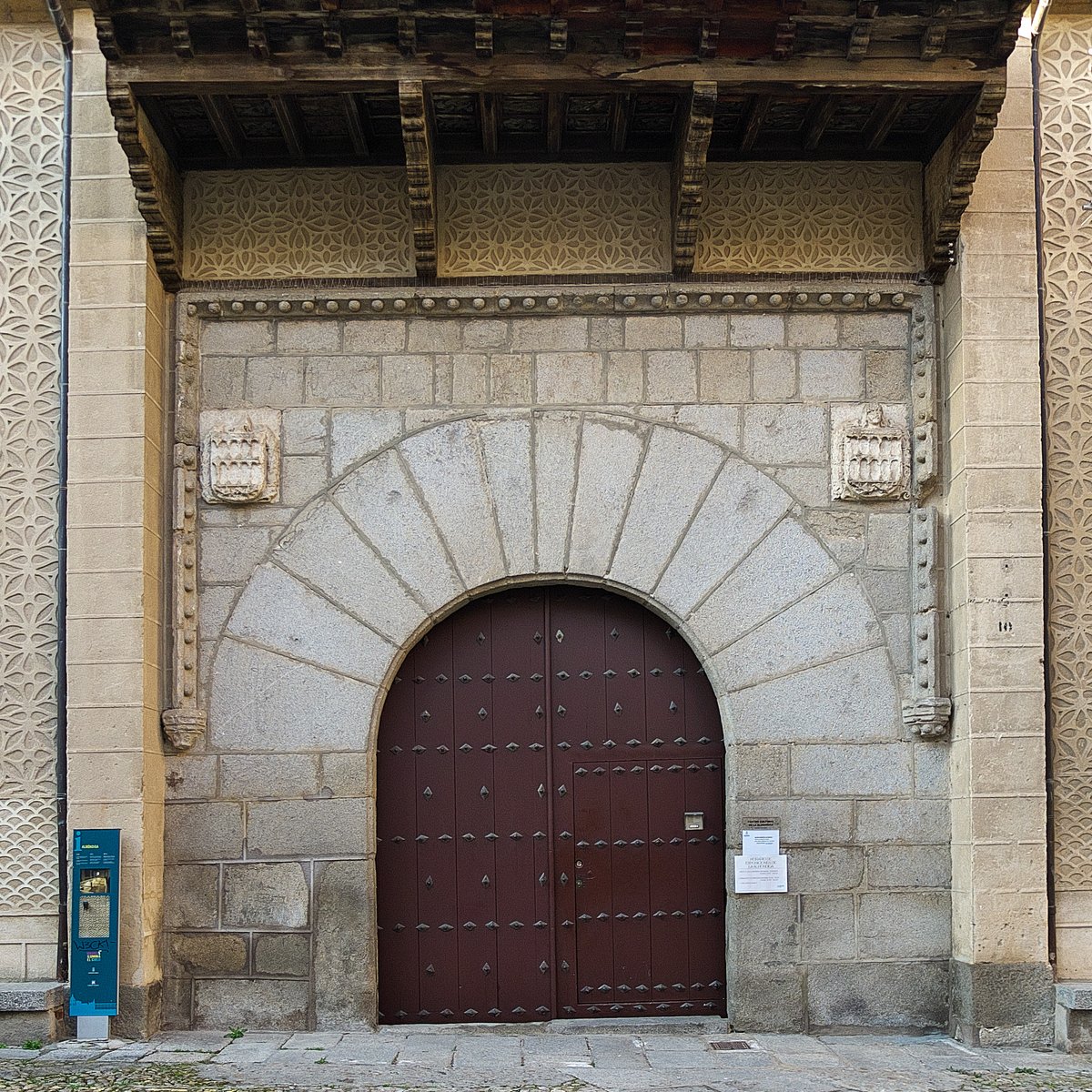

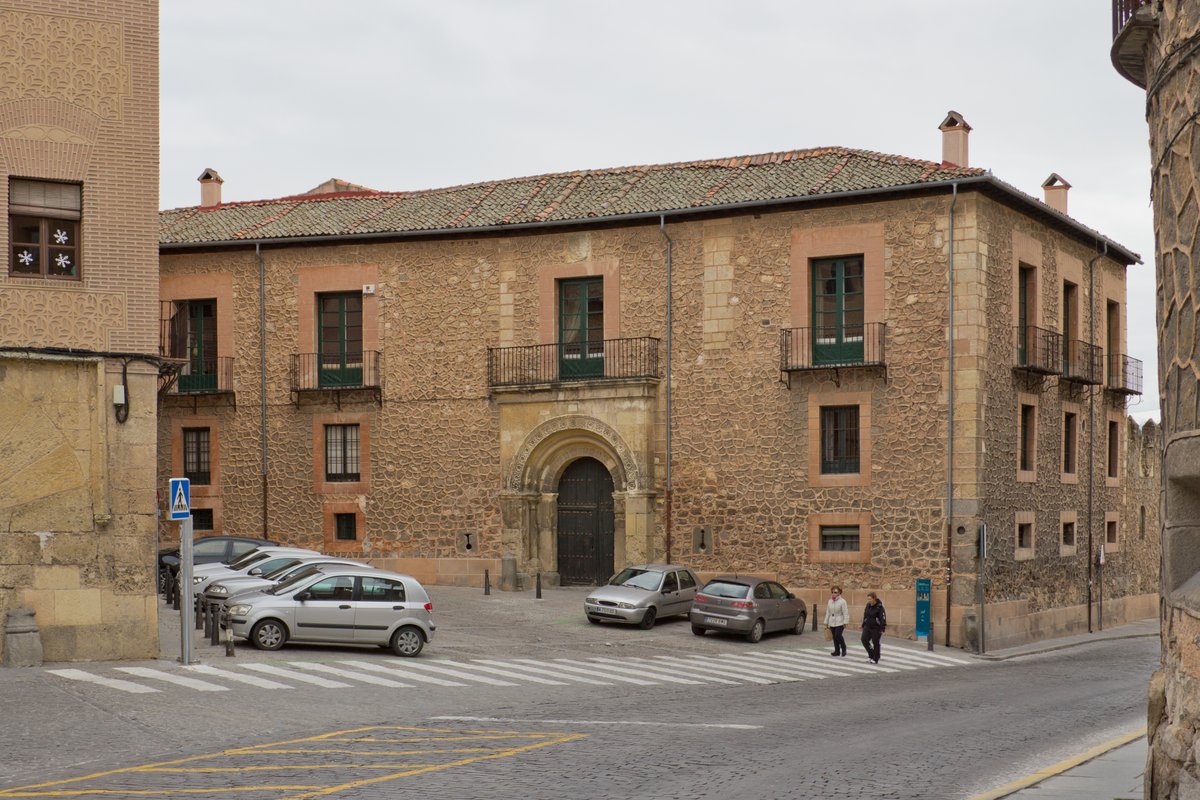
Built at the beginning of the 16th century, the Alhóndiga de Segovia is a building belonging to the industrial style. It is one of the few examples of industrial architecture created while Isabel and Fernando reigned. The building served as a grain warehouse for the city, where the word alhóndiga referred to a place where grain was sold, bought, and stored to help neighbors and farmers during times of scarce food.
The main facade features an Isabeline style doorway with two repeated shields of the city of Segovia on each side. In the past, the interior had three grain bins distributed to store wheat, named Gloria, Purgatorio, and Infierno. In 1925, the building became the headquarters of the Municipal Historical Archive, which has a main deposit with 1500 linear meters of conventional shelving and an exhibition hall.
Today, the building also functions as an exhibition hall, displaying paintings, sculptures, and photography. On some occasions, it has been used as a house of culture, carrying out cultural activities for children and also for the elderly. As a historic building, the Alhóndiga is considered a good of cultural interest and serves as the headquarters of the Municipal Archive of Segovia, performing functions similar to those of a museum.
Sources: Wikipedia, OpenStreetMap, Wikidata, Wikimedia Commons
Written by Nik Frost
Discuss this with the author and others
No comments yet. Be the first to start the conversation.