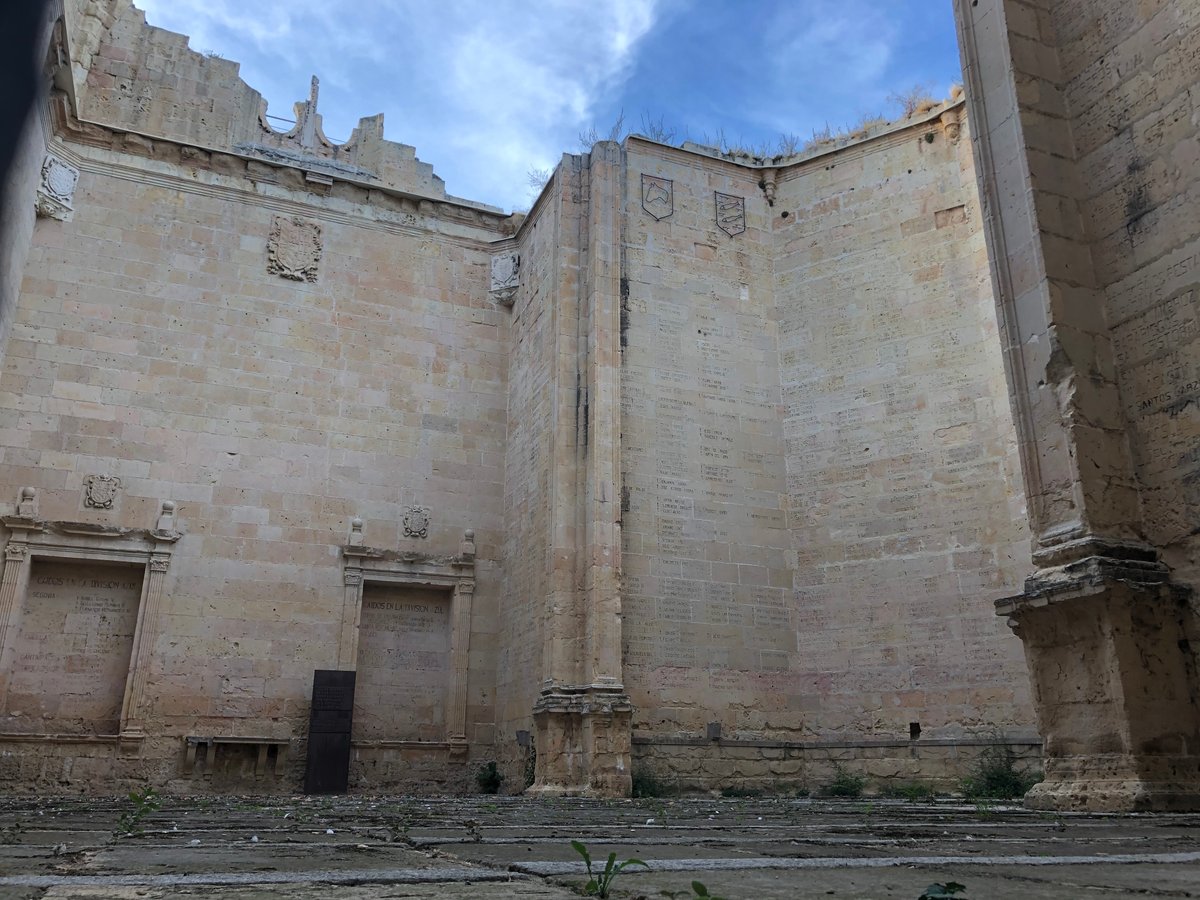

Since 1556, the cross-shaped Latin structure of the San Agustín Convent has been nestled in the heart of Segovia, Spain. Built between 1570 and 1600, it once served as a center of spiritual and cultural activity, offering a remarkable collection of history, art, and architectural wonder. To step inside its story, allow us to journey through the centuries that have passed since its inception. Founded by don Antonio de Guevara y Tapia, the church reveals a Gothic-style interior and a Neoclassical retablo that can be found in the current conventional church of Santa Cruz la Real.
The church was officially consecrated on November 16, 1597, and its collection of relics includes Renaissance-style sepulchers located in the crucero. Alongside these, a copy of Guido Reni’s Asunción graces the Epistle side.
However, the convent's history is shrouded in mystery and controversy. Whispers spread of its disbandment in 1836 due to Mendizábal's desamortización and its subsequent use as a military storage in 1853 and a hospital in 1942. The collapse of the cubierta of the nave occurred in 1893, and the organ built in the early 18th century is no longer in its place.
Despite its challenges, the convent remains a source of Segovian history and art, encouraging visitors to ponder the tales that linger beneath its battered walls and the mysteries that continue to unravel.
Sources: Wikipedia, OpenStreetMap, Wikidata, Wikimedia Commons
Written by Nik Frost
Discuss this with the author and others
No comments yet. Be the first to start the conversation.