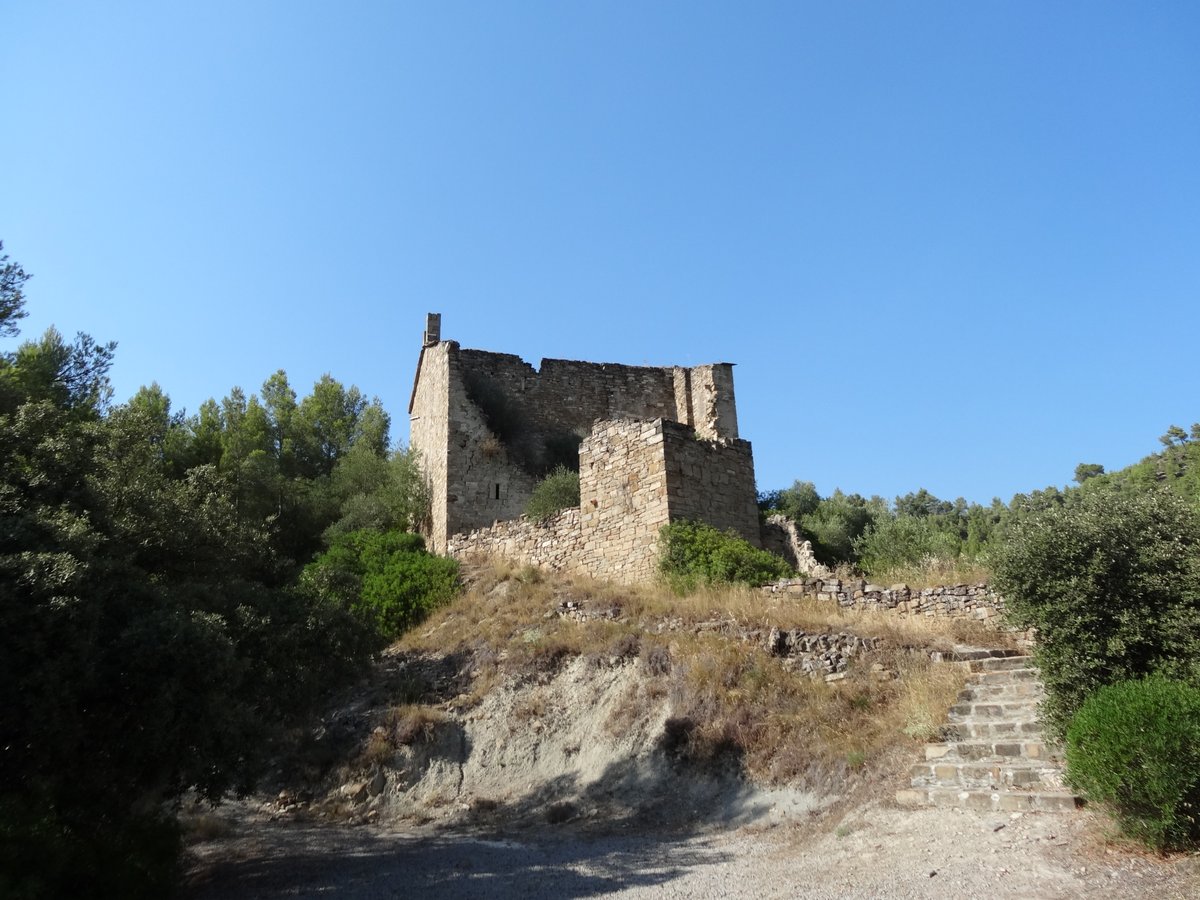

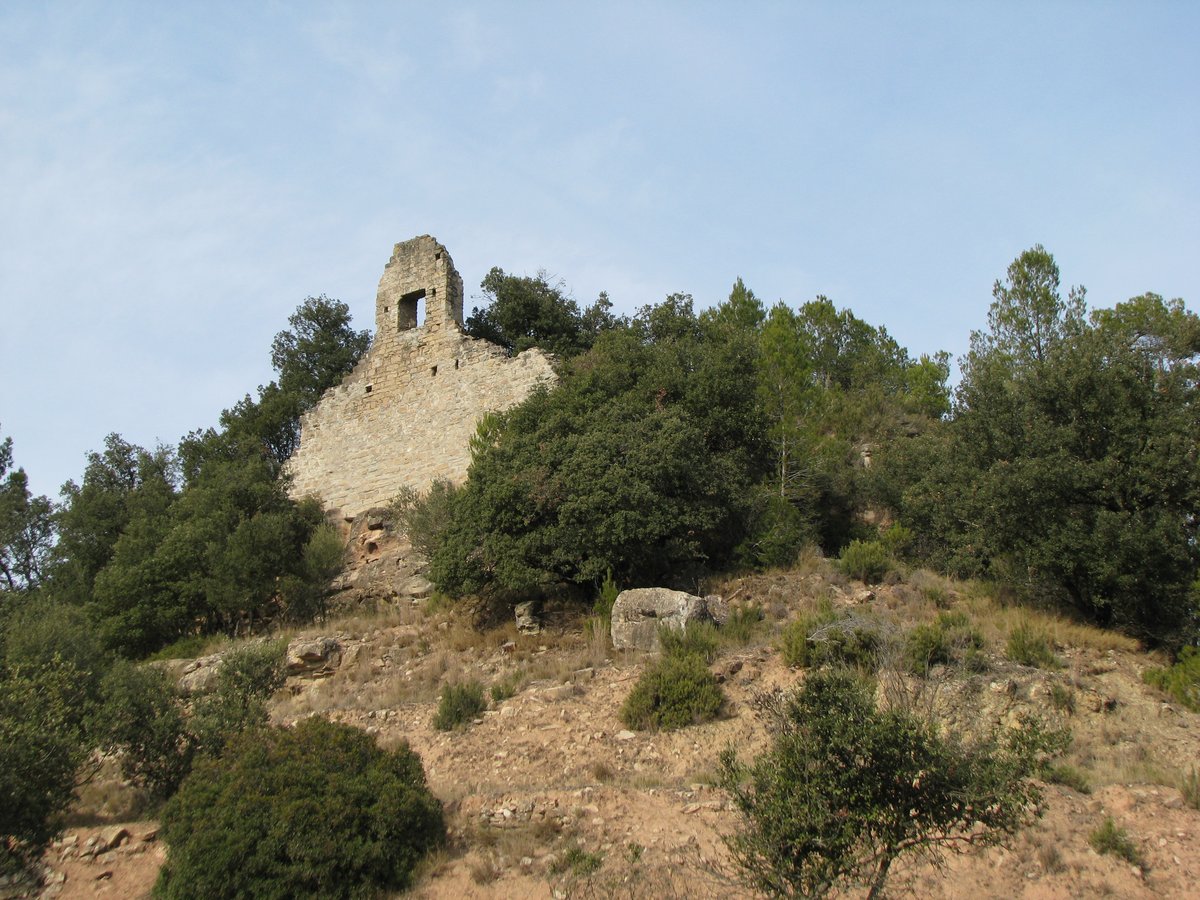
We must look back to 1225 to find the first mention of this rural chapel, which was born as a chapel in the testament of the noble Berenguer de Castellgalí. It is known that as early as 1376, a small priory of monks of the rule of Saint Augustine lived in a hill near the hermitage. After the community dissolved in 1402, the building returned to being a rural chapel dependent on the church of Sant Miquel. In 1772, a renovation expanded the church in length and height and built a sacristy that still stands today. The interior features moldings from the 18th century, and holes from a former altarpiece are visible on the wall of the high altar.
Maria Juvert Escales was the last hermit to live in the attached farmhouse. In 1936, an arsonist burned the altar, religious images, and the entire interior, although the hermit's dwelling was spared. A Sant Crist was saved from the altar; it could not be torn down and was shot with more than 100 pellets. After the war, the last hermit died and the site was abandoned. The vault collapsed in 1958, and a flood in 1999 caused the facade of the farmhouse to collapse.
In 1992, members of the Museu de Castellgalí cleared the vegetation and recovered the annual pilgrimage. A new image of Santa Margarida was blessed in 1993 and installed in 1995. A new stone altar was placed in 1996, and a new bell was blessed in 2003 to ring during the pilgrimage. The pilgrimage is organized by the museum with various activities and a mass where the bell is rung.
Sources: Wikipedia, OpenStreetMap, Wikidata, Wikimedia Commons
Written by Nik Frost
Discuss this with the author and others
No comments yet. Be the first to start the conversation.